
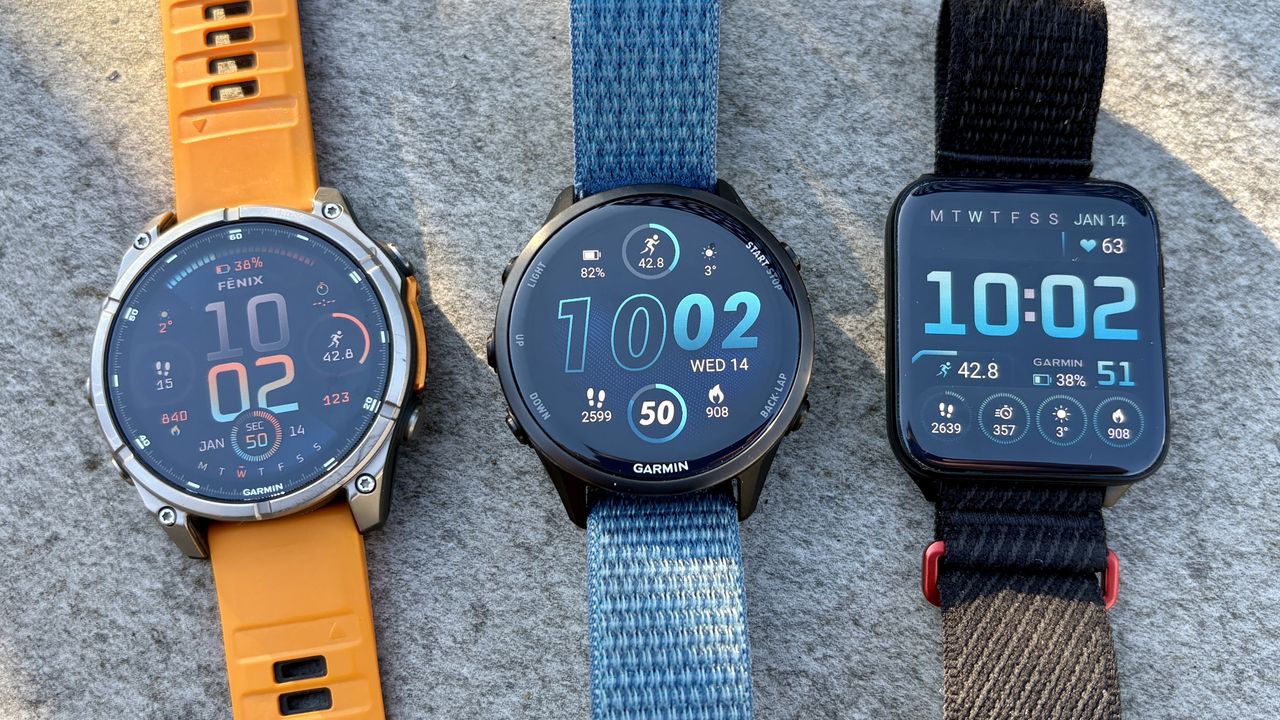
If you decide to buy one of the best Garmin watches, one of the biggest hurdles to clear is working out exactly which Garmin might suit you best. The brand’s line-up is huge, and it’s not always clear what the differences are between various models.
I’ve tested almost every Garmin watch launched in the last five years or so, and so have a better idea than most about the differences between them.

The three key types of Garmin watches are the Fenix, Forerunner and Venu lines, each of which contain several different models. There is a lot of shared hardware and software across all three of these lines, but they are designed to appeal to different people with their style and features.
Below I’ve highlighted the main features on each of the three lines, along with what you can expect to get across all of them, plus I picked out my favorite Forerunner, Fenix and Venu watch.
Garmin Forerunner

The Forerunner line-up is the broadest in Garmin’s range, and has options to suit every budget from the cheapest Forerunner 55 and Forerunner 165 models through to the flagship Garmin Forerunner 970.
Forerunner watches are primarily aimed at endurance athletes, especially runners, and have lightweight, mostly plastic designs that are smaller than Fenix models and have five buttons to make it easier to control the watches during workouts.
Aside from LTE and satellite connectivity, the top of the range Forerunner 970 has all of Garmin’s top sports, navigation and smart features, but as you go down the line-up to the more affordable end, you do lose out on training analysis and mapping tools in particular.
As a marathoner the Forerunner line-up is generally where I find my preferred Garmin watches, but even if you are a keen athlete you might prefer the more rugged design of a Fenix, or the slicker, smartwatch look of a Venu.
Garmin Venu

Garmin’s Venu line-up is aimed more at gym-goers and casual athletes rather than endurance fanatics or adventurers.
Venu watches have fewer buttons than Forerunners, but still offer excellent sports tracking, and with the Garmin Venu 4 and Garmin Venu X1 you also get great training analysis.
At the more affordable end of the Venu line-up you’ll find watches like the Venu 2 Sq, and the Garmin Vivoactive series also offers smartwatch styling at a cheaper price than the top Venus.
Garmin’s smart features are not as extensive as a true smartwatch, but are better than any other sports watch. You get music storage and they can link up with streaming services, NFC payments and access to the small Connect IQ app store. Note that these features are available on watches across the Fenix and Forerunner lines as well.
As a result, the main reason to look at the Venu line-up instead is the design, with the sleek Venu 4 being a good rival to the Forerunner 570, while the square, ludicrously thin Venu X1 is an alternative to top sporty models like the Forerunner 970.
Garmin Fenix

The Garmin Fenix line-up contains the brand’s most impressive adventure watches and if you opt for the top Fenix model at any given time you can be sure you’re getting all of Garmin’s best features.
You also get a more rugged, metal design than is available in the Forerunner and Venu line-ups, as well as longer battery life. The Fenix 8 Pro also has a unique feature for Garmin in that it offers LTE and satellite connectivity.
The Fenix watches don’t come cheap, but if you’re regularly heading into the wilderness they’re the best Garmin option for you, and they’re also great for runners and triathletes who prefer their chunkier, more durable design to the mainly-plastic build of Forerunners.

Follow Tom's Guide on Google News and add us as a preferred source to get our up-to-date news, analysis, and reviews in your feeds.