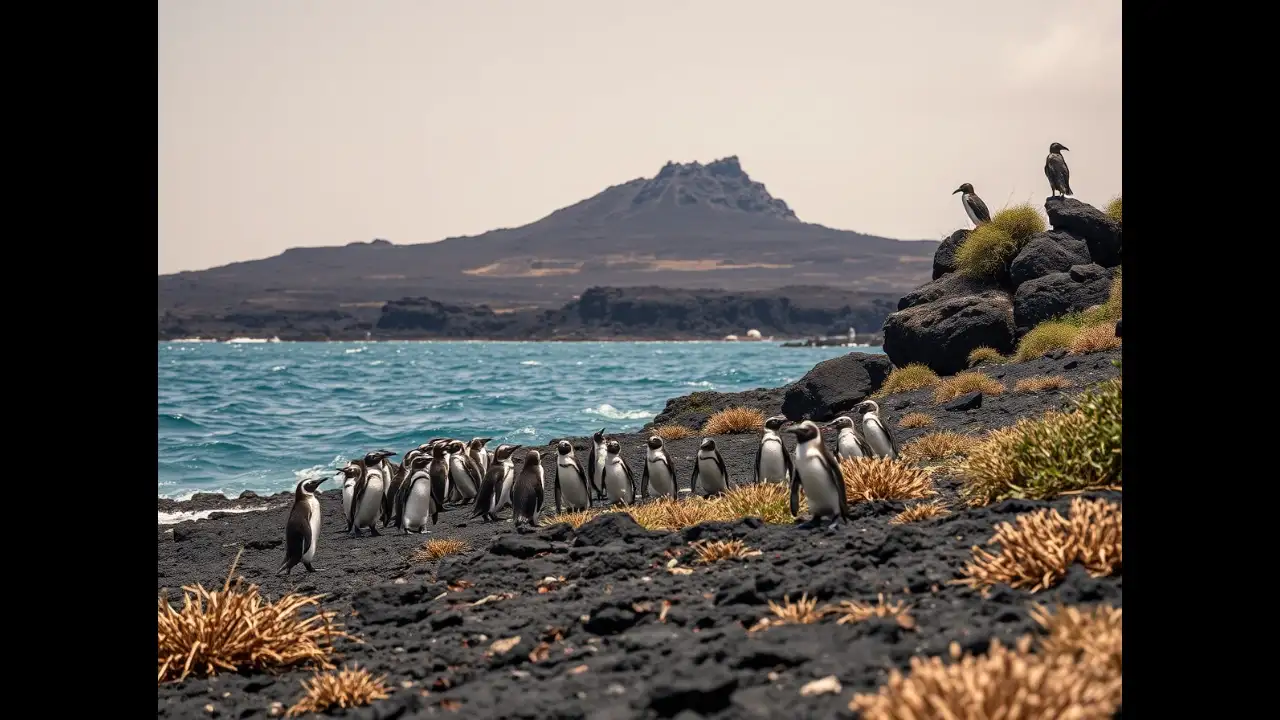
Galapagos Islands were declared a Natural World Heritage Site in 1978 for their unique animal and plant species, which served as the basis for the English scientist Charles Darwin to develop his theory of evolution. The archipelago of more than 230 islands — of which only four are inhabited — is located in the middle of the Pacific Ocean, 1,000 kilometers (620 miles) off the coast of Ecuador.
The prediction that this season’s El Nino phenomenon will be stronger than normal has alarmed the Ecuadorian scientific community, which has warned of its impact on the flora and fauna of the Galapagos Islands, home to the highest concentration of species not found elsewhere on Earth. The climatic phenomenon occurs periodically and in the equatorial Pacific is characterized by an increase in sea temperature and intense rainfall. Its strength is determined by measuring the water temperature in that area and comparing it to the normal average. If it is 2 degrees Celsius (3.6 Fahrenheit) above normal, it is considered “very strong.”