
Get all your news in one place.
100’s of premium titles.
One app.
Start reading
Golf Monthly
Golf Monthly
Sport
Joe Ferguson

Fujikura 2026 Ventus TR Blue Shaft Review

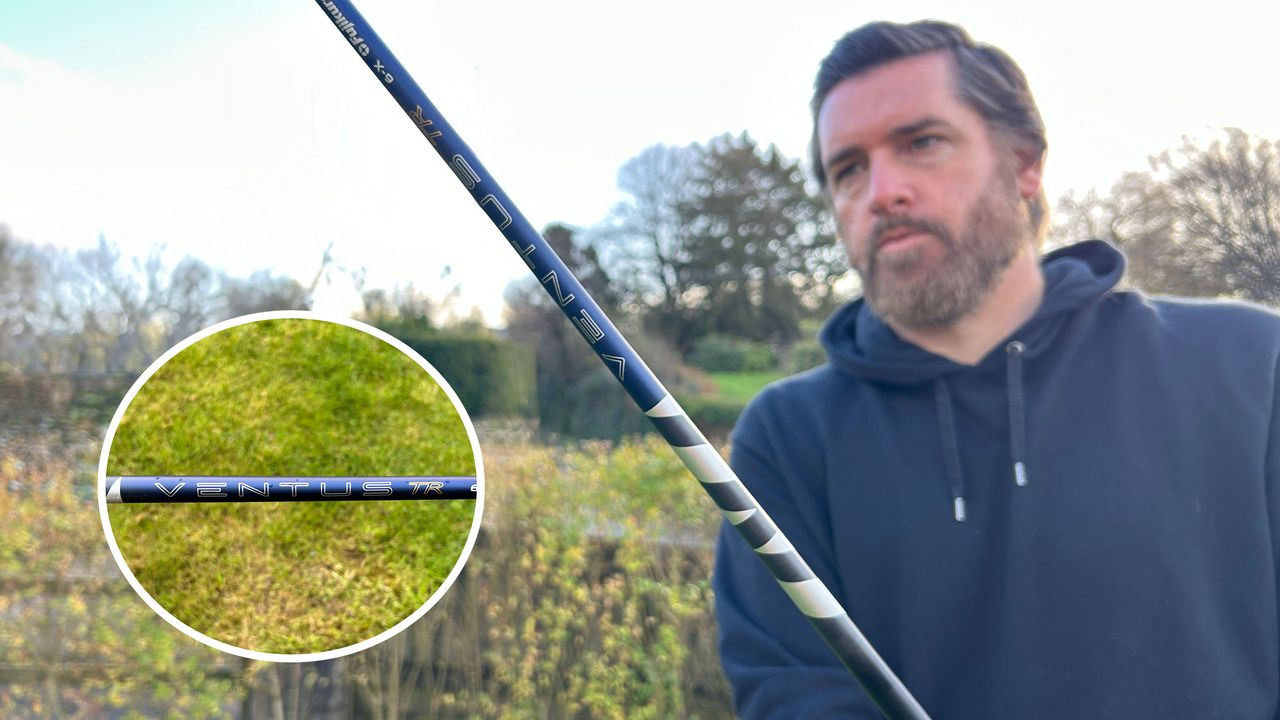
Photo of the Fujikura 2026 Ventus TR Blue Shaft.

Fujikura’s Ventus line has become a juggernaut in the golf industry. In 2025, it achieved a historic milestone by being the driver and wood shaft of choice for all four Major Championship winners. Now, with its latest release, Fujikura is looking to build on that success with the next generation of its acclaimed TR line: the Fujikura Ventus TR Blue with VeloCore+ technology.

I’ve been testing the latest iteration to see if the addition of VeloCore+ and new material technologies can actually improve upon a profile that many already considered the gold standard for the sought-after combination of stability and feel.

How We Test Shafts

(Image credit: Future)

All of our shaft testing is conducted using the same TaylorMade Qi35 core head driver set to a precise 9 degrees (measured), with each shaft cut to an exact length of 45.5 inches, fitted with a Golf Pride Tour Velvet 60R grip. Furthermore, all testing shots are struck from a white castle tee to ensure consistent tee height during testing.

The data is collected and recorded using a Foresight Sports GC3 launch monitor and TaylorMade TP5x golf balls.

(Image credit: Future)

Controlling these potential variables allows me to draw accurate and direct comparisons and form a clear picture of each shaft's performance and feel characteristics.

Fujikura 2026 Ventus TR Blue Shaft Review: Technology

The core of the new TR Blue is VeloCore+ Technology. This isn't just a marketing buzzword; it’s a construction update that pairs Fujikura’s cutting-edge spread tow fabric with an evolved material suite to maximize energy transfer.

Using its Enso 3D motion capture technology, Fujikura found that this combination allowed for even greater stability, especially for players who tend to pull or load the shaft aggressively.

(Image credit: Future)

Visually, the TR Blue maintains the premium, understated aesthetic that has become synonymous with the Ventus name, with understated graphics and just a pop of colour with the ‘TR’ branding executed in a subdued gold.

If I were being super critical, I’m personally not totally in love with the black blending into blue colour scheme; to me, there is something of a clash there. However, many of the people I have shown this shaft to already really liked this combination, so what do I know!

I personally don't love the black/blue combination visually, but that is going to be entirely down to personal preference (Image credit: Future)

Fujikura 2026 Ventus TR Blue Shaft Review: Performance

While the original TR Blue was a favorite of top-tier players like Rory McIlroy and Tommy Fleetwood, don't let the high-end player association put you off. With weight profiles ranging from 50g to 90g and flexes from Regular to Extra-Stiff, there is a profile here for almost any swing speed.

Tommy Fleetwood is still playing the original Ventus TR Blue in his driver (Image credit: Getty Images)

In terms of feel, Fujikura has not reinvented the wheel here - and thankfully so.

The TR Blue has always been the answer for the player who found the standard Blue a little too active but the Black too boardy. As before, you can still think of it as a slightly stouter version of the standard Blue profile, dissecting that Blue and Black area of the matrix.

The new TR Blue offers an extremely stiff tip section with very little torque, but that ultra-stiff tip sits adjacent to a slightly softer (albeit still stiff) mid and butt section. This creates a relatively smooth-feeling profile that delivers far more stability than its feel would suggest.

(Image credit: Future)

Testing on my Foresight Sports GC3 launch monitor, the stability was immediately apparent. As someone with a slightly "flippy" release, my miss pattern with this shaft was consistently just right of the target.

I didn't mind this at all, as it took the "big left" out of play for me - something a lot of quicker players will potentially enjoy. However, if you are a persistent right-misser who struggles to square the face, you may find the tip section a little too stubborn.

(Image credit: Future)

Centeredness of contact was a standout metric too; even on poor feeling swings, somehow the shaft felt like it knew exactly where the clubface was, and this feedback relationship really worked for me personally.

Fujikura 2026 Ventus TR Blue Shaft Review: Verdict

Fujikura has wisely chosen to evolve rather than replace. The original Ventus TR Blue was a powerhouse in fitting bays worldwide, and this latest iteration picks up exactly where the original left off. It is stable, predictable, and now, just a little bit smoother.

(Image credit: Future)

The Fujikura 2026 Ventus TR Blue is available now, and has an MSRP of $350.

Choose this shaft if:
You have a relatively brisk change of direction at the top, but you don't want to manage that load with a harsh or boardy-feeling profile.

Avoid this shaft if:
You are a smoother tempo player who struggles with a fade or slice and are looking for a shaft to help you square the clubface at impact.

Sign up to read this article
Read news from 100’s of titles, curated specifically for you.
Already a member? Sign in here
Related Stories
Top stories on inkl right now
Our Picks
Fourteen days free
Download the app
One app. One membership.
100+ trusted global sources.