
Get all your news in one place.
100’s of premium titles.
One app.
Start reading
AAP
AAP
Stephanie Gardiner

Fuelling rural ambition may ease renewables resistance

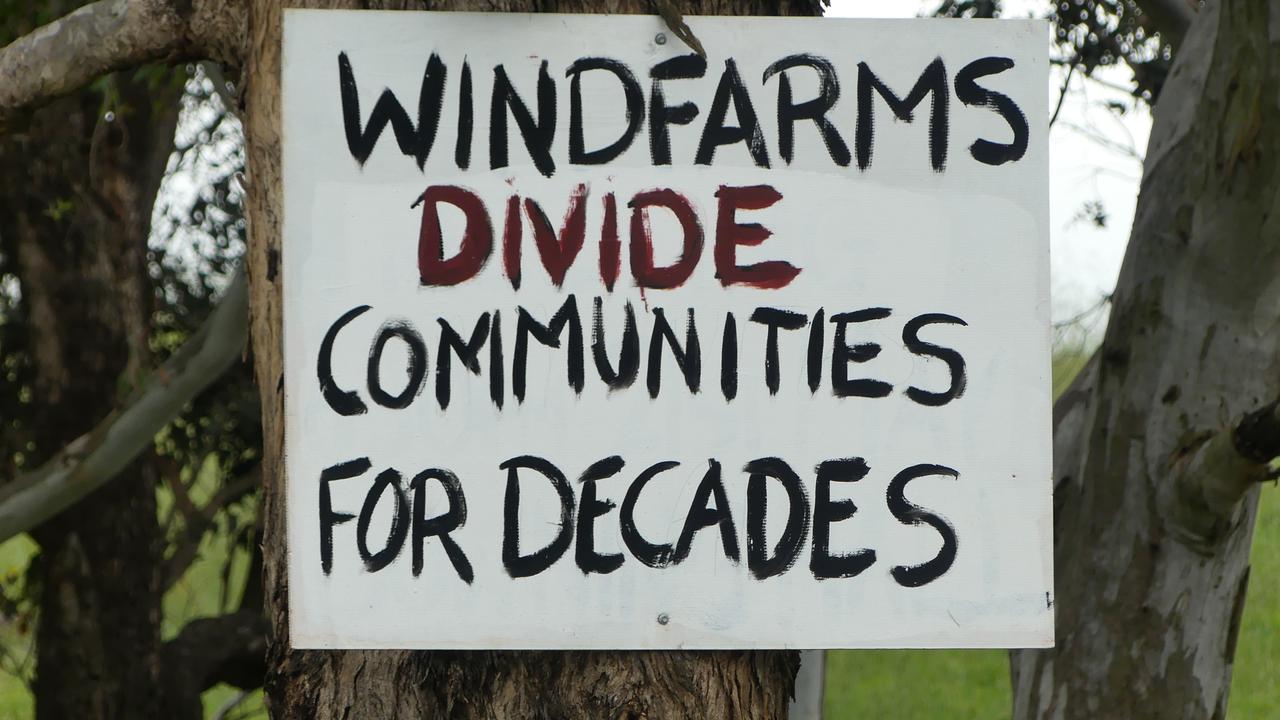
Resistance to renewables projects in regional areas may hinder the clean energy transition. (Stephanie Gardiner/AAP PHOTOS)

Just over an hour's drive northeast of the nation's capital, a sign nailed to an old gum tree says: "Wind farms divide communities for decades".

There are similar protest signs across Australia's rural landscape, as regions earmarked for clean energy projects weigh up both possible benefits and burdens of renewables.

Though renewable energy is central to achieving the global goal of net zero by 2050, community resistance is slowing Australia's progress and needs to be urgently addressed, research shows.

The Sharing the Benefits report by the Centre for Policy Development argues any renewables project backed by the federal government should have to clearly demonstrate community benefits.

The government could utilise the $22.7 billion Future Made in Australia fund to give greater financial support to projects that can show both meaningful engagement and benefit-sharing.

Power-generating wind turbines (file image)
Government-backed projects need to clearly demonstrate community benefits, a think tank says. (Mick Tsikas/AAP PHOTOS)

"Properly engaging with the community and making sure projects actually deliver benefits can be a real win-win," the think tank's economic director and report co-author Toby Phillips told AAP.

"If they are genuine participants in a project, then it can happen quicker with less bumps along the road."

Benefits might include developers using and training local workers, investing in infrastructure like libraries and roads and funding programs that increase rural and First Nations wellbeing.

Another strategy could be quotas for hiring apprentices, a move with the potential to address both local and national skills gaps, the report said.

"We've found that decarbonising the economy is creating new opportunities, but it's taking away old industries and it's an existential challenge for some communities to grapple with," Mr Phillips said.

"What we want to see is an economic transition that strengthens communities, where they are ambitious and have clear visions for the future."

A solar farm (file image)
Developers are being urged to begin community consultation long before construction. (Mick Tsikas/AAP PHOTOS)

Co-ownership of renewables projects was a successful model in Europe, giving locals have a profit share in the operation, a seat on the board and a say in how it is run.

The report highlighted successful Australian benefit-sharing examples, including the Culcairn Solar Farm in NSW that successfully collaborated with traditional elders.

The farm's developers offered compensation to neighbours for the disruption of construction, along with $150,000 annual payments to local groups.

While community funds have long been utilised by mining companies, some towns set to host renewables projects are wary of money coming from energy firms.

Mr Phillips said that view could be overcome by beginning community consultation and collaboration long before construction.

"Ultimately, the things that are good for communities should also be the things that are good for industries and developers."

Sign up to read this article
Read news from 100’s of titles, curated specifically for you.
Already a member? Sign in here
Related Stories
Top stories on inkl right now
One subscription that gives you access to news from hundreds of sites
Already a member? Sign in here
Our Picks
Fourteen days free
Download the app
One app. One membership.
100+ trusted global sources.