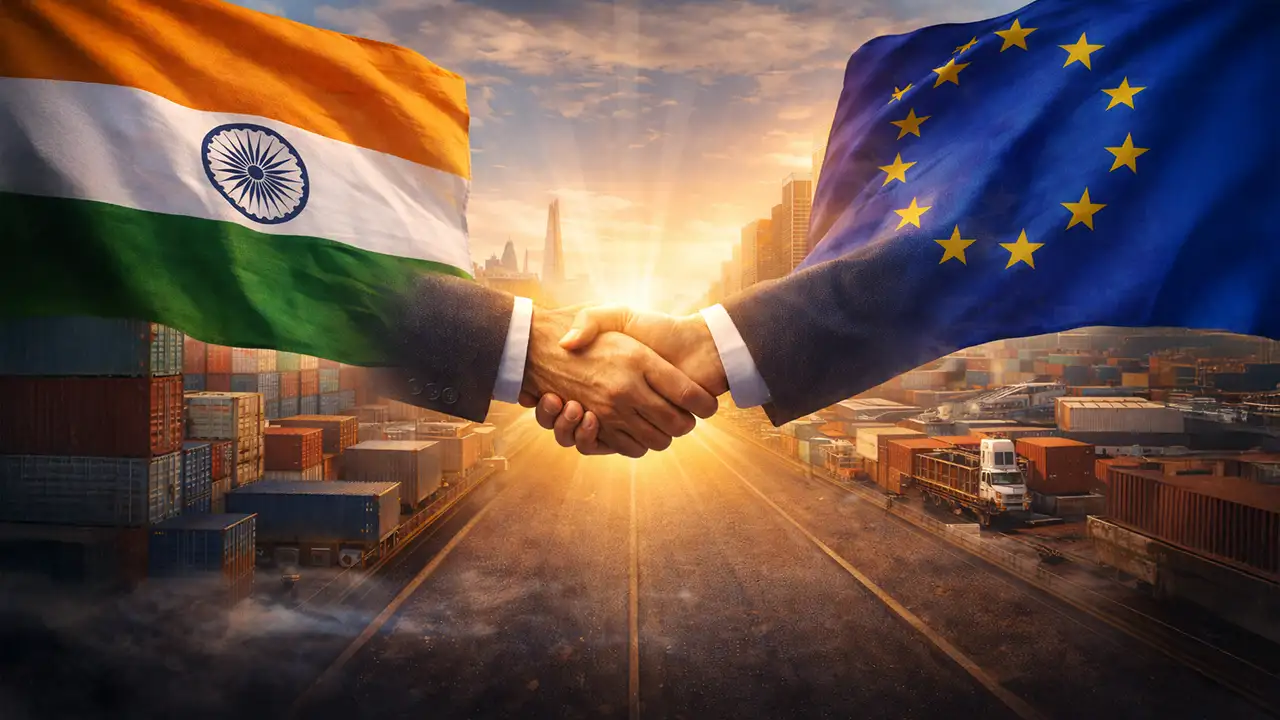
India is negotiating some of its most ambitious trade agreements in recent history. With negotiations underway or deals concluded with the US, UK, the European Union (EU), and New Zealand, preferential trade arrangements could soon cover more than 60% of the country’s exports. The key question, however, is whether these agreements will strengthen India’s long-term economic competitiveness or expose its underlying structural weaknesses.
Ajay Srivastava, Founder of the Global Trade Research Initiative (GTRI), argues that while free trade agreements (FTAs) can enable market access, they are no substitute for a strong manufacturing base. He says India must shift its focus from tariff negotiations to improving domestic competitiveness if the country wants to fully benefit from these trade deals.

He disputes the popular narrative that globalisation is ending. Srivastava, a former Indian Trade Service officer who was part of India’s WTO and FTA negotiating teams, argues that free trade is not disappearing, rather, major economies are increasingly embracing protectionist policies and industrial strategies to safeguard their own economic interests. “More than 80% of global trade still takes place under established international trade rules.” he says.
However, he argues that world’s largest economies, the US, EU, and China, are increasingly embracing industrial policy and protectionism. “The concern is not that free trade has ended. The concern is that the biggest economies are becoming more protectionist, and that creates challenges for countries like India.”
India must strengthen manufacturing
India, Srivastava argues, can achieve far more if manufacturing receives greater policy attention. “If we focus much more on manufacturing, our exports will increase. The government is taking the right steps, but the pace must accelerate.”