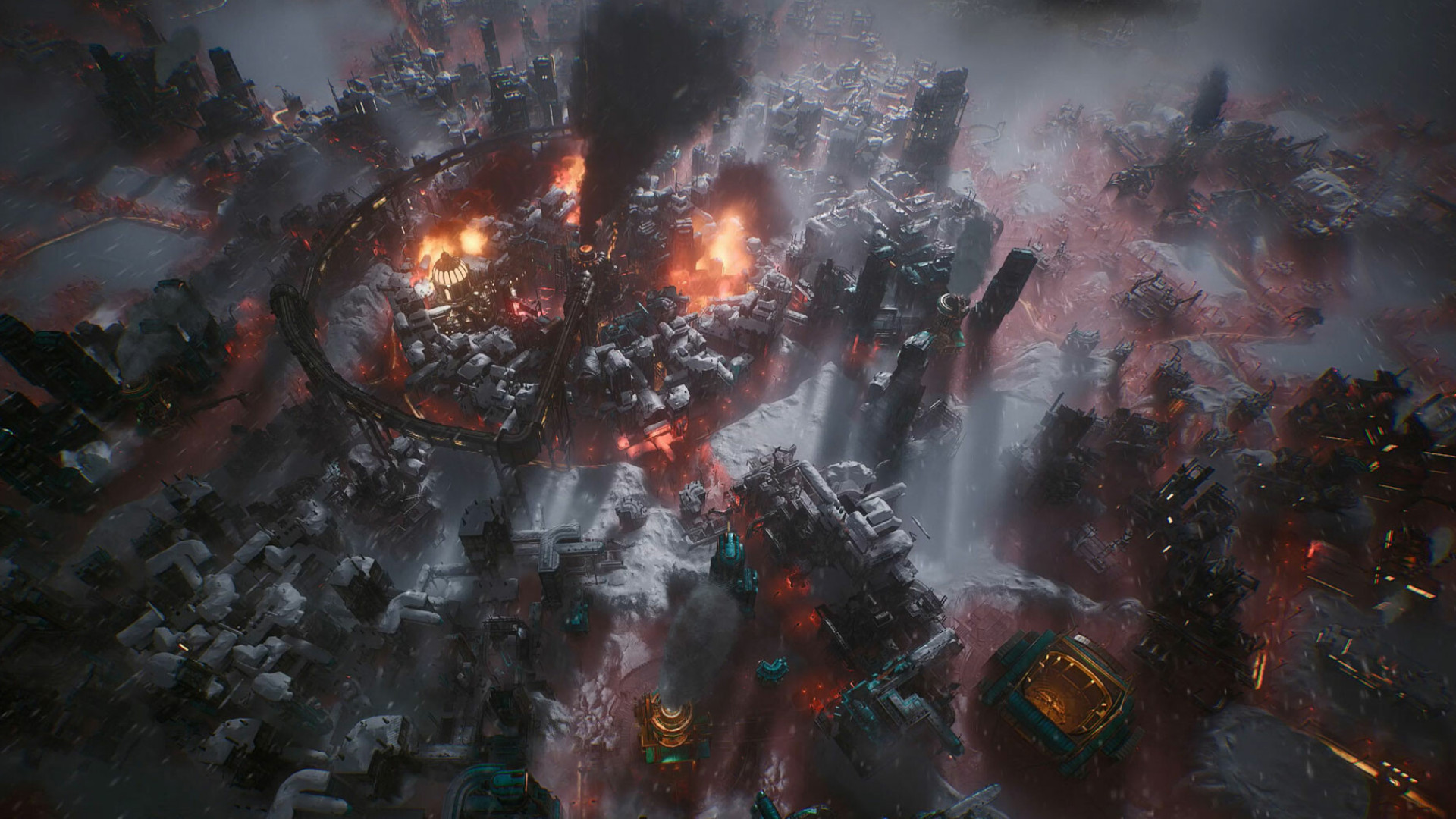
Just in time for the seasons to change and the weather to remain alarmingly warm, the follow-up to 2018's remarkable sci-fi parable about the absolute worst case climate change scenario arrives to spread some existential dread. Frostpunk 2 is a near-perfect example of how to do a sequel that both captures the original's idea saliently, but borrows some more macro-level concepts from other big empire building games to create a new, challenging, and rewarding experience.
Frostpunk 2 takes place decades after your Captain in the original game gathers survivors to build the first settlement of the arctic wasteland capable of surviving civilization-ending mega-blizzards. Years of relative peace - or the closest thing that is possible in a world frozen with no thaw in sight - have allowed populations to grow and a society capable of other things outside of basic survival to sprout. Mechanically, this means Frostpunk 2 makes the jump from smaller-scale real-time tactics to nearly full-blown 4x proportions, trading individual building placement, day/night cycles, and small maps with different kinds of zoning, and months moving by in minutes. An expansive overworld begs players to plant their flag in other territories, potentially operating more than one settlement at once.