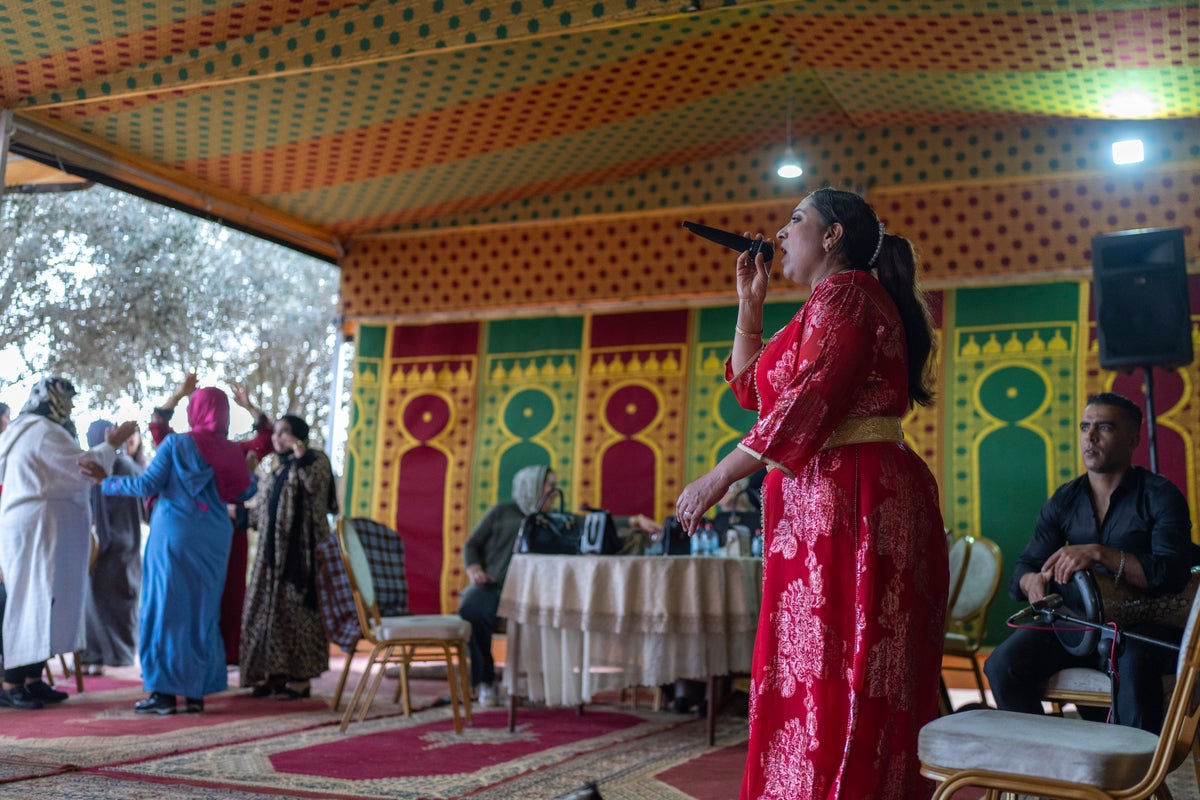
Mbarka Moullablad’s family frowned when she first told them she planned to make a living as a cheikha, singing about love, pain, and societal change to the melodies of her ancestors under the stage name “Thouria.”
Women like her are the stewards of one of Morocco’s most cherished oral traditions: a form of folk singing known as aita, which means a “cry” or “lament” in Arabic. From smoky bars and cabarets in Morocco’s largest cities to the gatherings in the country’s rural regions, they croon at weddings, festivals and private events and pub nights, hypnotizing audiences both humble and wealthy.