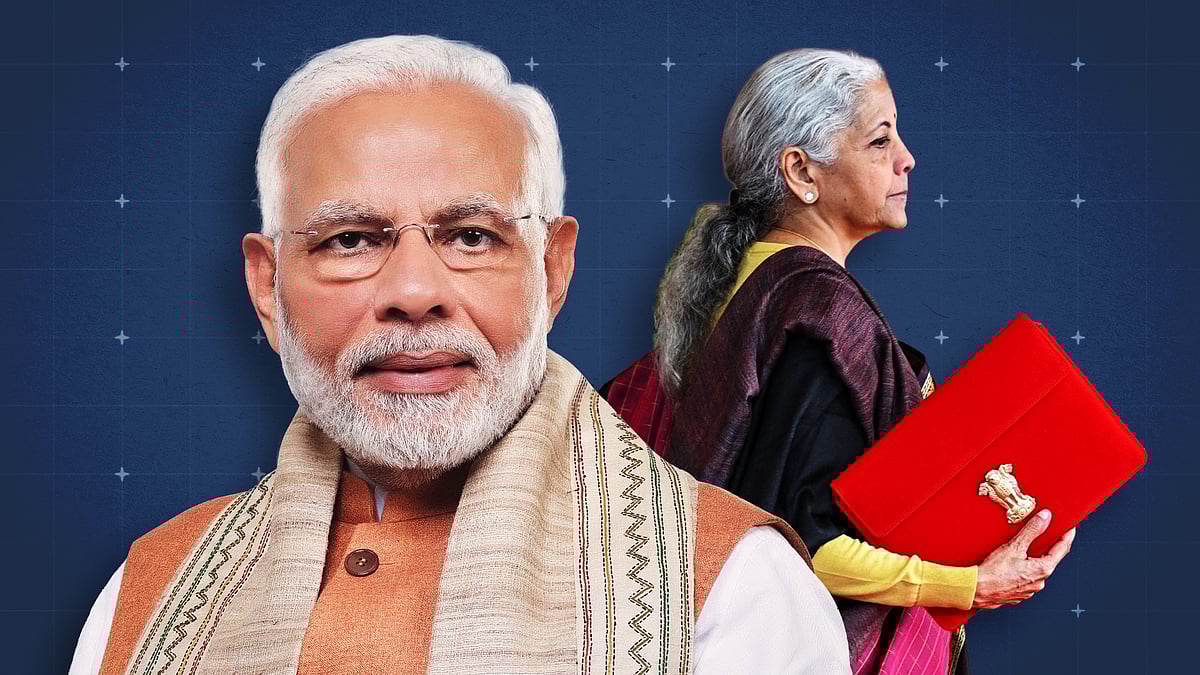
There were no headline-grabbing giveaways, no sweeping tax cuts, no “big bang” reforms designed to dominate prime time. Nirmala Sitharaman’s ninth budget seemed to match an economy that, at least on paper, is doing well considering global turbulence, and therefore needs steady steering more than fixing.
That is how much of the press read it the next morning.
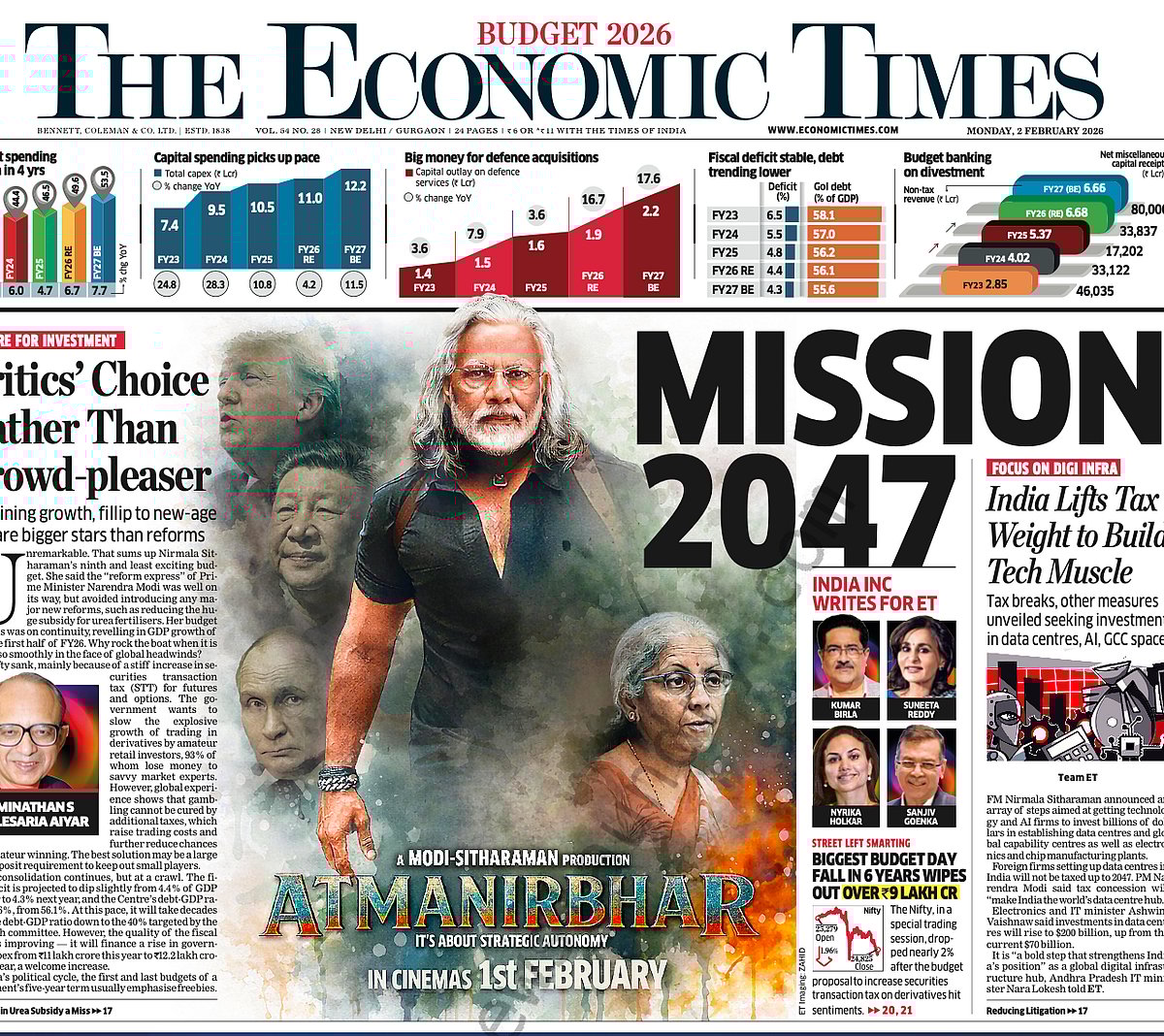
In the lead on The Economic Times front page, journalist and economist Swaminathan Aiyar called it “unremarkable”, dubbing it Nirmala Sitharaman’s “ninth and least exciting budget” and a “critics’ choice rather than crowd-pleaser”. The paper even paired the story with a stylised poster featuring Modi and Sitharaman against a geopolitical backdrop of Trump, Xi and Putin – suggesting a government fighting global turbulence.
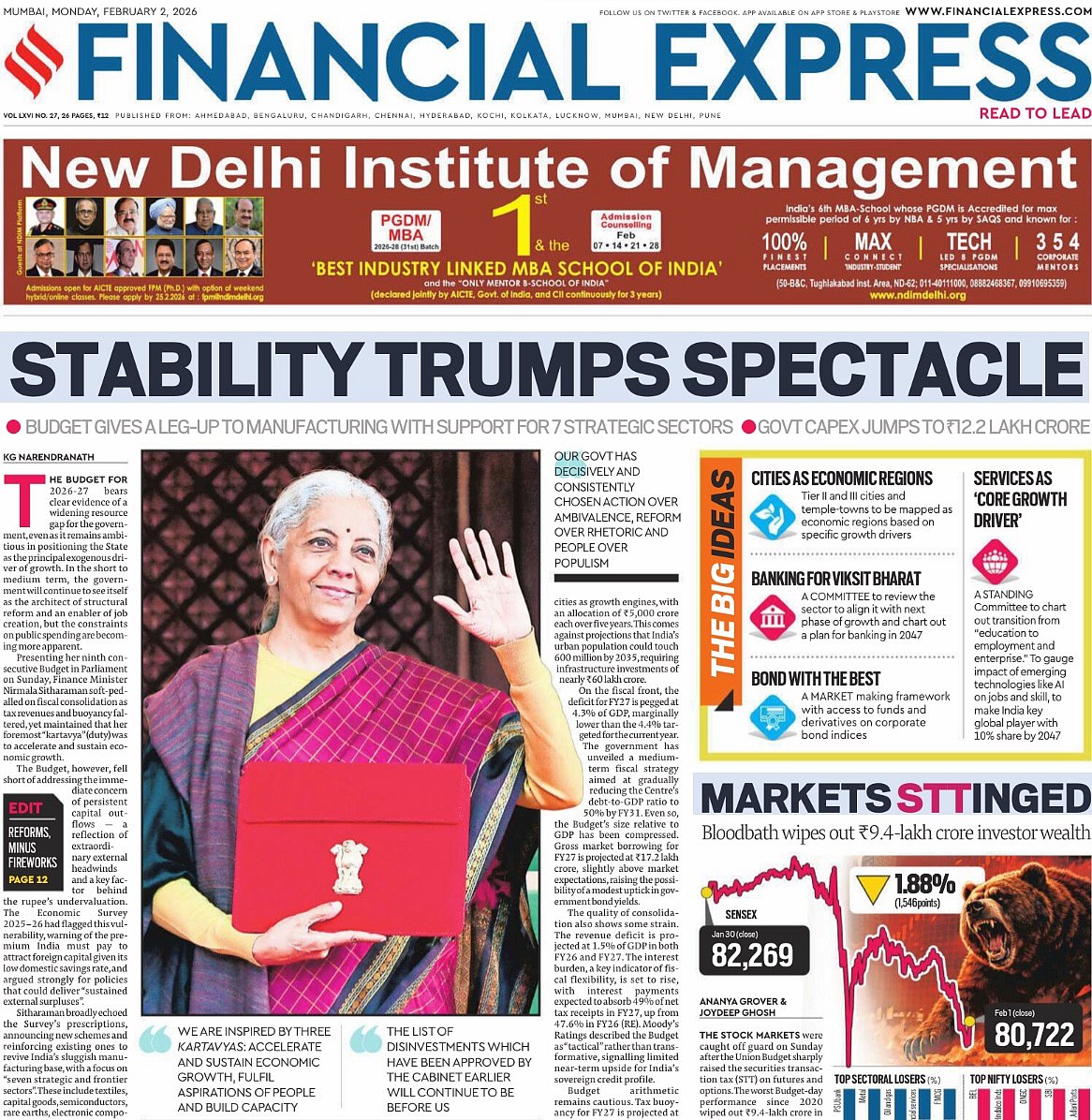
The Financial Express stressed on that interpretation with its front page headline: “stability trumps spectacle”. Its editorial, titled “reforms minus fireworks”, argued that the government had deliberately opted for continuity. In an uncertain global economy, it said, the measures “may not dazzle markets or voters” but sought to preserve fiscal credibility and keep the reform engine humming – nudging private investment rather than leading with big-ticket announcements.
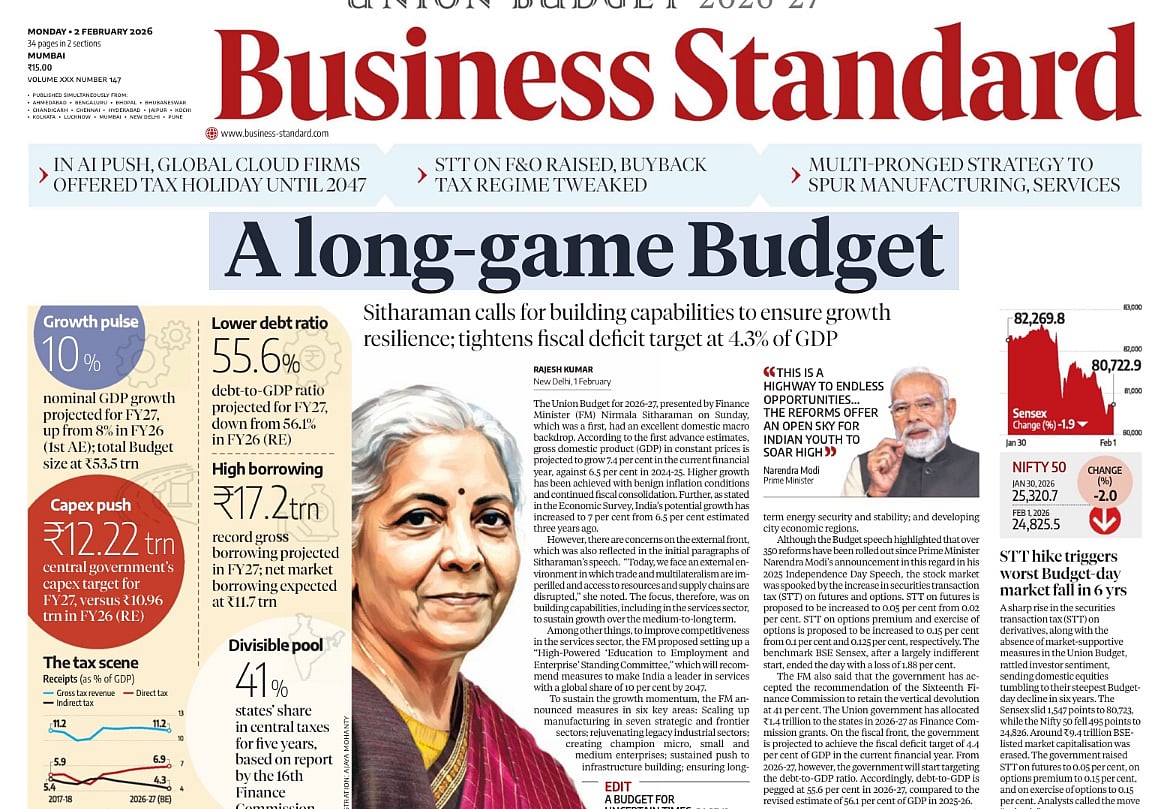
Business Standard called it “a long-game budget”. The paper’s editorial highlighted the government’s continued reliance on public capex – especially the planned Rs 12.2 trillion infrastructure push, new freight corridors, high-speed rail links and waterways 00 reading it as strategic, patient state-led growth rather than short-term stimulus.
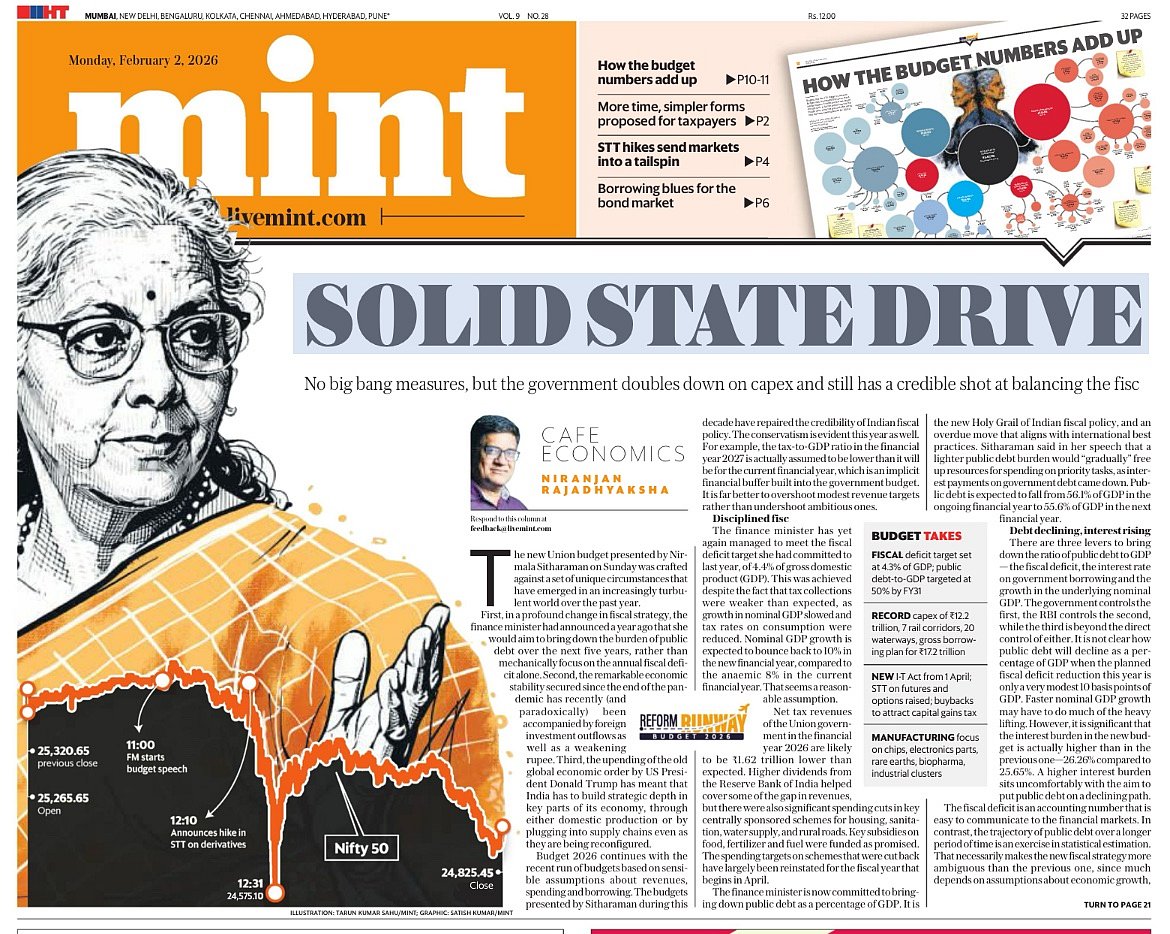
Mint’s front page called it a “solid state drive”. “The budgets presented by Sitharaman during this decade have repaired the credibility of Indian fiscal policy. The conservatism is evident this year as well. For example, the tax-to-GDP ratio in the financial year 2027 is actually assumed to be lower than it will be for the current financial year, which is an implicit financial buffer built into the government budget. It is far better to overshoot modest revenue targets rather than undershoot ambitious ones,” it noted.
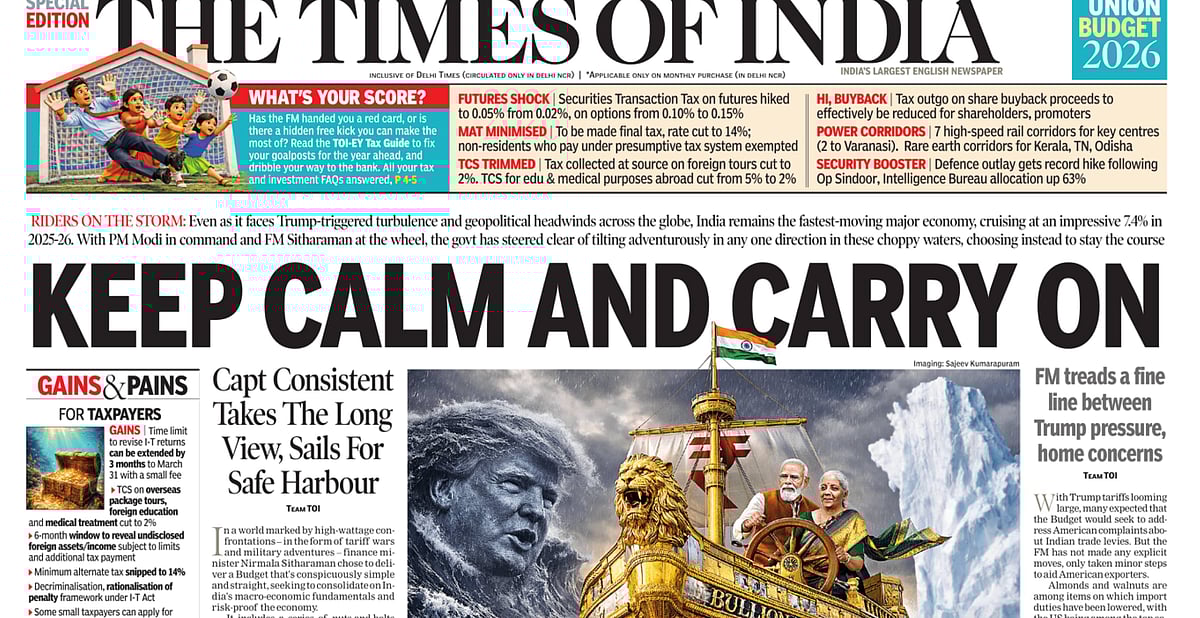
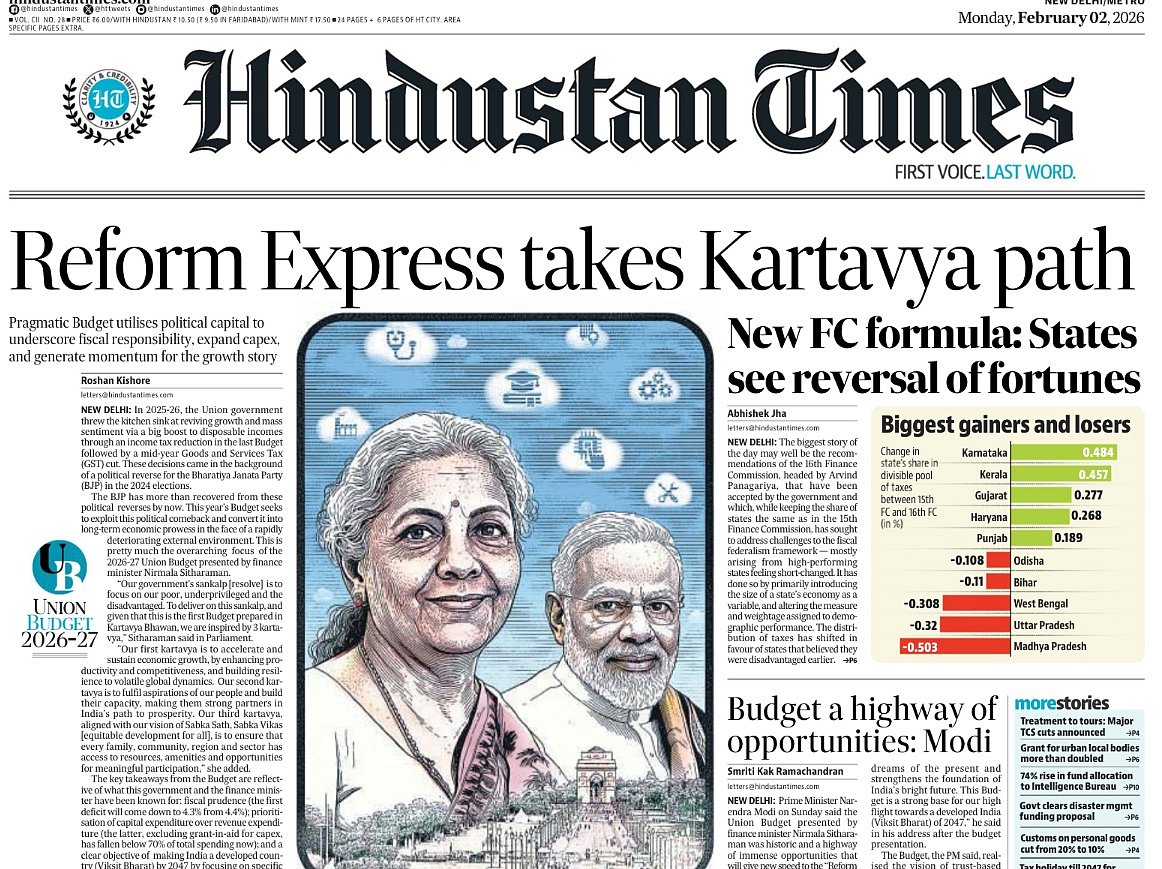
The Times of India front page showed Modi and Sitharaman riding a ship on choppy waters and looming threats – sharks, a massive iceberg, and a giant Trump wave. The Hindustan Times front page headline was “Reform Express takes Kartavya Path”.
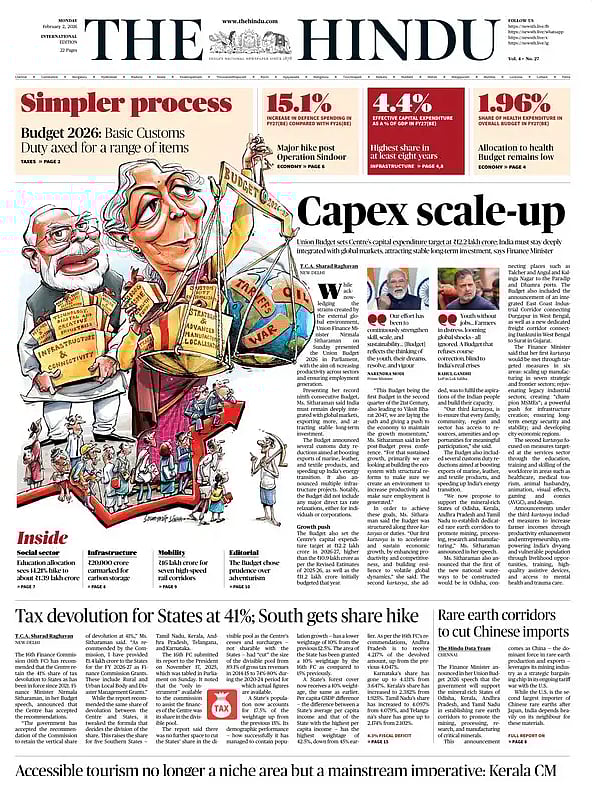
The Hindu’s editorial, headlined “credible and creditable”, echoed that sentiment. Where last year’s budget leaned on income-tax reliefs, this one avoided “Big Bang measures”. Instead, it adopted what the paper called a “scattershot approach” of targeted sectoral moves – a diffuse strategy better suited to a world of geopolitical and geoeconomic shocks. “This is not the time for further disruption,” it concluded.
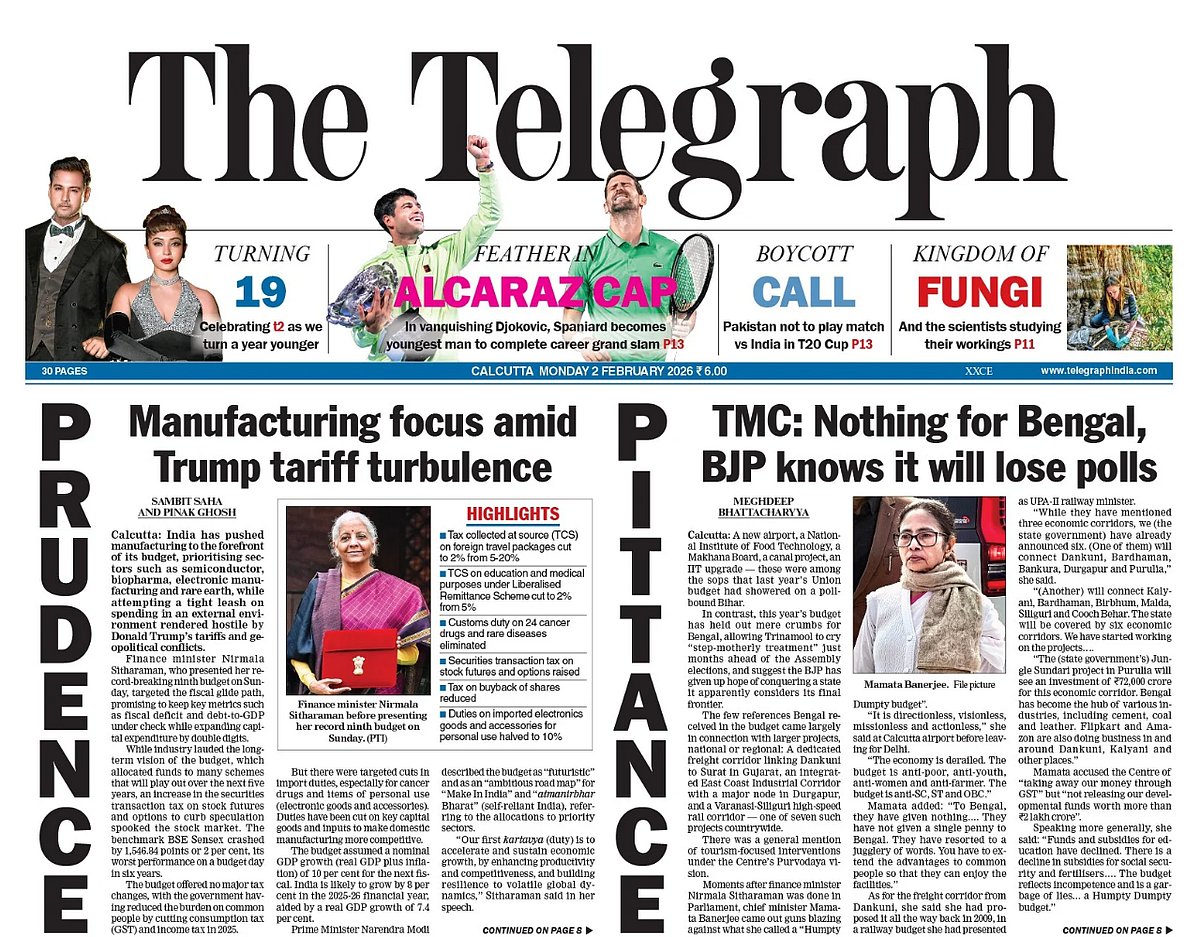
There was some scepticism too.
The Telegraph, in an editorial titled “shorn of surprises”, acknowledged the logic of focusing on domestic manufacturing, AI-led sectors, semiconductors, rare earths and export competitiveness. Yet it questioned whether these capital-intensive industries would create enough jobs, and flagged weak responses to persistent red flags – youth unemployment, inequality and soft consumption. The paper also noted the political subtext, pointing to the budget’s “silence” on poll-bound Bengal.
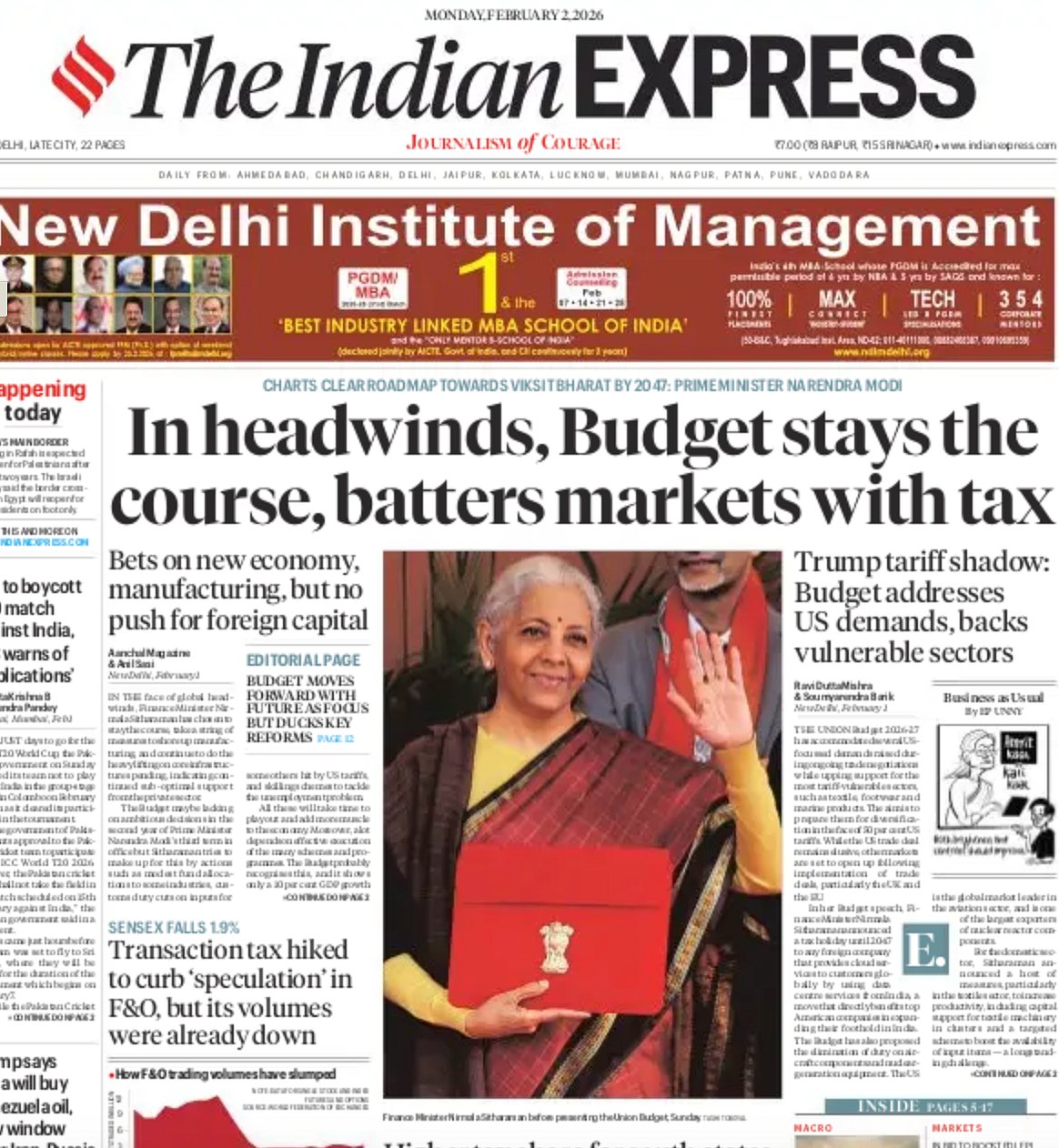
For The Indian Express editorial, the missing piece wasn’t prudence but bold reform. The editorial argued that in troubled geopolitical times, “managing the economy is as much about managing sentiment”. It criticised the government for ducking hard decisions – aggressive disinvestment, lowering state stakes in PSUs, and rationalising subsidies. With food and fertiliser subsidies continuing to overshoot, it asked pointedly: when will the Modi government “bite the bullet”?
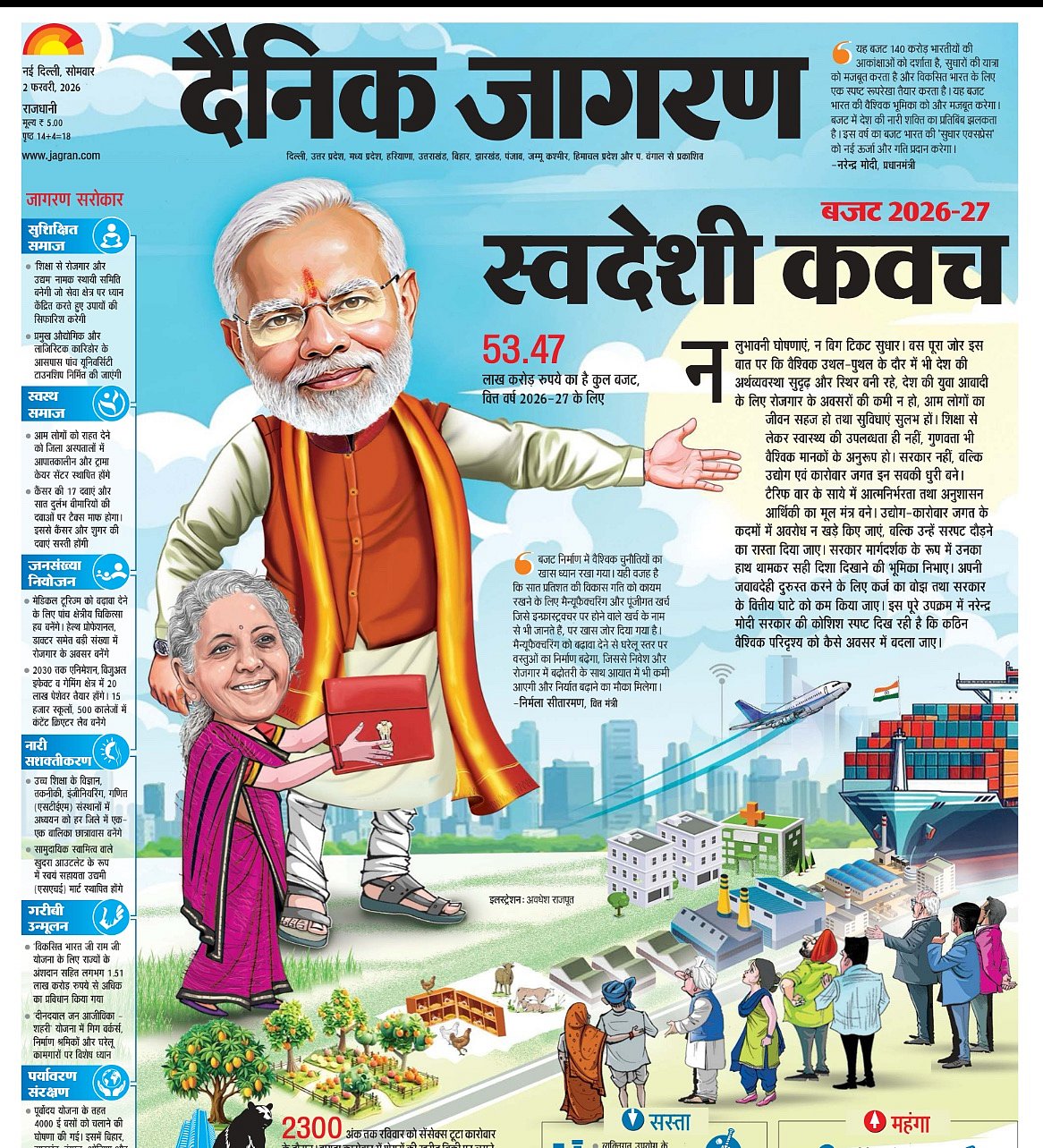
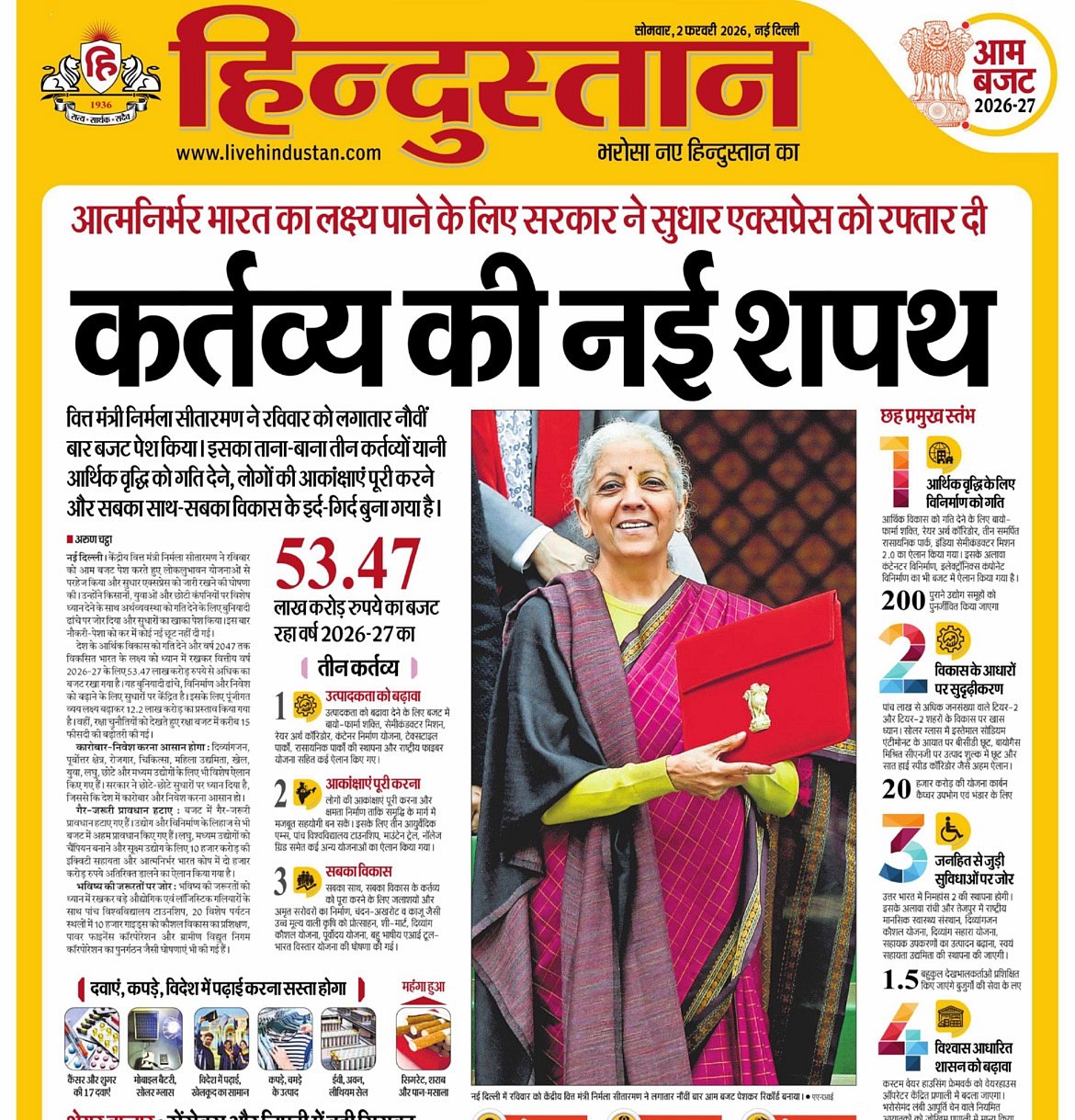
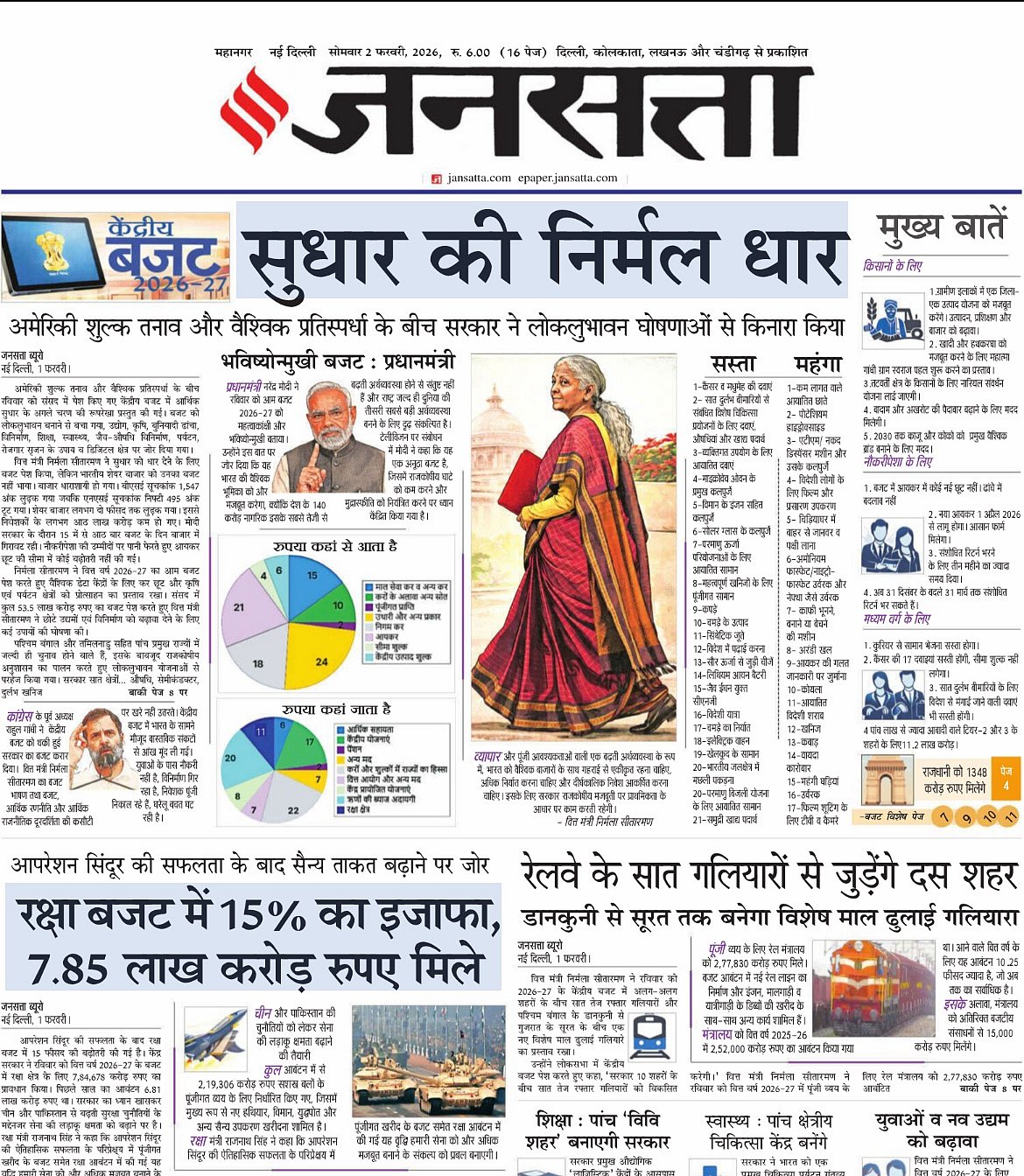
Even Hindi dailies leaned toward the same vocabulary of protection and reform rather than populism – describing the budget as a “swadeshi kawach” and a “reform express”.
Complaining about the media is easy. Why not do something to make it better? Support independent media and subscribe to Newslaundry today.
Newslaundry is a reader-supported, ad-free, independent news outlet based out of New Delhi. Support their journalism, here.