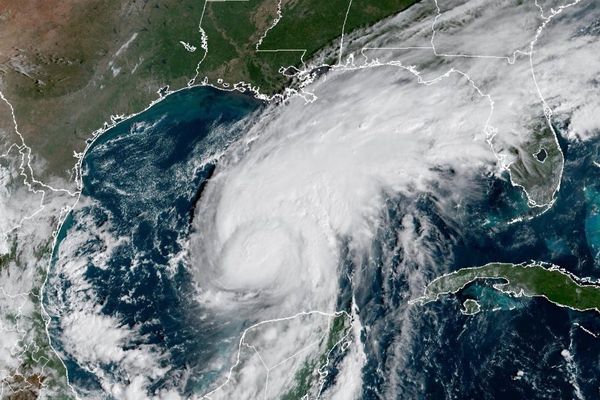
The journey of Wesley Wing, CEO of Tikimondo, into tiki art was shaped by an unusual convergence of creative influences, cultural moments, and personal experiences. For Wing, the story starts in September 1998 when Hurricane Georges moved through the Florida Keys and headed toward the Gulf Coast. According to Wing, the experience would ultimately mark the beginning of a path he has followed for nearly three decades.
After traveling to Key West to help repair storm damage on family property, Wing returned to St. Petersburg carrying a section of a fallen ficus tree that had come down during the hurricane. Back at his home, which sat on one of the city's higher elevations, friends gathered for what Floridians often call a hurricane party. Late that night, by firelight and armed with little more than a hatchet, Wing carved what became his first tiki sculpture. He recalls that the storm later weakened offshore, and the coincidence became part of a story his friends would repeat for years.

"They started calling me the tiki carver almost immediately," Wing says. "At the time, it felt like one of those moments where everything just lined up."
The timing mattered. According to Wing, St. Petersburg in the late 1990s was experiencing a surge of creative energy. Long before the city gained its current reputation as an arts destination, filmmakers, musicians, performers, and visual artists were building a vibrant community around downtown neighborhoods and independent venues.
Wing found himself at the center of much of that activity. After recovering from a serious motorcycle accident years earlier, he had purchased a home that became a gathering place for artists and musicians. He recalls documenting the scene with film cameras, recording the people and ideas that defined the era. According to him, the environment encouraged experimentation and helped shape the artistic perspective he still carries today.
Long before carving became his primary medium, Wing was working as a filmmaker. His first documentary, shot on 16mm film, explored body piercing and body modification culture. A later project focused on cyber dancers and electronic music culture at the turn of the millennium. Looking back, he sees a common thread running through much of his work.
"I have always been fascinated by people and how they express themselves," Wing explains. "Whether it was film, photography, painting, or carving, I kept coming back to the human figure."
That interest may help explain why tiki art resonated so strongly. Wing notes that many cultures throughout history have created stylized representations of the human form. As he developed his carving style, he found himself drawing inspiration from Polynesian, Hawaiian, Mayan, African, and Native traditions while developing interpretations that reflected his own artistic instincts.
Interestingly, much of what he learned about tiki history came after he began carving. He explains that books, collectors, and enthusiasts gradually introduced him to the mythology and symbolism associated with the art form. Over time, those discoveries deepened his appreciation for the traditions connected to the work.
The carving process itself remains central to Wing's creative identity. He explains each piece as a combination of structure, intuition, and physical discipline. Most carvings begin with the nose before expanding outward in symmetrical stages. Different woods require different approaches, with softer Florida palms offering one experience and dense hardwoods demanding another.
Wing compares the movement of carving to Tai Chi. Hours can pass as he guides a chainsaw through wood with deliberate precision, balancing concentration with a sense of calm. "It's creating art with a deadly weapon in a very calming atmosphere," he says. "There is something meditative about it, but there is also a level of focus that keeps you completely present."
What began as a single sculpture eventually grew into multiple carvings and the foundation for Tikimondo. Yet Wing believes the appeal of tiki extends beyond the artwork itself. From his perspective, people often respond to the feeling it creates.
According to him, tiki culture has long been associated with relaxation, gathering, creativity, and connection to nature. Whether displayed in a backyard, garden, or outdoor living space, the artwork often becomes part of a larger atmosphere.
"People connect with the feeling in different ways," Wing says. "For me, it represents creativity, freedom, nature, and the idea that you can create a space that inspires you every day. That has really been the journey behind all of this."
At nearly thirty years into that journey, Wing continues to carve, design, and create. He says, "The hurricane party may have ended long ago, but the piece of wood that started it all still echoes through every project that followed."