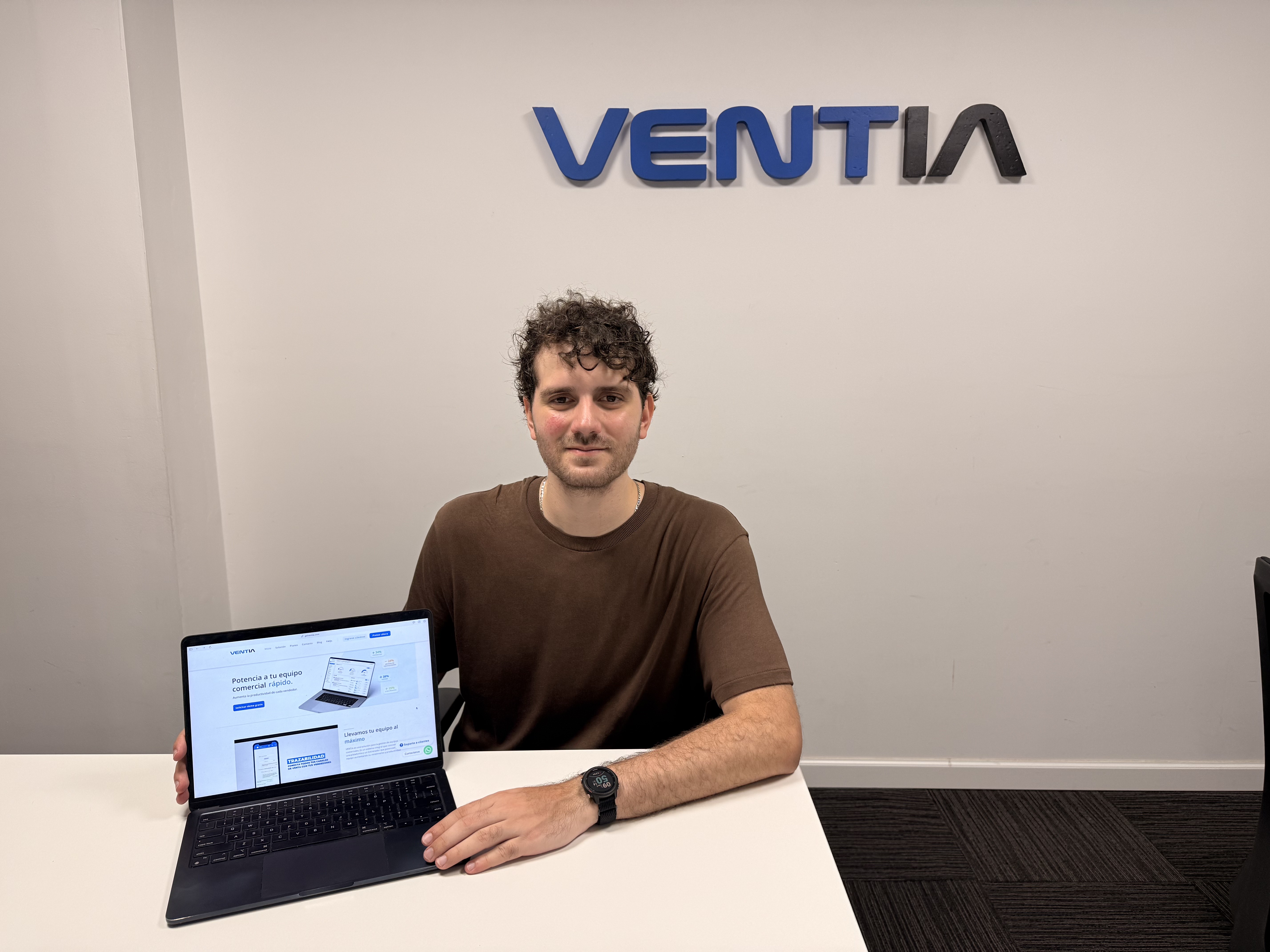
Classrooms teach theory, but startups teach survival. When systems fail and pressure is high, real learning begins. This is the environment where Agustín Suárez found his advantage. Long before formal credentials, he was already experimenting, breaking things, and putting them back together: “It was a lot of trial and error—benchmarking different systems and figuring out what actually worked,” he says.
Suárez discovered coding at 15 and quickly put it to use, despite limited opportunities around him. By 19, he had already launched his first startup and later built a career as a founding engineer and product-driven full-stack developer. Now, he mentors hundreds of founders around the world while building AI systems used by global companies: “In a small town, you either accept limits or dream bigger. For me, building was always the way out,” he shares.
He now specializes in AI integration and system design, helping early-stage ideas grow into solid, real-world platforms. This sought-after expert refined these skills by repeatedly delivering products under startup pressure. That ability to work under pressure was first tested when he joined his family’s satellite TV business, where he built CRMs, analytics pipelines, and automation tools from the ground up: “I was in charge of all the technology,” Suárez recalls. Those systems increased sales by nearly 30% and became the foundation for his first scalable product.
That early phase was witnessed firsthand by Antonio Suárez, the CEO of Ventia. They worked closely when Agustin was just 19, and Antonio recalls how a pressing sales management problem became the foundation of the company. Rather than offering ideas, Agustín took ownership and built a working platform that solved the issue in practice: “We realized this wasn’t just our problem—many companies were struggling with the same thing. That’s when we decided to turn the solution into a product,” Antonio shares.
That approach shaped Ventia’s adoption success, especially in complex environments where multiple channels had to be unified without adding friction: “Agustín builds solutions that people actually use. That mix of courage, responsibility, and practical intelligence is what makes him different—and why his work creates lasting impact,” says Antonio.
Suárez focuses on AI orchestration, which means building systems that think through problems the way humans do—step by step—instead of relying on opaque, black-box automation: “People often think AI agents are magical, but I tell teams to first imagine how a person would handle the task,” he explains. For him, AI is simply a group of models working together to recreate that process. Years of startup experience shaped this approach, teaching him that reliability and visibility are just as important as intelligence: “Sometimes the best solution isn’t in AI at all. The technique is to understand the fundamentals. Get the basics right, and AI becomes a powerful tool,” he adds.
Humble Roots That Sparked a Tech Fire
Suárez was raised in Las Piedras, a small town in Uruguay, far from major tech hubs. But tech was always around him. His parents owned a technology retail business, starting with computers and gadgets before expanding into satellite TV and other telecom services. Growing up in that environment gave him practical exposure to hardware and systems. This laid the foundation for his ability to work across the entire tech stack: “From a young age, entrepreneurship was the only path I saw. Watching my parents build their own business made freedom feel tangible,” he shares.
By age 12, he was already experimenting with small ventures: “Those projects taught me how to think end-to-end—pricing, logistics, feedback, and iteration,” he said.
But it was coding that truly hooked him. Self-taught from age 15, Suárez dove into web pages and Arduino gadgets while attending a tech-focused high school: “Tech never felt intimidating to me. After school, I’d build PCs and mess around with circuits. I just love seeing how everything worked,” he recalls.
That curiosity gradually evolved into exploring modern web frameworks and backend technologies, including JavaScript and Node.js. He also dabbled in full-stack development for the first time.
Suárez later strengthened his skills by earning an IT and Programming Technician diploma from ESI Buceo from 2017 to 2019. This helped him connect his hands-on experiments with solid programming basics and prepared him for more advanced systems work: “I knew I wanted to build something different,” he said. After graduating, he joined his family’s telecom business, where he built automation tools that increased sales by 30%. That success revealed the power of well-designed, connected systems, marking the start of his expertise in full-stack development and system optimization. It made Suárez realize how software could directly improve business results, a turning point he describes as “seeing how interconnected systems create real leverage.”
In January 2021, he began a Bachelor’s Degree in Computer Systems at Universidad ORT Uruguay, which he expects to finish in November 2026. While studying, he continued building startups: “University gave me the theory and ethics, but real work taught me how to deliver under pressure,” he shares. Balancing both worlds helped him move fast without losing technical discipline.
Bootstrapping an Empire from Scratch
At just 19, Suárez founded Ventia and took on the role of CTO. Ventia is a CRM and sales performance SaaS that he bootstrapped to $360,000 in annual recurring revenue. Over four years, the platform served more than 30 SMBs across Latin America, showing that strong engineering could compete with much larger companies.
This highly-regarded tech expert built the entire product himself at the start, using Next.js, Node.js, MongoDB, React Native, AWS, and Redis: “I built the MVP alone. I focused on real metrics and automation.” he recalls. This full-stack ownership, from backend logic to mobile interfaces, allowed Ventia to move faster than competitors.
Ventia’s analytics tools helped sales teams improve performance by up to 30%. Features like predictive lead scoring and performance dashboards were built using historical sales data. Early traction came quickly: “We got our first customer through industry referrals. Because we were one of the main satellite sellers in Uruguay, people could already see the data and the results we were getting,” Suárez shares. By September 2025, Ventia had onboarded over 30 clients across LATAM, including customers in Colombia and Argentina within months of launching, making the company international almost immediately.
As the company grew, Suárez led a team of 14 and was accepted into top accelerators such as Endeavor ScaleUp, Mana Tech Miami, and Itaú Cubo. He also designed secure CI/CD pipelines using Git and Docker to support rapid scaling: “It was hard competing with bigger companies, but we grew quickly—from our first customer to international clients in just months. We focused on modular systems so one issue wouldn’t take everything down,” he shares. That modular mindset was born out of necessity: “If one thing failed, I didn’t want the whole system to go down. We had to be careful and intentional with how everything was connected,” he explains.
Today as one of the founders of new startup called Zelto.ai he does product, sales and strategy. Zelto is a proactive user support tool for SaaS and software products that automatically detects when users get stuck during onboarding or regular usage.
It then instantly starts personalized, real-time conversations with them through channels like SMS, WhatsApp, Slack, or LinkedIn to help resolve issues before they churn.
By addressing the common problem where most stalled users (often 70%) never ask for help and simply leave, Zelto helps companies retain more users, reduce drop-off rates (especially the 60-75% onboarding abandonment), and gain valuable product insights from those actual support interactions.
That ability to turn complex sales problems into scalable systems is something Federico Barboni, Co-founder and Chief Growth Officer of Ventia, witnessed firsthand. Barboni has worked closely with Suárez for over 4 years as his co-founder, leading Ventia’s commercial strategy while Suárez built and scaled the platform's technology. Their partnership combined deep technical execution with real-world market pressure—exactly where Suárez’s strengths became most visible: “Agustín doesn’t build technology for its own sake. He starts by understanding the real pain point behind what clients think they need—and then solves the right problem,” Barboni explains.
That mindset repeatedly surfaced as Ventia expanded across Latin America, where Suárez designed a modular, ERP-agnostic architecture capable of handling large sales teams, multiple markets, and massive data volumes. Barboni recalls moments when that pragmatism made the difference: “We once needed a feature that wasn’t on the roadmap. Agustín built an MVP in a week, validated it with clients, and helped us close deals. That mix of speed, clarity, and technical depth is rare.”
That moment, Barboni explains, came during Ventia’s expansion into Peru, when a client believed they needed a specific functionality. Through deep analysis, Agustín identified the underlying issue and rapidly delivered a working solution that allowed the team to demonstrate value, validate demand, and win multiple clients in the market.
According to Barboni, it’s this ability to bridge advanced engineering with commercial reality that allowed Ventia to compete with global players and scale across multiple countries—without sacrificing product quality or stability: “Because of Agustín’s long-term vision and systems thinking, we were able to scale without compromising performance. He built a reliable technical foundation from the beginning. This gave us the confidence to expand into new markets,” Barboni shares.
Suárez’s ability to translate complex sales operations into systems that actually work was also evident to Gastón Kehyaian, who worked directly with him as a client. Kehyaian first met Agustín when he was leading operations at Viasono.com.uy and hired Ventia after discovering the company through Uruguay’s main innovation hub at Universidad ORT. What started as a few initial discussions soon became a full collaboration, with Suárez at the center of the project’s progress. Kehyaian describes him as someone who pairs deep analysis with empathy for the client’s situation: “He grasped complex challenges almost immediately and moved straight into solving them. He stayed calm under pressure and always focused on what would actually move the project forward,” he recalls.
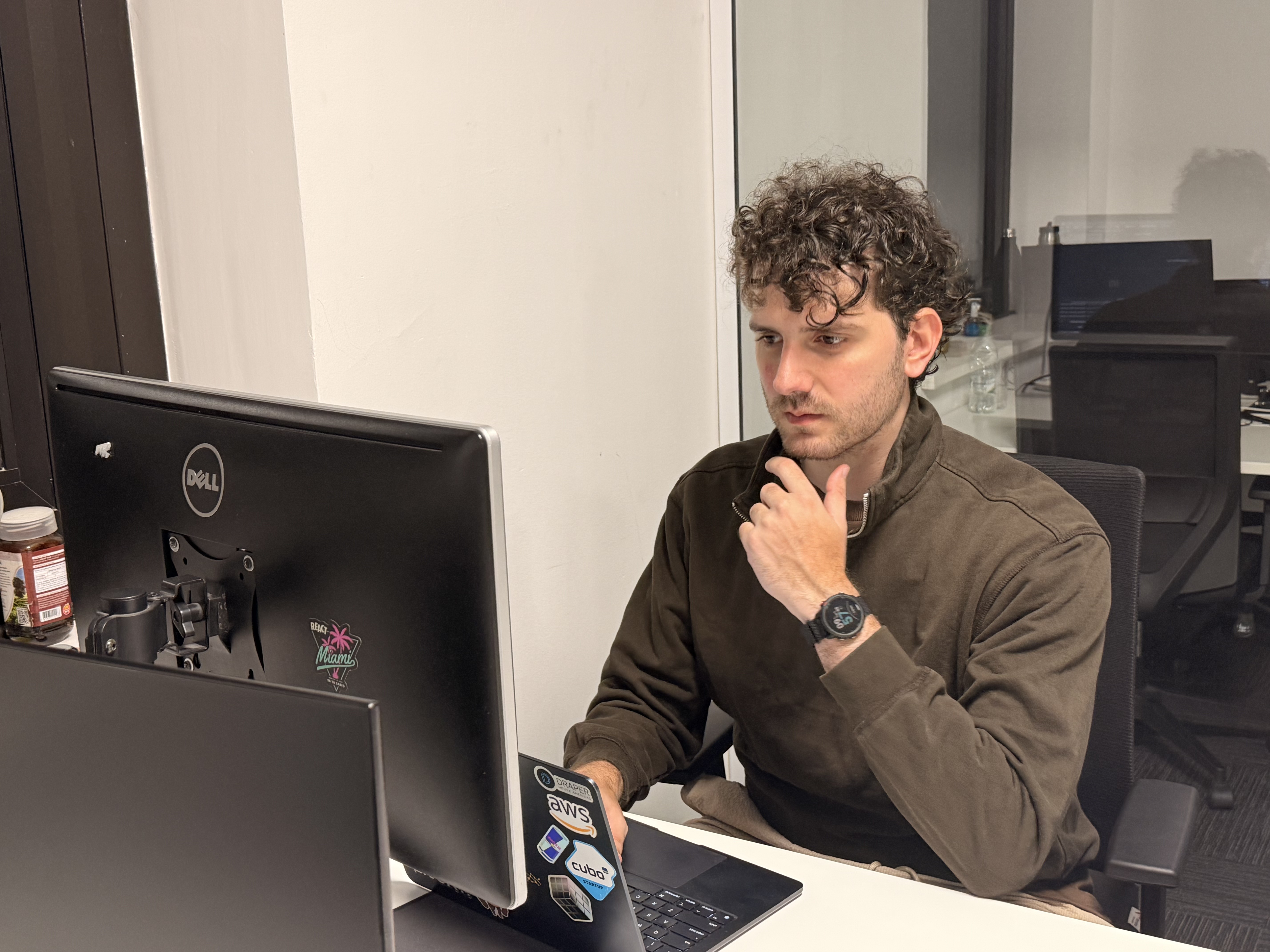
From a technical standpoint, Suárez led the integration of data from multiple systems into Ventia’s CRM, acting as a bridge between internal teams and external vendors, including Viasono’s ERP provider. But what stood out most to Kehyaian wasn’t just the technical delivery—it was how Agustín worked with people: “He understood the commercial reality of our business,” he explains, referring to Viasono’s consultative sales model in home products like furniture and mattresses. “He didn’t force technology onto us. He shaped it around how we sold,” Kehyaian adds.
Throughout the process, Suárez was consistently transparent, proactive, and solution-oriented, even in difficult moments. Kehyaian adds that Agustín’s professionalism was matched by a human touch: “He combines strong technical skills with great communication and even a sense of humor—which makes a huge difference when you’re solving hard problems together.”
In October 2025, Suárez joined startup Domu as its first technical hire and Founding Engineer. There, he cut database load by 80% and built queue systems that process millions of AI calls every month. He described this phase as one of the most technically intense of his career: “We were growing really fast, so we had to recalibrate infrastructure, systems, and customer services all at the same time. That’s the kind of thing that keeps you up at night,” he recalls.
By restructuring PostgreSQL schemas and optimizing queries, he helped stabilize Domu’s rapidly expanding Voice AI platform: “If the system is brittle, even the smartest AI won’t survive growth,” he said.
His work now supports enterprise clients like Chubb, where AI voice agents manage collections, process payments, and recover millions in revenue—without adding staff. At Chubb, those agents operate under high demands, calling customers after failed payment attempts and handling collections that would otherwise require large call center teams: “If we didn’t do this, many of those accounts would simply stop paying,” Suárez explained.
He also built internal tools that made it easier for teams to manage and monitor these AI agents, ensuring companies maintain full oversight of customer experience rather than outsourcing it to opaque third-party call centers: “AI only adds value if teams can operate it themselves. That means building internal systems where performance, failures, and decisions are visible and not hidden behind a vendor. If something goes wrong, the team needs to know why immediately. That’s impossible when customer interactions are buried inside third-party systems you don’t control,” Suárez explains.
Giving Back: The Mentor Inspiring a Generation
While Suárez has built successful products, he’s best known for helping others do the same. Selected as one of Uruguay’s top seven engineers for the Puentes program, he traveled to San Francisco, where he built connections with Y Combinator–backed startups and AI companies: “They selected the seven best engineers they could get from Uruguay and brought us to San Francisco to meet founders and entrepreneurs. After that week, I stayed six more months in SF and really got into the ecosystem. That experience showed me that your background doesn’t define your limits,” he recalls.
Since then, this tech expert has mentored early-stage founders through programs like Tribu CTO Mentoring and Emprelatam. He helps teams build AI into their products from the start, and not as a last-minute feature. Suárez’s guidance comes from lived experience—learning by building, failing, and improving in real-world environments: “AI changes how everything works. That’s why it should be embedded in the product foundation. You can’t just add it at the end,” he said.
He has mentored multiple startups on AI MVPs, taught hundreds of students at Universidad ORT, and shared insights at conferences in Montevideo and Bogotá. In total, he has directly helped 8–12 startups, taught or spoken to over 200–300 students through classes, and reached more than 500 people through talks, panels, and community events.
He is also known for translating complex AI concepts into practical, deployable systems using tools like OpenAI’s API: “AI is new, and there aren’t many books yet. You have to read papers, test things, fail, benchmark systems, and then extract where the real value is,” Suárez explains.
Thanks to his practical approach, he can fill in the gaps that many academic programs lack: "I love closing knowledge gaps on AI. Sharing what I’ve learned from papers and real trials helps founders move faster and avoid costly mistakes," he says.
That same mindset shows up outside of tech. A marathon runner and fitness enthusiast, Suárez sees startup building much like endurance sports. Success doesn’t come from quick wins, but from consistency, patience, and long-term thinking. For him, background has never been a limitation: “I come from a small country—about three million people—but that doesn’t define what you can achieve. No matter where you start, you can still build a good life. Origins don’t limit you. Lack of grit does,” he shares.
Suárez’s path, from teaching himself to code to becoming a global voice in AI, proves that where you start matters less than staying curious, disciplined, and persistent. And that real success is measured not just by what you build, but by who you help along the way.