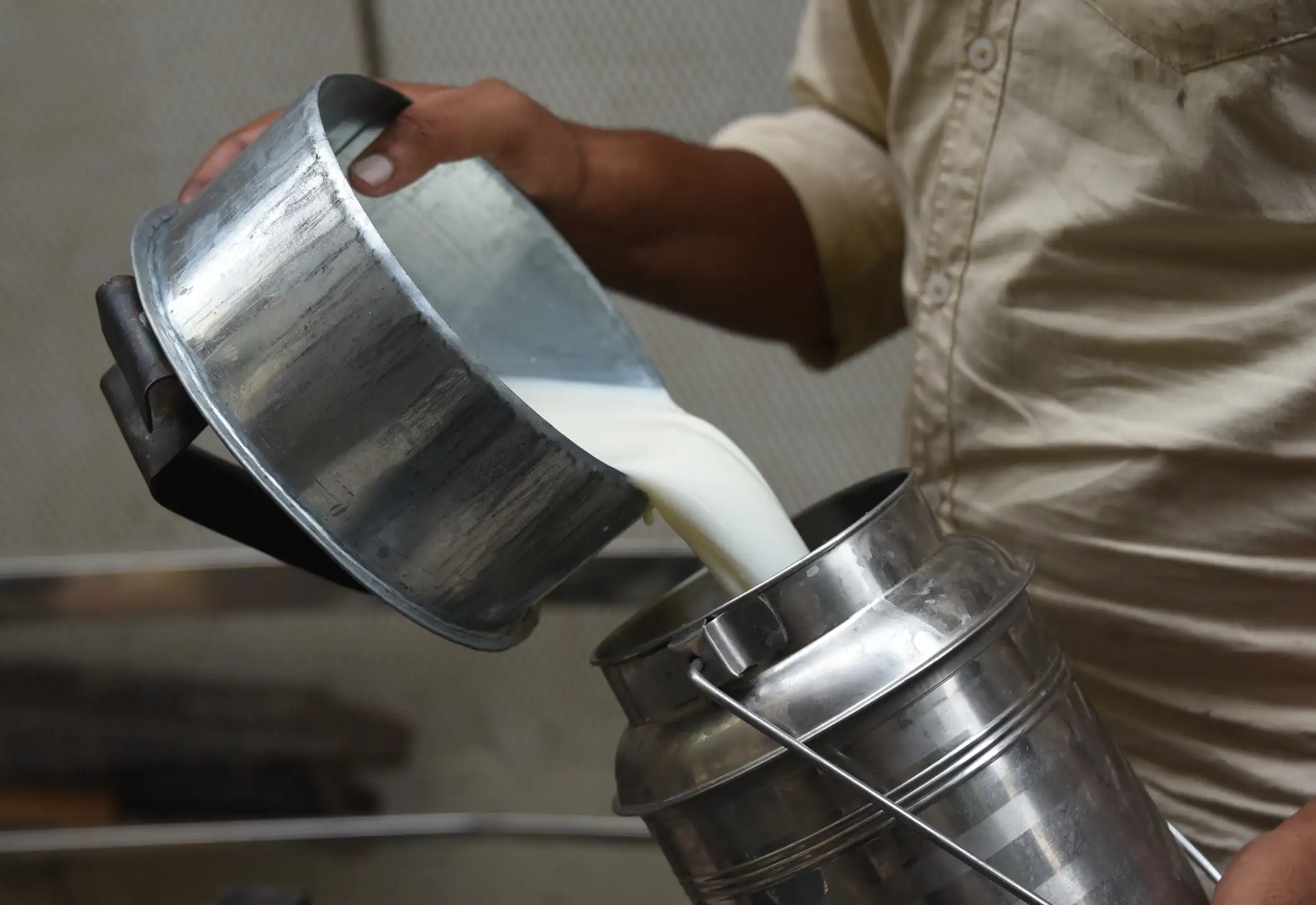
India is the world’s largest milk producer, yet it accounts for a small share of global dairy trade. The gap between production and exports is fueling a broader debate over the role of free trade agreements (FTAs): should India continue using these trade ties primarily to protect its dairy farmers from imports or leverage them to make the sector globally competitive?
According to industry experts, India needs a balanced approach. In the short term, the focus should be on protecting the dairy sector from imports. At the same time, FTAs should be leveraged to push long-term reforms in productivity, quality, food safety, processing, and infrastructure.
In 2024-25, India produced 247.87 million tonnes of milk, retaining its position as the world’s largest milk producer. Yet its share in the global dairy export market remains less than 1% of its output as most milk is consumed domestically.
In April, Commerce Minister Piyush Goyal reiterated that India had offered no dairy tariff concessions in its FTAs, including agreements with the European Union (EU), the UK, New Zealand, and Australia. The cautious approach reflects the structure of India’s dairy economy. Unlike developed dairy markets dominated by large commercial farms, India’s dairy sector supports around 80 million small and marginal farmers, many of whom own only a few animals.