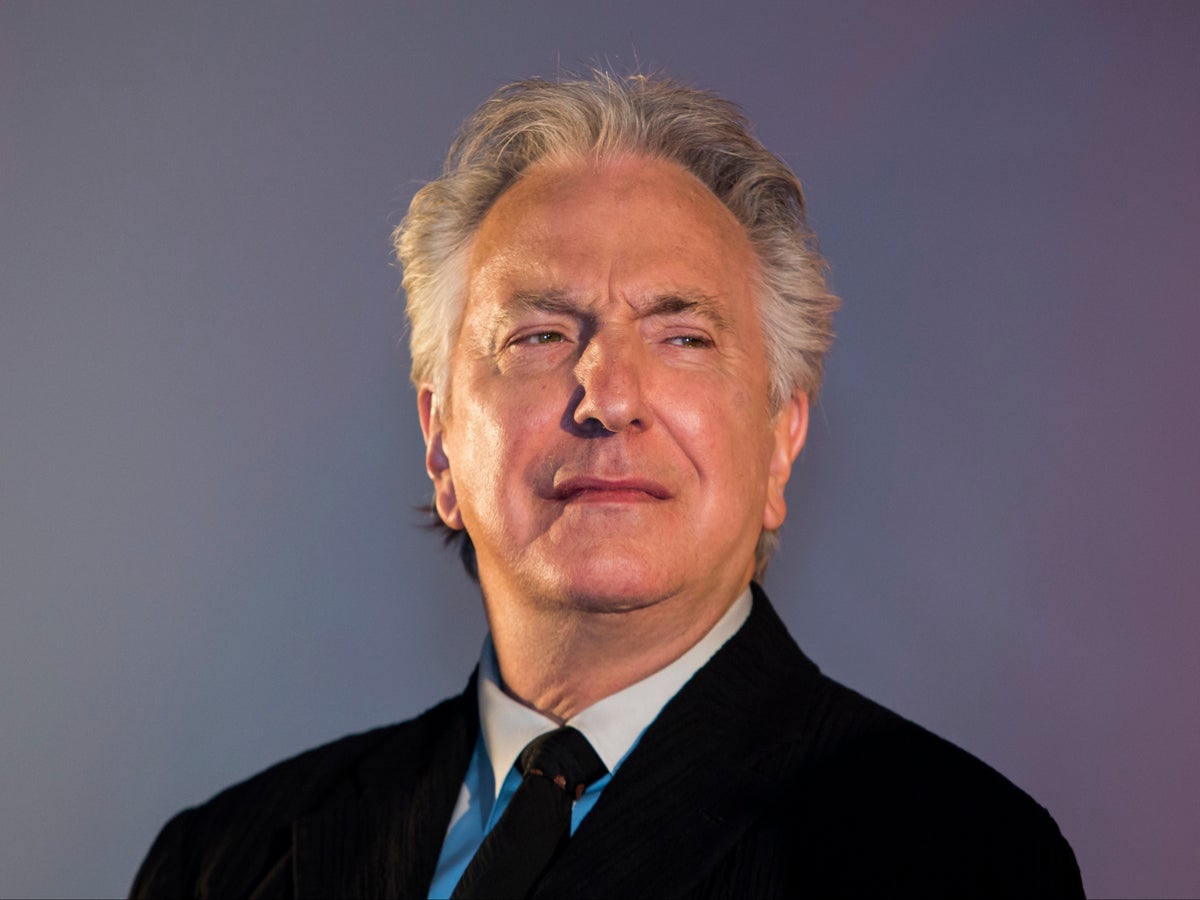
There’s an interview with Alan Rickman from 1991; you can find it on YouTube. At the time, he was best known for his roles as criminal mastermind Hans Gruber in Die Hard and the tyrannous Sheriff of Nottingham in Robin Hood: Prince of Thieves. The journalist – American – asks him, “Do you like playing villains?” The actor’s lip begins to curl. “Sure… it was fun.” He explains, patiently, that he’s done other things. The journalist ploughs on: “You don’t intend to keep playing these hyperbolic Hollywood villains?” Rickman, presumably now saying swear words in his head, replies, “Prrrrobably not”; he doesn’t think, as an actor, there’s anywhere else to go. The exchange only becomes more enjoyable once you’ve read his diaries, published today and covering his life and career from 1993 up to his death in 2016. Few things irritated Rickman quite so much as a journalist’s inane questions. Perhaps it was only Gruber that was a fan of Time magazine.
But that villain label did stick. Which Rickman baddie hurt you the most? (For me, the disloyal, Joni Mitchell CD-buying husband in Love Actually, of course.) Perhaps it’s ironic, given he seemed so keen to escape it, that Rickman ended up being best remembered for playing the sneering Professor Severus Snape in Harry Potter. Or perhaps it’s fitting. Snape, who languidly uttered words about how to “bewitch the miiind and ensnaaare the senses”, was cold, disapproving, enigmatic and – as it turned out – not whom he appeared. He was a hero masquerading as a villain. Rickman, with his distinctive lugubrious voice and penetrating stare, seemed hard of exterior – but after his death, stories emerged of his generosity. He gave money to acting students; his visibly emotional Truly, Madly, Deeply co-star Juliet Stevenson said on Newsnight that the acting community felt it had “lost the steering wheel in our car”. Emma Thompson, whom he appeared alongside in Sense & Sensibility and Love Actually, and directed in The Winter Guest, writes in the foreword, “There was something of the sage about him – and had he more confidence and been at all corruptible, he could probably have started his own religion.”