
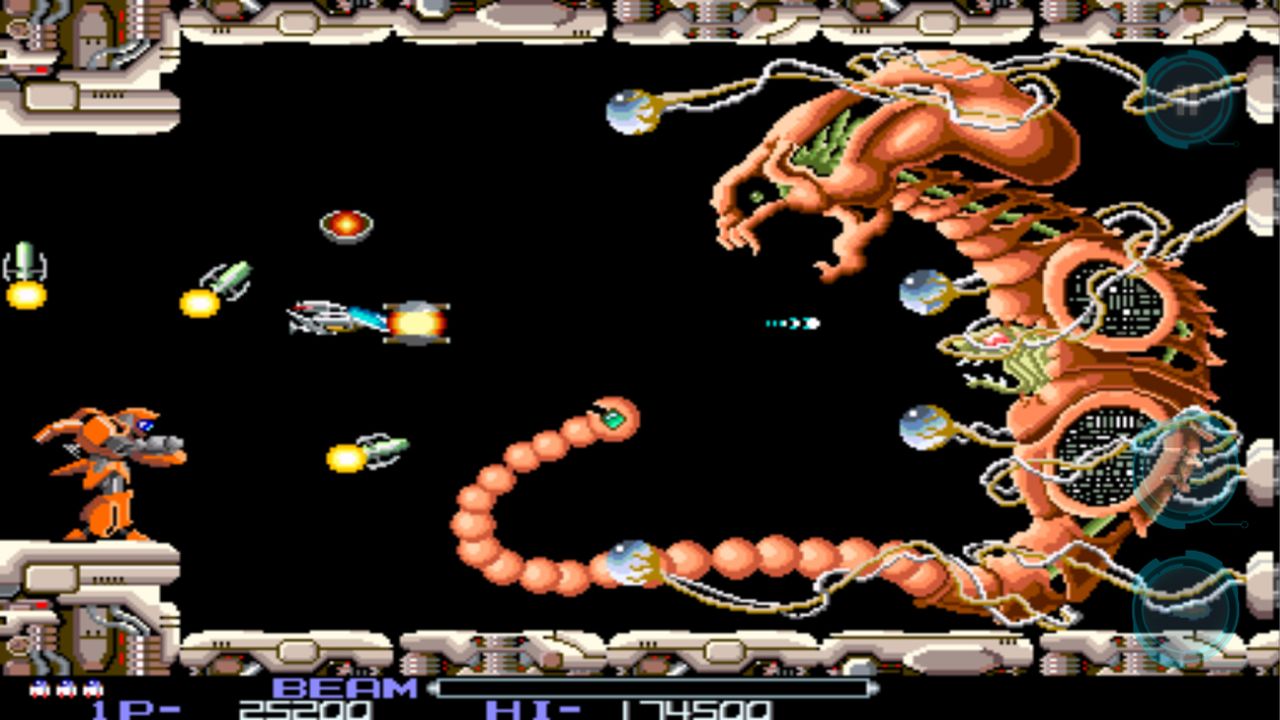
Few arcade shooters have left fingerprints as deep as R-Type. Its imagery is burned into the collective memory: the Force ping-ponging about the screen, the Wave Cannon charging in silence, levels that feel less like stages and more like hostile ecosystems. But to understand why R-Type landed with such force in the late 1980s, and continues to inspire with R-Type Delta: HD Boosted, and be replayed (I have the Evercade cart), you have to look beyond the screen and back to Irem itself, and the particular moment in arcade history that shaped it.
By the mid-80s, game arcades were brutally competitive spaces, and shooters were locked in an arms race of spectacle and difficulty. Companies like Toaplan, Konami, and Namco were iterating rapidly, but Irem carved out a different identity. Where many shooters leaned into speed and reflex, Irem’s games often felt heavier, more deliberate, more spatially oppressive. Retro games like Image Fight and Mr. Heli prioritised enemy behaviour, positioning, and pressure over raw screen-filling chaos.













