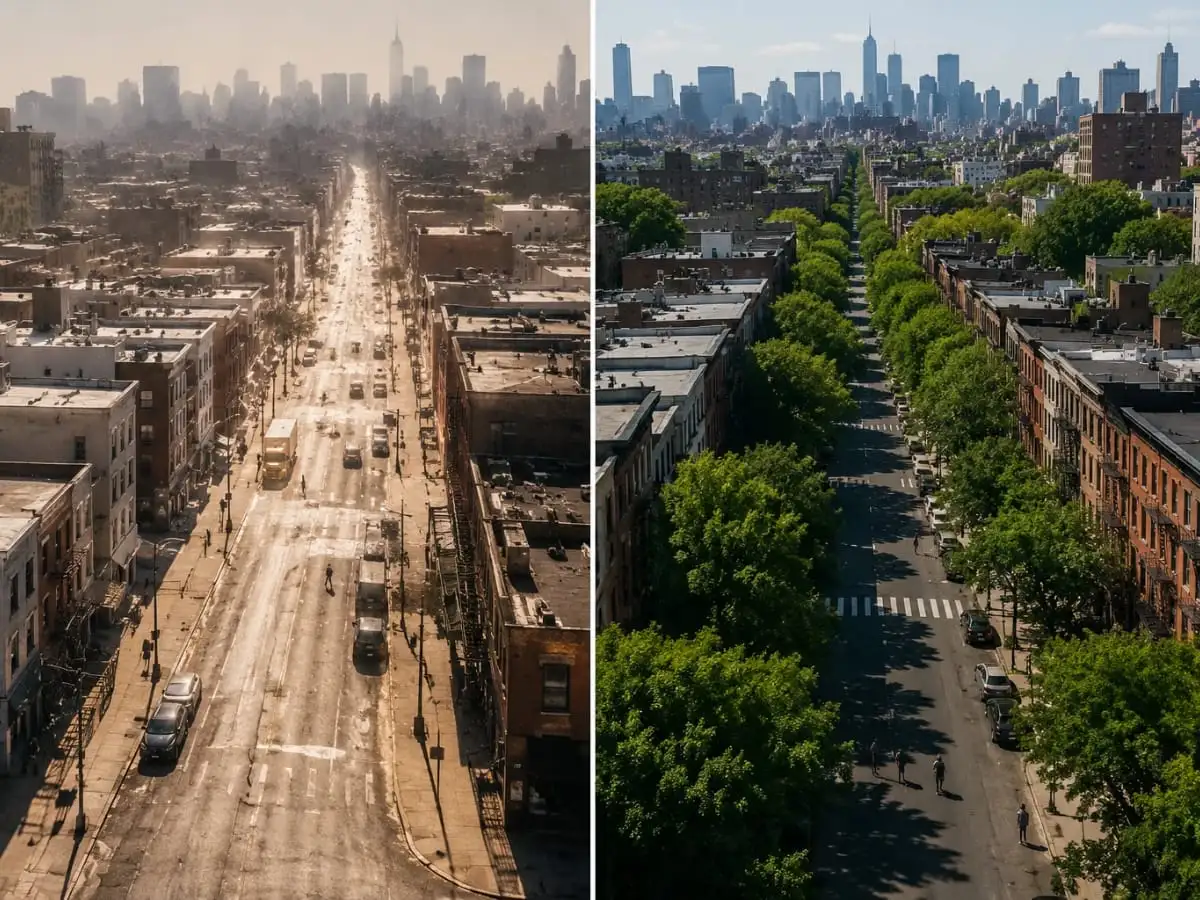
“The best time to plant a tree was 20 years ago. The second-best time is now.” New York City took that maxim to heart, and then scaled it by a millionfold. Soaring towers and sweltering summers saw the city embark on an unprecedented urban greening initiative from 2007 to 2015. According to the MillionTreesNYC initiative, one million trees were planted years ahead of schedule throughout all five boroughs, transforming sidewalks, parks, schoolyards, public housing, campuses, and forgotten concrete corners into living infrastructure in the city.
A slogan for the environment became a citywide mission. The project wasn't just about aesthetics; trees were designed as climate infrastructures that would cool overheated neighborhoods, act as air purifiers, reduce stormwater runoff, and even turn the world's densest city into a more resilient one.