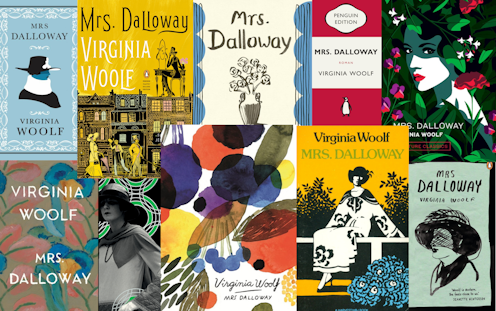
I’m at the park with my daughter, who is jumping in and out of puddles, splashing, shrieking at me (Mum! Look what I can do!), as I read frantically, taking one-handed notes on my phone (Mum! Look at this!). Part of me wishes I could enjoy with her this moment of pleasure in movement. The other, more insistent part is thinking about this essay: where to start, what to say, how to sum up the extraordinary legacy of the book I’m re-reading, Virginia Woolf’s Mrs Dalloway, which this year marks 100 years since its first publication in 1925. How am I supposed to write about this book?
If you were to read a synopsis, it might seem like a book purely for an academic specialist (which, admittedly, I am). One day in London in June 1923, an ageing rich woman, Clarissa Dalloway, prepares to give a party. Across town, a shell-shocked Great War veteran, Septimus Warren Smith, loses his grip on sanity. Between them oscillate other characters: Clarissa’s former lover Peter Walsh, Clarissa’s husband Richard and daughter Elizabeth, Elizabeth’s tutor Doris Kilman, Septimus’s wife Rezia, and his doctors Holmes and Bradshaw.