Get all your news in one place.
100’s of premium titles.
One app.
Start reading
Radio France Internationale
National
RFI

French watchdog flags heart, lung and cancer risks as vape use grows

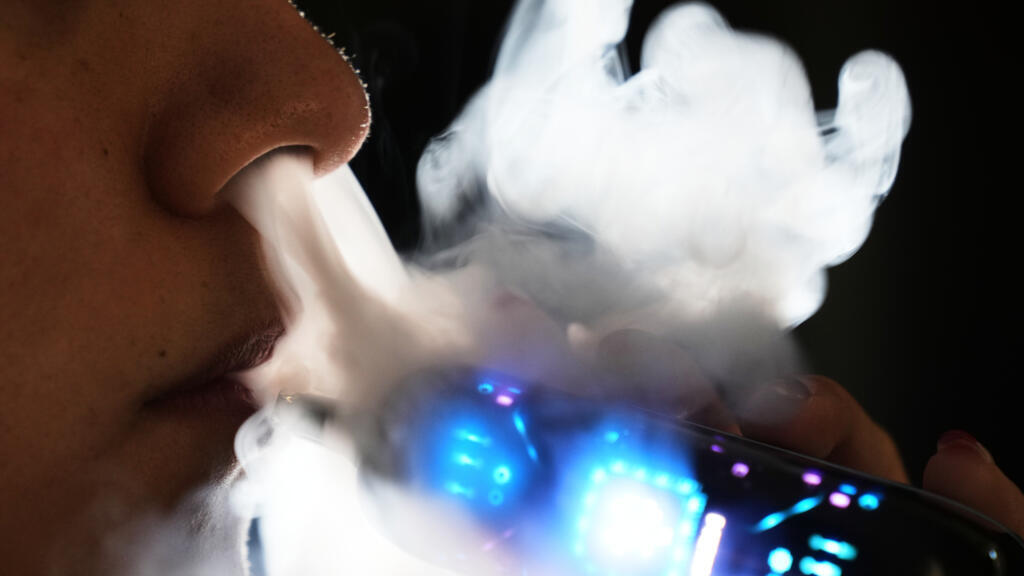
France’s public health agency says vaping is not risk-free, warning of possible heart, lung and cancer-related effects and growing use among teenagers who have never smoked. AP - Marco Ugarte

Vaping poses possible heart, lung and cancer risks, France’s national health agency warned on Wednesday, as it raised concerns about long-term use and the growing appeal of e-cigarettes among teenagers.

Anses, France’s public health and food safety agency, said vaping is often seen as an alternative to smoking but is “not without risks” for health.

About 6 percent of people in France vape daily, or more than three million people, according to 2024 figures from Santé publique France, the national body responsible for monitoring population health.

While the harms of tobacco are well documented, Anses said the health effects of vaping are less well known, particularly in the medium and long term.

Scientific studies suggest vaping “is associated with possible health effects in the medium and long term”, notably for the cardiovascular and respiratory systems, it said – adding the risks are linked to repeated inhalation of toxic substances.

This included aldehydes, which were described as irritants with cancer-related effects.

“The absence of combustion does not mean absence of exposure to dangerous substances,” Anses warned.

The work drew on nearly 3,000 scientific publications, international reports and industry declarations, with 14 experts involved.

“Our aim is to look at everything science says and assess the strength of the evidence,” said Carole Leroux, one of the coordinators of the Anses analysis, speaking to the press ahead of its publication.

Psychedelic therapy gains ground in Europe, under strict conditions

Harms over time

Anses said nicotine-containing vaping products carry a probable risk of cardiovascular effects, such as increases in blood pressure and heart rate. It said studies also point to possible effects on the respiratory system, including chronic lung disease and lung inflammation.

On cancer, several studies showed biological changes compatible with early stages of cancer development, but Anses said these do not allow it to conclude that e-cigarettes have a cancer-causing effect at this stage.

The agency also flagged possible risks during pregnancy. Vaping, particularly when nicotine is used, has “possible harmful cardiovascular and respiratory effects” on children exposed before birth, including changes to heart and respiratory cells as they develop.

Anses stressed that vaping’s effects are not as severe as those caused by tobacco.

Tobacco use is France’s leading cause of avoidable early death, killing about 75,000 people each year, including 45,000 from cancer.

Benoît Labarbe, who heads the Anses unit that evaluates tobacco and related products, said that e-cigarettes can help people quit smoking but “must remain a transitional option”.

French gut study explores how microbes influence health over time

Youth uptake

Anses warned about how long people keep vaping. In 2023, 32 percent of vapers in France had been using e-cigarettes for more than four years, up from 24 percent in 2022.

“This trend reflects a stabilisation and growing loyalty to e-cigarettes among regular users,” the agency said, adding that longer use is often seen among former smokers.

A 2023 Anses study also looked at teenagers and said adolescent users have “their own dynamics and motivations”, different from adults.

Among 510 teenagers aged 13 to 17 who were surveyed, 32 percent had never smoked or had only tried a cigarette once, a “much higher proportion” than among adults, where the figure is 2 percent.

This “reflects entry into vaping without prior tobacco use, often driven by curiosity, taste or a fashion effect,” Anses said.

There was not sufficient hindsight on cancer risks because vaping products only emerged in the early 2010s.

The agency said the question is also harder to study because most adult vapers are current or former smokers and it recommended an in-depth study of those who have never smoked.

Sign up to read this article
Read news from 100’s of titles, curated specifically for you.
Already a member? Sign in here
Related Stories
Top stories on inkl right now
One subscription that gives you access to news from hundreds of sites
Already a member? Sign in here
Our Picks
Fourteen days free
Download the app
One app. One membership.
100+ trusted global sources.