
Founded in North Yorkshire in 2010 by a husband-and-wife team with extensive experience in the outdoor and hiking-boot industry, Freet is a British barefoot brand that designs and makes comfortable, robust, high-performing zero-drop trail-running shoes, as well as walking footwear.
I won’t lie, I’d never heard of them before my editor asked me to test the Howgills, so I was very intrigued to see how their footwear would present itself and perform. There is so much competition in the quality running shoe market these days, with massive names like Hoka releasing new shoes all the time and dominating the space, that it’s hard to see how a small independent brand can get noticed and tread its own path.

But I instantly took a shine to Freet’s approach. Using mostly recycled materials, like BottleYarn (a material made from recycled plastic bottles) and Coffee Yarn (a textile created from recycled coffee grounds – yep, really), the brand keeps price points reasonable and incorporates elements of their local landscape into the shoes they produce.
The Howgills, for example, are named after the Howgill Fells, a series of hills that roll across the lovely landscape between England’s Lake District and the Yorkshire Dales, where you can find some spectacular and uncongested trails with eye-wateringly wonderful views.
When the shoes arrived, I instantly liked their look, with their bootie design, wide toe box (which suits my feet), and tough outsole. So far, so good, but how would they actually perform? I’ve spent the last two months finding out, across a wide range of terrain, culminating in a trail-running trip to the Peak District, close (ish) to where they were conceived.
Freet Howgill Review
Price and availability
Available in two colourways (black and grey or Khaki green – they don’t mess about with pretentious colours in Yorkshire, and quite right too), the Howgills can be purchased directly from the Freet website if you live in the UK (where you can expect to pay £90), the USA or Canada (US$115) or an EU country (€105).
Design and materials

The Howgill has a cuff that sits around the ankle bone, which makes it look more like a bootie than most barefoot shoes. The fabric is soft, so this collar doesn’t provide support as such, but it does prevent grit, dust and sand from getting into the shoe – reinforced by the all-in-one, sock-like design of the upper.

The flyknit chassis of the Howgill shoe is constructed with BottleYarn, a material made from recycled plastic bottles, featuring a moisture-moving mesh lining to wick sweat away from the foot and a ventilation panel on top. It's designed to be breathable, offer some water repellency, and be hard-wearing and durable.

Although the Howgill looks and feels like a barefoot shoe, it does have a minimalist 'SoftFlex' midsole, and the shoes come with a 3mm AirMax insole, which is removable if you prefer, but it provides some cushioning and prevents the studs from pressing through when you’re running on hard surfaces. The fully flexible outsole features 'HillGrip' tread pattern with 4mm lugs for a secure grip on a range of surfaces.
Performance and comfort
I found the Howgills instantly comfortable to walk and run in. My initial outings in the shoes were around London parks and on longer jogs on mixed terrain, including canal paths, dirt trails and city streets.
I’d been wearing a more traditional-style running shoe (the Lowa Skyterra, which features a 33mm stack) for months before switching to the Howgills, and it took a bit of time to get my leg muscles used to barefoot running again, especially on such hard-packed terrain.
For the first few days, my calf muscles ached a little bit, but the transition was easier and quicker than I’ve experienced when switching to other barefoot models. This was thanks in part, I think, to the thin midsole and comfortable inner that come with these shoes (which the purists can remove if they prefer).

The padding provided by the mega minimalist midsole and 3mm insole didn’t dampen the ground feel or interfere with trail feedback, but it did make things more comfortable on mixed terrain, and it was enough to prevent the 4mm lugs pressing though to the bottom of my feet.
As a result, the shoes provide both a comfortable ride and plenty of confidence-inspiring grip – they really are like slippers with studs.
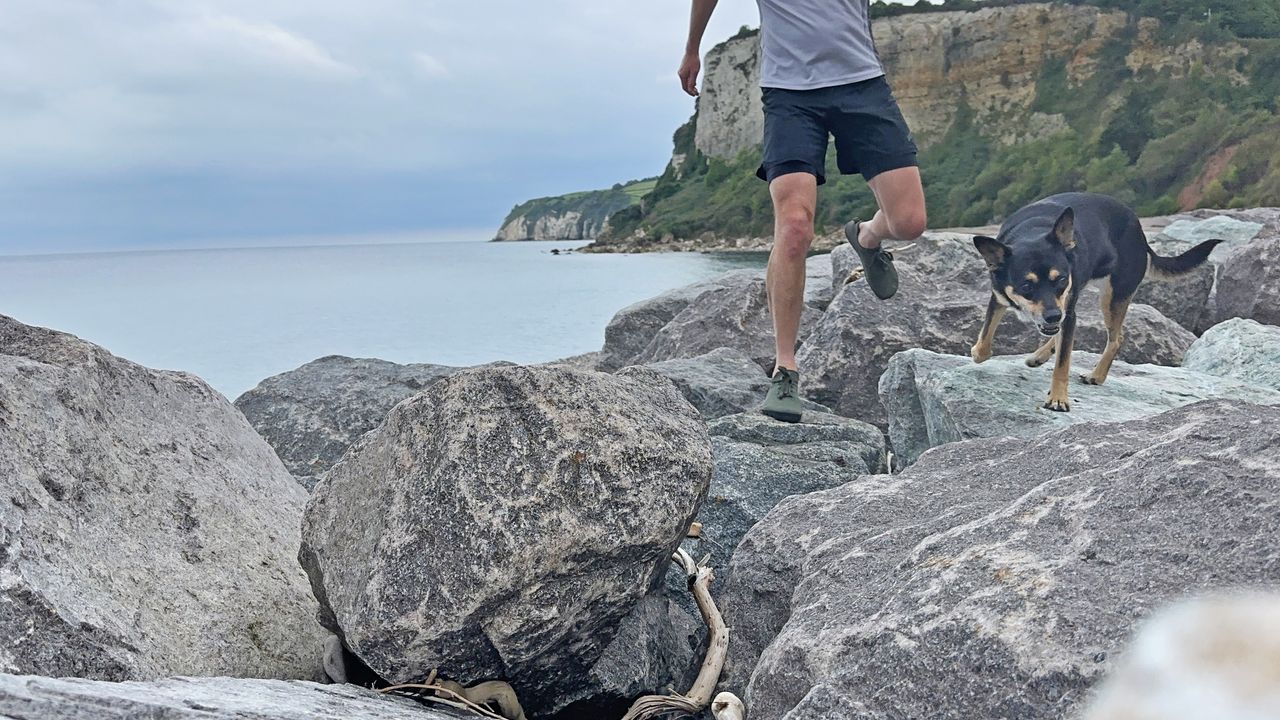
Soon I was back in the countryside, running regularly on softer terrain ranging from woodland and clifftop paths to beaches. And this is where the Howgills really came into their own. I actually tried switching back to standard running shoes with big midsoles a couple of times, and my body was not happy.
I’d become so used to running with the tactile gait you naturally adopt with barefoot shoes, landing on my forefoot and generally treading more lightly, that my back began to hurt if I wore anything more padded, and it felt like I was clumping clumsily around the trails. It’s lucky I like them, because it looks like I’m going to have to keep running in the Howgills from now on.

I had a couple of events looming on the calendar that would take me across the lumpy landscape of the Peak District. I know how rock-strewn some of the trails are up there, and I considered reverting to a shoe with more underfoot protection. But I also knew the Howgills had been designed to tackle tough terrain in Yorkshire, and this was the perfect opportunity to test them properly.
I wore them for a run around the sprawling expanse of Lyme Park (renowned for having one of England’s toughest parkruns). The following day, during the main event I’d travelled for – the mid-distance Castle and Cake race – the route took me from Castleton, up along Cave Dale, over the shoulders of Mam Tor and Back Tor, before returning via Hope Valley.
The trails were stony and technical, but the Howgills performed perfectly as I’d hoped they would. The outsoles supplied grip on terrain ranging from slick, wet rocks, mud, and slippery tree roots to dusty, loose gravel.
The ankle-high upper design kept all the trail debris out, and the modest cushioning from the midsole and insole was just enough to keep me comfortable without dampening the trail feel.

There’s always a bit of debate about whether you should wear socks with barefoot shoes, and different people have strong opinions in both directions. Personally, I prefer to go sans socks because I find the shoes easier to put on (especially the Howgills) with bare feet, and it lets me spread my toes properly and breathe better.
Often, the downside of this approach is that the material can rub your skin, and the shoes start smelling like Satan’s armpit after about a week, but weirdly, neither of these things has happened with the Howgills, and I’ve got well over 100ks on the clock with them now.
Usually I am of the opinion that trail-running shoes should not be waterproof, because having a membrane like Gore-tex in the mix makes shoes expensive and, while you might keep water out, the sweat you generate from the inside (because they’re never as breathable I you’re told they are) will make you damp, and when water does get in, over the top, it can’t easily escape, so you run around sploshing.

However, Freet’s Howgill shoes are water-resistant (and they really are – I have stood in a flowing stream for ages in them without getting wet feet), but also breathable and quick-drying. I guess this is achieved with the yarn used, rather than a membrane, but however it’s done, it’s very impressive.
Verdict
I’m genuinely not prone to giving gushing reviews, but I’ve been seriously impressed with these shoes. The Freet Howgills are super comfortable, with optional midsole and insole inserts that together supply just the right degree of cushioning while still allowing loads of trail feel.
They repel water enough to keep your feet warm on chillier days, but they still breathe well, and don’t seem to get too smelly even when worn without socks. They offer great grip and durability. And they’re affordable and made with recycled materials. What’s not to love?
Also consider
The Vivobarefoot Primus Trail Flow shoes are another decent barefoot option that offers additional toe protection, but they're considerably more expensive than anything in Freet's fantastic footwear range.
For a more standard trail-running shoe, with a regular stack and an outsole that will last longer than humanity itself, the Inov-8 Trailfly G270 V2 is a great shoe. Or, if you really want to run around on a big bouncy mattress-like midsole, check out the Hoka Speedgoat 6.







