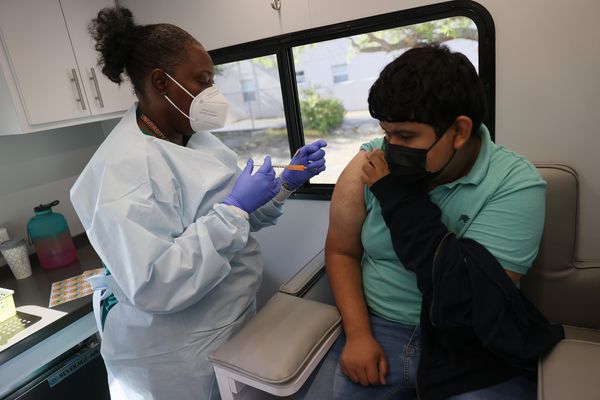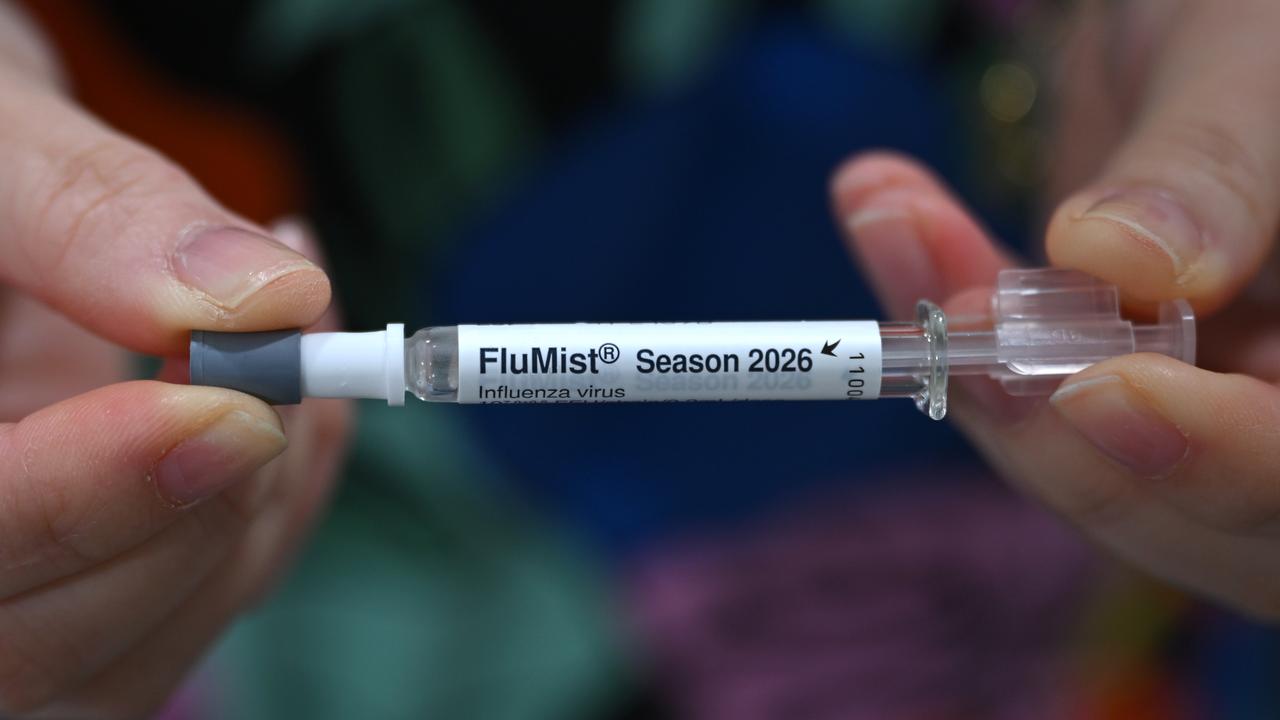
Hundreds of thousands of children can receive a painless, needle-free flu vaccination for free, but experts want more done to curb falling vaccine rates.
NSW has become the latest state to offer a free nasal spray flu vaccine to children, following Queensland, South Australia and Western Australia.

The needle-less vaccine is applied with one spray into each nostril, making it a gentle and painless option that could make it easier for parents to get their children vaccinated.
"There's a bit of vaccination fatigue, and sometimes for parents it's difficult," NSW Health Minister Ryan Park told reporters on Tuesday.
"A needle-free alternative is a real win."
NSW and SA are funding the free treatment for children aged two, three and four, Queensland is offering it to those between and including the ages of two and five, and WA is funding it for kids between and including the ages of two and 11.
Anyone else under 18 would have to pay about $50 to $70 for the spray, prompting the Royal Australian College of General Practitioners Victoria to call for free access to be expanded to lift vaccine uptake and ease pressure on hospitals.
Though the flu jab is recommended yearly for everyone over six months old, vaccination rates for those under five - who are at higher risk of becoming seriously unwell from the flu - have dropped significantly.
By September 2025, only 25.7 per cent of these children had received a flu jab compared to 44.6 per cent in 2020, according to the National Centre for Immunisation Research and Surveillance.
NSW recorded its highest number of flu cases across all age groups in 2025, with emergency departments receiving more than 4600 presentations for influenza-like-illness in children under five, and more than 960 hospital admissions.
That marked a 40 per cent increase in both presentations and admissions.
While the needle-free vaccine option has been welcomed by immunisation experts, more must be done to address other barriers.
A new report from the National Vaccination Insights project found the number of parents who would not prioritise the flu vaccine increased from 15.7 per cent in 2024 to 32.3 per cent in 2025.
The proportion of parents who did not believe the flu vaccine was effective jumped from 9.7 per cent to 22.2 per cent, and those who did not believe it protected others grew from 9.5 per cent to 18.5 per cent.
"The nasal spray vaccine is likely to reduce distress and improve parents' access ... however, it won't fully address why influenza vaccination is being deprioritised - we need to address the underlying attitudes and beliefs directly," lead author Maryke Steffens said.