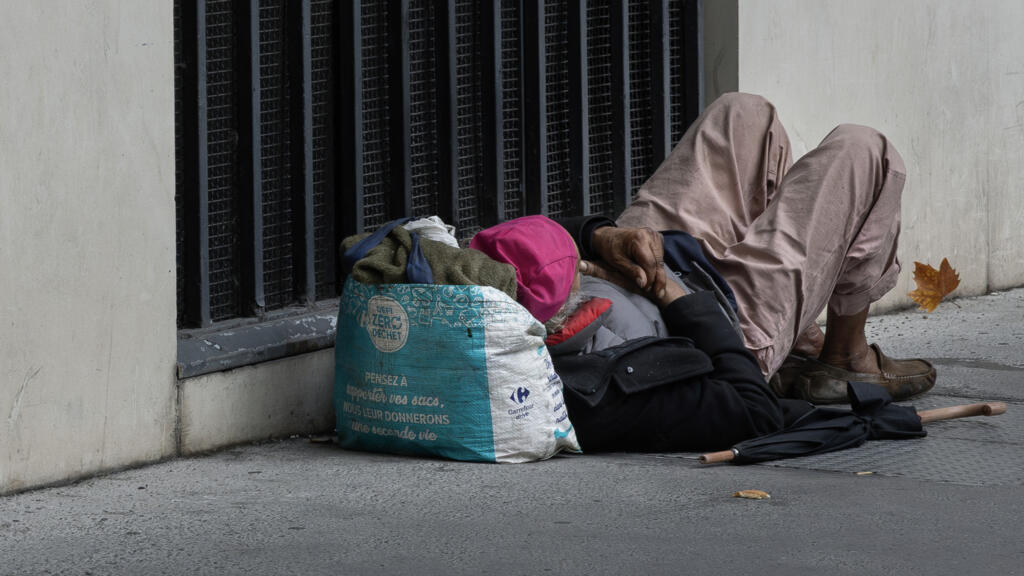
Families, people grappling with health issues and many foreign nationals are slipping deeper into poverty in France, according to charity Secours Catholique, which says the profile of those seeking help has changed dramatically over the past three decades.
According to Secours Catholique's latest annual report, released on Thursday, the median monthly income of the people it supports fell to €565 in 2024 – down from €658 in 2014.
Nearly all of those the organisation assists – around 95 percent – were living below the poverty line last year. That threshold is defined as 60 percent of the national median income, or €1,316 per month for a single person in 2024.
And 74 percent were living in what is classed as extreme poverty – below 40 percent of median income, or €877.
It’s a long-term shift that worries the charity. “Thirty years ago, poverty was considered unbearable and a problem that had to be fought,” said Secours Catholique’s president, Didier Duriez.
“But since the 2010s, people in precarious situations have been stigmatised and often considered to be welfare recipients,” said Duriez, who called for a political “wake-up call”. Without one, he warned, “the situation will get even worse”.
France faces homelessness crisis as deaths and child poverty soar
Foreigners living in precarity
Secours Catholique supports more than a million people each year, and the charity says a growing share of them now have no formal income at all.
In 2024, more than a quarter – just under 26 percent – were surviving through “resourcefulness” and the solidarity of friends, family or community groups. Back in 1994, that figure stood at just over 10 percent.
Seventy percent of those without resources are migrants without stable administrative status – people awaiting a decision on their right to stay, rejected asylum seekers or individuals living undocumented.
Another 10 percent are foreign nationals with secure status. Only 20 percent are French citizens.
Secours Catholique has seen a striking rise in the number of foreign nationals seeking assistance. In 1994 they represented 20 percent of the charity’s beneficiaries – by 2024 that figure had jumped to 53 percent.
The organisation stresses that this jump does not correspond to an increase in France’s overall foreign-born population, which has risen by a modest 2 percent over the same period.
Instead, it argues, the change reflects the tightening of rules for obtaining residence permits, pushing more people into precarious situations without legal rights.
Link between poverty and poor health
Across all households supported by Secours Catholique, women continue to make up a slight majority at over 56 percent – a figure that has held steady for three decades, inching up by five points since the mid-1990s.
Families account for almost 47 percent of beneficiaries, and single mothers are especially vulnerable: three out of four of them live in extreme poverty, the charity said.
Poverty harder to bear for women and children, French report claims
The report highlights the growing link between poverty and ill health. Nearly 23 percent of beneficiaries in 2024 were living with significant health problems or disabilities, compared with around 15 percent in 1999.
These cases are predominantly French nationals in their 50s, often based in rural areas where access to services can be patchy and employment options limited.
Secours Catholique insists that political will – backed by investment in social support, housing and pathways to regularisation – could stabilise or even reverse some of these trends.
"When solidarity is affirmed as a priority, poverty declines," its report said. "When this priority fades, poverty increases."
(with newswires)