Get all your news in one place.
100’s of premium titles.
One app.
Start reading
The Independent UK
The Independent UK
National
Derek Gatopoulos,Colleen Barry and Lefteris Pitarakis

Why the date of Easter remains divisive four centuries later

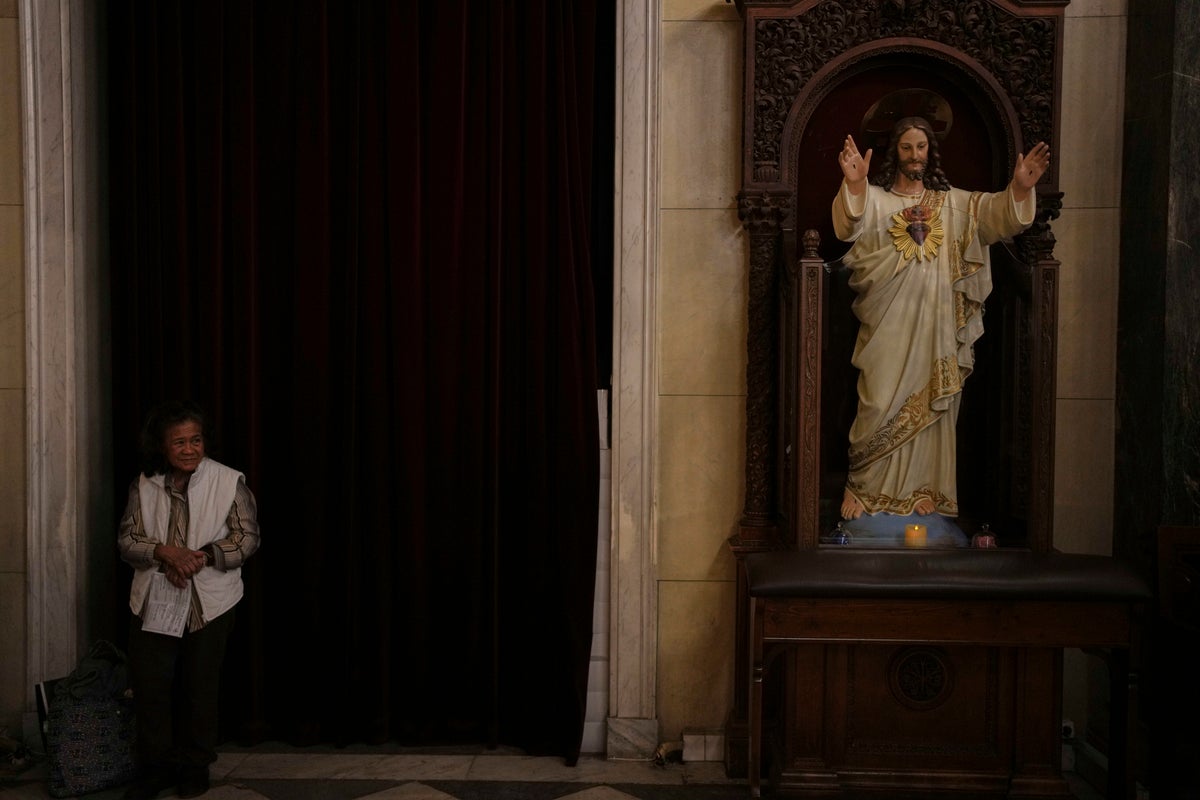
A Catholic believer attends mass in Athens, Greece - (AP Photo/Thanassis Stavrakis)

In 2026, the Catholic or Western Easter will be celebrated on April 5. The Orthodox Easter, however, falls a week later on April 12.

This is because Catholics primarily use the Gregorian calendar, while most Orthodox churches still use the Julian calendar for Easter calculations.

Some years, the dates coincide - like in 2025 when the churches celebrated Jesus’ resurrection on the same day, April 20.

The rare alignment of the churches sparked hopes for a permanently unified date, even drawing support, at the time, from the late Pope Francis.

However, the churches have been divided on the way to determine the date of Easter for more than 400 years.

And beneath the surface of hopes for a shared celebration lay lingering tensions and mistrust between the two major Christian communions.

Calendars and calculations differ

The movable date for Easter follows a seemingly straightforward rule: the Sunday following the first full moon on or after the spring equinox. But the two churches started using different calendars after Pope Gregory XIII’s adaptation in 1582, when the Western church adopted the Gregorian calendar while the Eastern Orthodox Church kept the older Julian one.

Moreover, each church uses its own ecclesiastical calculations for lunar cycles and the equinox, which don’t neatly match scientific projections.

The result is that Easter dates can be as much as five weeks apart. They can coincide in back-to-back years, or a decade can pass without it happening.

Pope Francis’ wish

In early 2025, Pope Francis referred to the year’s Easter celebration while invoking the 1,700th anniversary of the historic Council of Nicaea, when Christian leaders gathered to settle foundational disputes about the faith.

"Once again, I renew my appeal: Let this coincidence serve as a sign — a call to all Christians to take a decisive step toward unity around a common date for Easter,” Francis said while leading prayers at the Basilica of St. Paul in Rome.

Pope Francis and Ecumenical Patriarch Bartholomew (AP Photo/Alessandra Tarantino, File)

Francis’ invitation wasn’t new.

Returning from a trip to Turkey in 2014, he told reporters on the plane that a unified date would be logical.

“It is a bit ridiculous,” he said, then staged a pretend conversation: “‘Tell me, your Christ, when is he resurrected? Next week? Mine was resurrected last week.’”

He found an ally in Ecumenical Patriarch Bartholomew, a fellow octogenarian and spiritual leader of the world’s Orthodox Christians.

Before his death Francis said the two “speak to one another like brothers” and Bartholomew called Francis “our elder brother.”

He also described the Easter initiative as “a real step toward repairing old conflicts.”

Only winners, no losers?

The idea of a common Easter has been discussed since the 1960s, with interest often peaking when celebrations coincide. The key obstacle has always been the implication that one side would need to concede.

Protestants, who follow the same calendar as Catholics, have also been in on the discussions.

The Geneva-based World Council of Churches — a fellowship of Orthodox and Protestant bodies — has proposed a compromise. It suggests using modern astronomy, basing the calculation on Jerusalem time and following the same basic rule set centuries ago.

“It has never been more important than now, because we live in a polarised world and people all over the world yearn for more unity,” Lutheran Bishop Heinrich Bedford-Strohm, a senior WCC official, said from his home outside Berlin. “All other questions – on calendar, on time, on the moon and the stars and everything – it’s not primary; it’s secondary."

‘Strings attached’

While the late pope’s wishes may carry powerful influence through the Vatican’s highly centralised authority, Bartholomew’s role is largely symbolic over the self-governed national and local churches.

And discussions between Russia, the Orthodox world’s most populous country, and churches of other Orthodox-majority countries remain stalled due to the war and church divisions in Ukraine.

Further complicating prospects for consensus is a history characterised by centuries of mistrust, largely driven by wariness in the East about the Vatican’s supremacy.

The Epitaph Procession at the Catholic Cathedral Basilica of St Dionysius the Areopagite in Athens on Good Friday (AP Photo/Thanassis Stavrakis)

Last year, at a Holy Week service in Athens, Father Anastasios welcomed parishioners into the Church of Saint Dimitrios Loumbardiaris, a restored stone chapel near the Acropolis.

He said he supports forging bonds with Christianity's other branches — but with caution.

“We can try to build bridges, but we cannot distort our faith or the traditions of our ancestors, or the dogmas Christ himself handed down," he said.

"There are deeply rooted differences. From my view and that of many people here, the unity sought in the past by the Roman Catholic Church often wasn’t sincere; it came with strings attached, was more about dominance than genuine reconciliation.”

‘Great harmony’

As dialogue between the churches slowly unfolds, common Easter celebrations are already a practical reality in a few places. The Orthodox Church in Finland switched dates in the 1920s to align celebrations with the Lutheran majority. And Catholics in Greece — while making no official change to their calendar — have celebrated with the rest of the country since 1970.

Joseph Roussos, a member of a Catholic community on the Greek island of Syros, took his first trip to the Vatican last month.

At age 67, he remembers when Easters in Greece were separate: when schools and shopkeepers on the island closed for different holidays, and the church bells tolled mournfully during two distinct Holy Weeks.

“It wasn’t a good situation. But when we did celebrate Easter together, there was great harmony,” he said.

“We live very well (today), and it’s truly beautiful. I hope it stays that way.”

Sign up to read this article
Read news from 100’s of titles, curated specifically for you.
Already a member? Sign in here
Related Stories
Top stories on inkl right now
One subscription that gives you access to news from hundreds of sites
Already a member? Sign in here
Our Picks
Fourteen days free
Download the app
One app. One membership.
100+ trusted global sources.