
Get all your news in one place.
100's of premium titles.
One app.
Start reading
The Conversation
The Conversation
Julien Benoit, Associate professor in Vertebrate Palaeontology, University of the Witwatersrand

Fossil science owes a debt to indigenous knowledge: Lesotho missionary’s notes tell the story

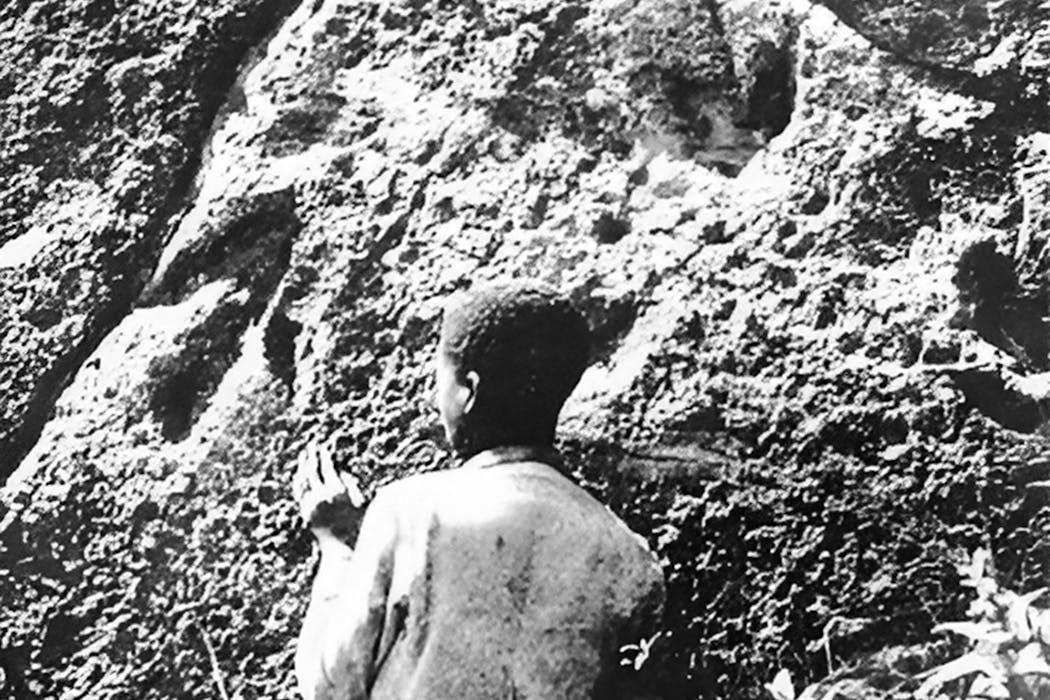
Dinosaur footprints at Morija, Lesotho, in 1906. The person standing in front of the rock slab covered with tridactyl fossil footprints is not identified. Photos courtesy of the Institut des Sciences de l’Evolution of the University of Montpellier, France , CC BY-NC-SA

For over a century, the scientific literature has credited western missionaries with “discovering” fossils in Lesotho, the small, mountainous country surrounded by South Africa.

The narrative typically begins with figures like the French missionary Hermann Dieterlen, who, in 1885, reported unusual “petrified bird tracks” near the settlement of Morija. This account implies that earth sciences like the study of rocks and fossils arrived in Lesotho from Europe.

Sign up to read this article
Read news from 100's of titles, curated specifically for you.
Already a member? Sign in here
Related Stories
Top stories on inkl right now
One subscription that gives you access to news from hundreds of sites
Already a member? Sign in here
Our Picks
Fourteen days free
Download the app
One app. One membership.
100+ trusted global sources.







