Former Tour de France runner-up and multiple Grand Tour champion Nairo Quintana confirmed on Sunday that he will retire from racing this season, making this year's Vuelta a España his final career start.
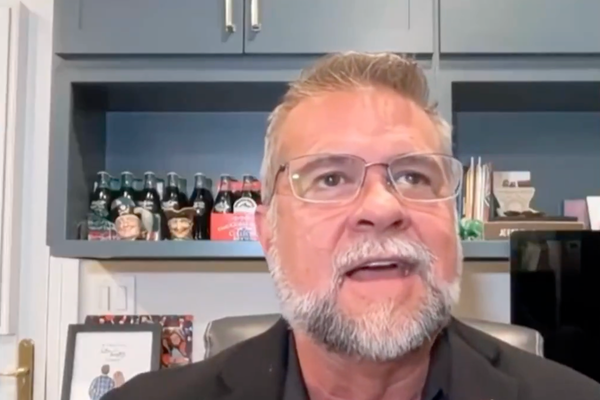
The 36-year-old Movistar racer made the announcement at a press conference in Barcelona on Sunday evening, shortly before the start of the Volta a Catalunya, which he won back in 2016.

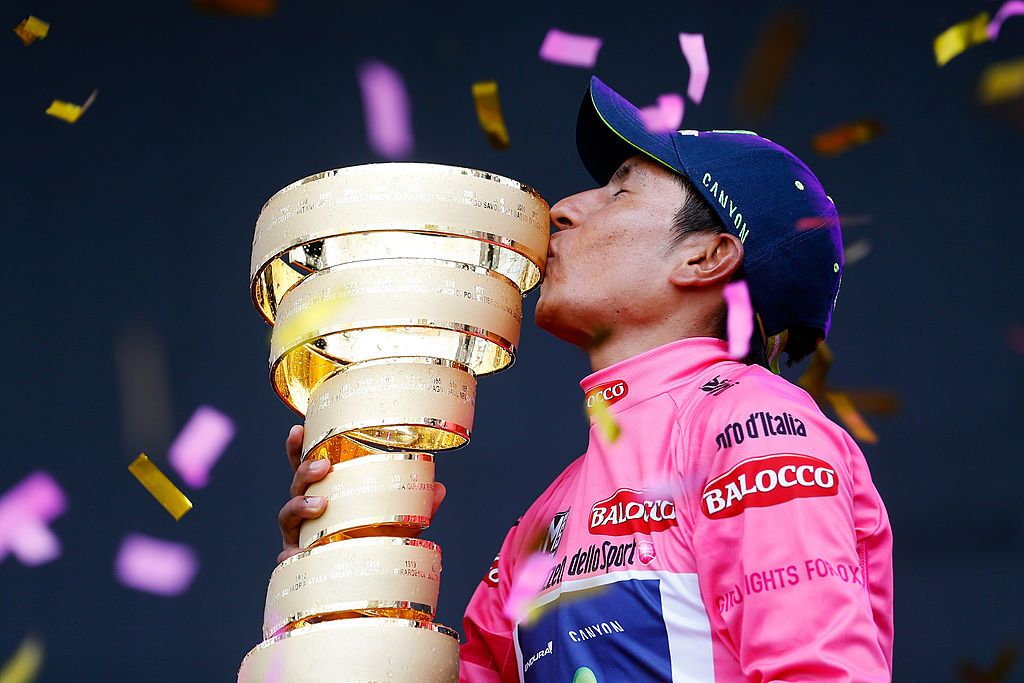
That was far from being Quintana's only major victory, with two podium finishes in the Tour de France, and outright triumph in the 2014 Giro d'Italia – Colombia's first-ever win in the race – and 2016 Vuelta a España to his name. Amongst his 54 career triumphs were also two editions of Tirreno-Adriatico, an Itzulia Basque Country and a Tour of Romandie, as well as multiple stage wins in all three Grand Tours.
"I want to say: it is over. It is all over. And I am going home to my family," Quintana said in Spanish, beginning his press conference by calling it a "grand celebration" not just an end to a chapter.
"I am that boy who grew up amidst the mountains, in a place where life was anything but passive. I was just a kid who didn't have much, but I possessed something far stronger: the burning desire to break free.
"I learned that this wasn't just a sport. It was a way of life—lived step by step, without rushing the process. Then, in 2012, a new chapter began.
"From that point on—race after race, victory after victory—my triumphs were not mine alone; they belonged to an entire continent. They belonged to the Colombian land—to every life, every climb, and every finish line crossed.
"These were moments of constant growth—a journey that allowed me to mature both as an athlete and as a human being. It was a wonderful chapter, filled with learning, respect, and immense gratitude."
He concluded by saying his retirement marked another chapter in his life.
"I am not speaking of a farewell; I am speaking of a beginning—a new beginning where I want to continue building, creating businesses, opening up opportunities, supporting both competitive and recreational sports, and giving back to the people—especially the youth—everything that cycling has given me."
Once compared by Movistar team manager Eusebio Unzue to Bernard Hinault for his similar tenacity, rural origins and race insight, Quintana never had the Frenchman's talent for one-day racing. However, he remained a major force as a top stage racing specialist throughout his 16-year career.
For a while in the mid 2010s his diminutive, classic climber's form seemed able to destroy the field at will with knockout mountain rides, be it ascents as famous as the interminably rising treeless plateaus of the Blockhaus in Italy in 2017, arguably his greatest ever mountain-top stage win, or the mist-enshrouded Lagos de Covadonga at the 2016 Vuelta.

Following the wheeltracks of early Colombian stage racing greats like Fabio Parra and Lucho Herrera, two decades after they had retired, Quintana is widely seen as a pioneer for the revival of Grand Tour racing in Colombia in the 2010s. He is also well-known in South America for his longstanding work as a social and human rights activist.
The one, very significant, blot on Quintana's copybook was his positive test for the painkiller Tramadol, which saw him disqualified from the 2022 Tour de France and sparked his exit from his team of the time, Arkéa-Samsic.
Although Quintana did not serve a suspension as his offence was covered by UCI's medical rules rather than being classed as an anti-doping violation, he was left with no chance but to take a hiatus season in 2023 with no top-level racing. He returned in 2024, however, rejoining his near-life-long team Movistar for the final part of his career.
The early years and glory at the 2014 Giro d'Italia
As could be expected of a hugely talented climber, Quintana's first breakthrough result came in the Volta a Catalunya in 2011, taking the mountains title with the small Colombia es Pasión squad, and rendering his announcement of his retirement on the eve of the same race this March even more appropriate.
Quintana then joined his first major squad, Movistar, in 2012, where he was one of the few climbers able to withstand the might of Team Sky in races like the Critérium du Dauphiné, where he won the Queen Stage.
He then made a mark as a key support rider for teammate Alejandro Valverde in the Vuelta that year, most memorably on the agonisingly steep slopes of Cuitu Negru.
Far, far more was to come in 2013, when Quintana provided the upset of the Tour by pushing Chris Froome the hardest as the Briton carved out his first overall victory.

Only woefully unambitious team tactics by Movistar in the Pyrenees reduced his chances to impact there, but he still got a major stage win at Semnoz on the second last day, and second overall in Paris, too.
Together with Alberto Contador, Quintana was seen as the rider most likely to give Sky a run for their money as the British team imposed a claustrophobic domination of the Tour for year after year.
Yet despite being able to carve out a somewhat controversial victory in the 2014 Giro d'Italia – what exactly transpired on the snowy descent of the Stelvio and how many instructions about stopping (or not) during a neutralisation have never been resolved – Quintana was never consistently able to match Froome in the mountains.
There were some impressive near-misses, too, most notably in 2015, when Quintana claimed his second Tour podium after pushing Froome to the limit on the final ascent to Alpe d'Huez. But time after time, be it at Ax-3 Domaines in 2013, the Ventoux in 2015 or the Megeve TT in the Alps in 2016, the Briton had his number.
A second Grand Tour win and a new role

The only time the boot was truly on the other foot came in the 2016 Vuelta, where Froome and Sky came a radical cropper after Quintana and Contador made a rare combination to destroy the Briton's team on the road to Formigal and then leave him out of overall contention in the process.
It was a hugely impressive effort, but never repeated, although Quintana's duel against Tom Dumoulin in 2017 in the Giro d'Italia ended in a narrow defeat by the Dutchman, and yet more question marks about what might have been with some more sharply-honed team tactics.
By then, though, Quintana was moving out of his GC contender phase in favour of occasional blazes of glory and stage wins, the most recent – and his final Grand Tour race lead – coming in a memorable last-ditch breakaway on the streets of Calpe early in the 2019 Vuelta.
Quintana's complicated position in the hierarchy at Movistar, as seen in insider films like 'The Least Expected Day', may well have contributed to his decision to head for Arkéa-Samsic in 2020. Initially, as he took a string of early-season victories at the French squad, it seemed like a renaissance was on the cards.
That ended, though, with his positive for Tramadol, after which he spent a year out of racing before re-signing for Movistar.
By then, Quintana was already moving into team worker mode, and he did not take a single victory in his last two-and-a-bit seasons. His last major flourish, a long breakaway through the Dolomites in the 2024 Giro d'Italia, where he was remorselessly overtaken by the all-conquering Tadej Pogačar close to the finish, felt very like a valedictory gesture.
Since then, despite claiming early this season that "old dogs don't lose their sense of smell" – that the ambition to win never really dies – Quintana had already been hinting at an imminent retirement.
This was finally confirmed on Sunday, in Barcelona, on the eve of the race, where in many senses, it all began for the quietly-spoken Colombian, way back in 2011.