
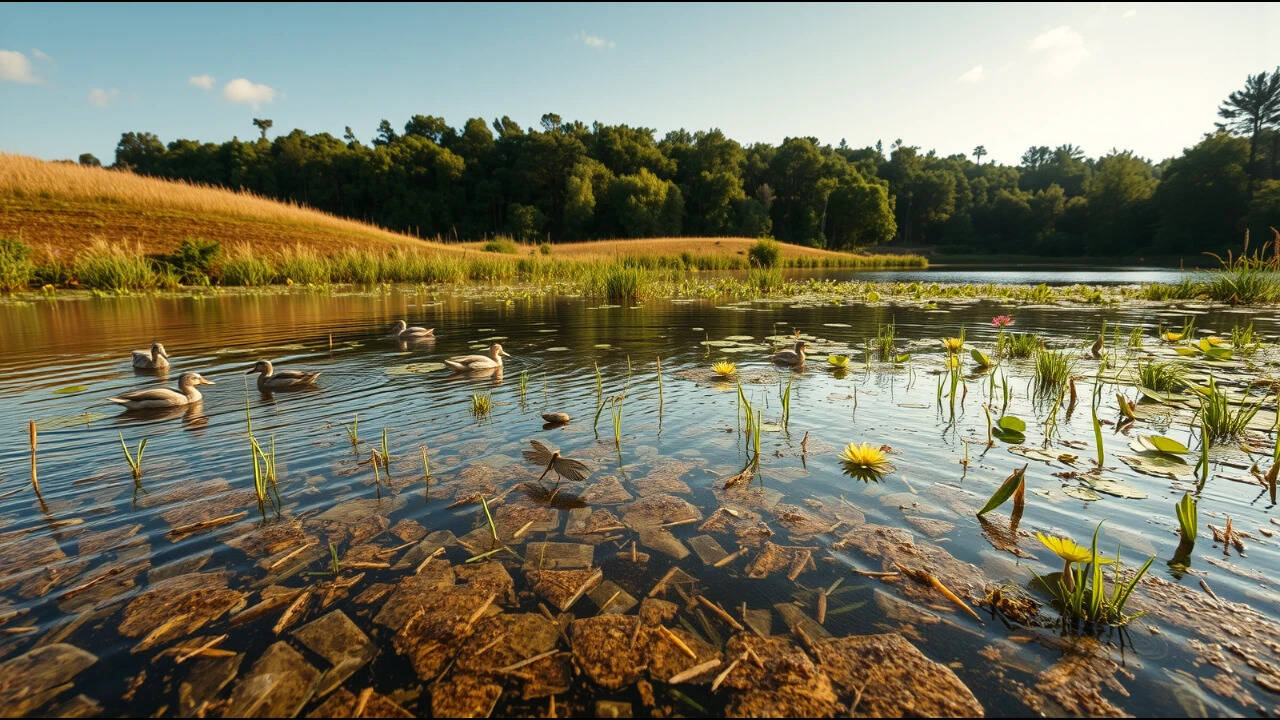
A former golf course on England's Lincolnshire coast has been transformed into a new wetland nature reserve, with ponds, open water, reedbeds, grassland and coastal habitats replacing much of the former golfing landscape. Sandilands, near Sutton-on-Sea and Mablethorpe, opened to the public on September 26, 2026, following a six-year programme of planning, consultation and habitat creation led by the National Trust. The National Trust's latest press release describes the reserve as covering 30 hectares, although a September 2026 opening article by Visit Lincolnshire gives the area as 38 hectares, so the exact current area is not consistent across the organisations involved. What is not in dispute is the scale of the earthworks: nearly 52,000 cubic metres of earth were moved during the transformation. The project has already produced an early wildlife milestone, with avocet chicks hatching at Sandilands for the first time in July 2026.
Get breaking news anytime, anywhere. Download the TOI app now!

From a golf course dating to 1894 to a new coastal nature reserve
The Sandilands site has a long history as a golf course. The National Trust says the land was used for golf from 1894, while Sandilands Golf Club was formed in 1952. The club later entered liquidation in 2018, bringing its operation to an end. The National Trust acquired the former golf course in March 2020, using a supporter donation specifically directed towards Lincolnshire alongside funding from its Neptune Coastline Campaign. The acquisition marked the National Trust's first coastal land acquisition in Lincolnshire.
The six-year project has involved converting the former golfing landscape into a mixture of wetland habitats, grassland and coastal scrub. The National Trust says the new reserve sits within the Lincolnshire Coastal Country Park and is intended to create more habitat for wildlife while improving public access to the coast. The project has also involved local partners, volunteers and public funding, including £2 million from the Mablethorpe Towns Fund through Connected Coast, £1.5 million from National Highways and £200,000 from the UK Government Shared Prosperity Fund, delivered by East Lindsey District Council.
Nearly 52,000 cubic metres of earth were moved
Creating the new landscape required extensive earthworks. According to the National Trust, nearly 52,000 cubic metres of earth were moved during the transformation. The charity compares that volume with 21 Olympic swimming pools or 11 Elizabeth Towers. The earthworks helped create ponds, open water and other wetland features across the former golf course.
Planting has also been a major part of the project. The National Trust says more than 35,000 native coastal shrubs were planted across the wider project. Its project page separately records that more than 6,500 native scrub plants were planted with the help of more than 200 volunteers, including species such as hawthorn, sea buckthorn, blackthorn and wild rose. The National Trust says these plants will provide nectar, berries and nesting opportunities as they mature. Green hay collected from a nearby Lincolnshire Wildlife Trust reserve was also spread across parts of the site to help establish species-rich grassland. The National Trust identifies plants including wild carrot, yarrow, yellow rattle and red clover among the species associated with the developing grassland. The construction programme was planned around wildlife, with work carried out in stages to reduce disturbance during sensitive bird-breeding periods.
Avocet chicks have already hatched at the new wetlands
The new habitats are already being used by breeding birds. Avocet chicks hatched at Sandilands for the first time in July 2026, before the reserve officially opened to the public. The National Trust describes the arrival of the chicks as an encouraging sign that the newly created habitat is being used by wildlife. Visit Lincolnshire also reported that avocet chicks hatched at the site for the first time this year.
The National Trust says Sandilands provides habitat for breeding birds including snipe, lapwing and oystercatcher, while uncommon migratory birds recorded or expected at the site include black-tailed godwit, spotted redshank and spoonbill. The latest National Trust press release describes Sandilands as part of the East Coast Flyway, an important migration route along Britain's eastern coastline. The charity says thousands of birds travel along the UK's east coast between Arctic and northern European breeding grounds and areas farther south. The National Trust has also highlighted species such as skylarks and meadow pipits, as well as rare plants including birdsfoot clover. The reserve is therefore intended to provide both breeding habitat for local species and places where migratory birds can stop during their journeys.
A former golf course is now open for people and wildlife
The transformation has also changed public access to the site. The former golf course has been replaced by a landscape with new paths and boardwalks through the developing wetland habitats. A visitor welcome building includes the Flyway Café, while accessible facilities include a Changing Places toilet. The National Trust says the new infrastructure is intended to make the coastal landscape easier for people to explore alongside the conservation work taking place there. The project is now moving from construction into the longer-term management of the reserve. The National Trust says Sandilands will continue to develop as its wetlands, grasslands and coastal vegetation mature. The first breeding avocets provide a documented early example of wildlife using the newly created habitat, but the ecological development of the reserve will continue to be monitored over the coming years.







