Get all your news in one place.
100’s of premium titles.
One app.
Start reading
Tom’s Guide
Tom’s Guide
Technology
Amanda Caswell

Forget the HomePod — OpenAI is launching a smart speaker designed by Jony Ive

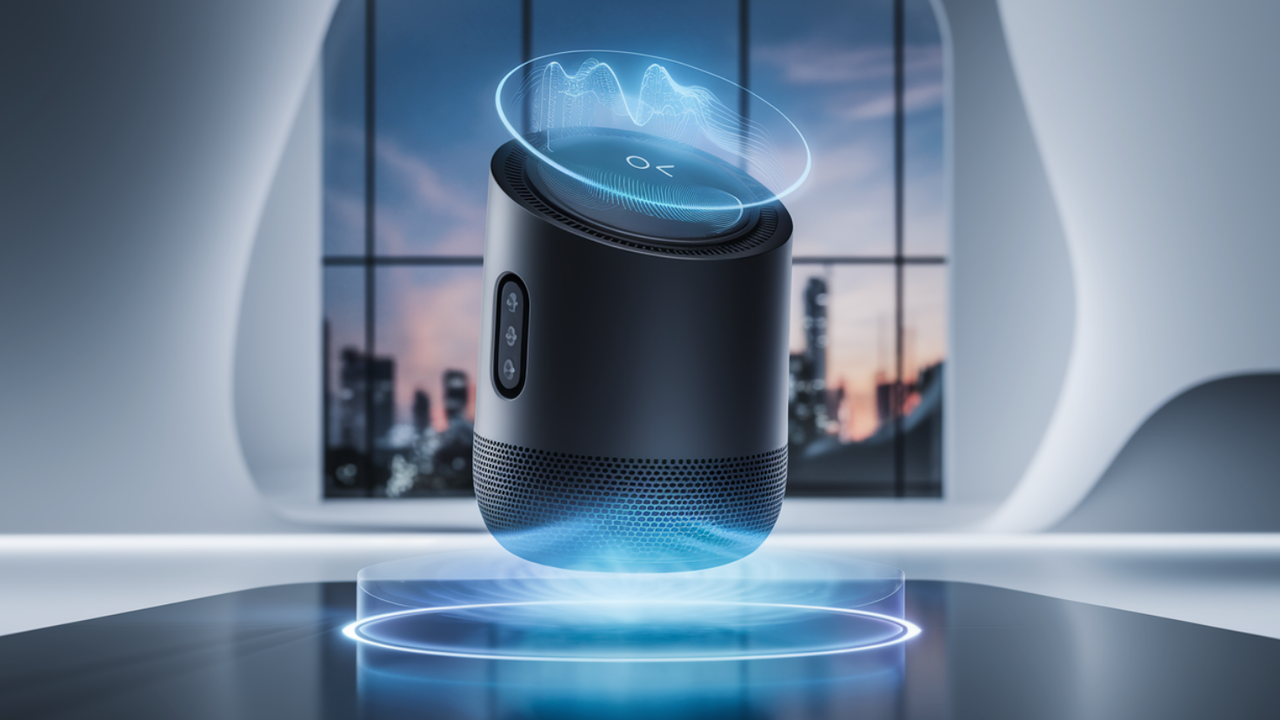
Smart speaker.

OpenAI is quietly assembling one of its most ambitious projects yet: a family of AI-powered consumer devices, starting with a smart speaker for the home. But with Apple, Meta and Google already staking their claims in the space, the company has a steep climb ahead.

According to a report from The Information, OpenAI has more than 200 people working on a lineup that could include a smart speaker, smart glasses and even a smart lamp.

The smart speaker is expected to be the first product out the door, carrying a price tag somewhere between $200 and $300 — though customers shouldn't expect to get their hands on it before February 2027 at the earliest.

What we know about the device

(Image credit: Shutterstock)

From what we can tell, the speaker won't be a passive listening device. It will reportedly feature a camera capable of observing its surroundings, recognizing faces for purchasing authentication — similar to Apple's Face ID — and even monitoring user behavior to offer proactive suggestions. For instance, it might nudge you to get to bed on time the night before an early flight on your calendar.

Smart glasses are also in the pipeline, though mass production isn't expected until 2028.

A market that's already moving fast

(Image credit: Future)

OpenAI's hardware ambitions are coming together at a moment when the competition is anything but idle. Meta has already been selling its Ray-Ban smart glasses to consumers, with AI features baked in.

Google has its own smart glasses efforts in motion. And Apple is reportedly developing an AI wearable pin alongside next-generation AirPods with enhanced sensors.

For a company with no hardware track record, breaking into this market is a genuine challenge — not just technically, but commercially. Consumers have become more selective about the devices they adopt, with surveys showing that smart home and wearable adoption rises only when products provide clear daily value and convenience.

The team behind it

(Image credit: Shutterstock)

OpenAI formed its devices division nine months ago following its acquisition of Io Products, a startup co-founded by CEO Sam Altman and legendary Apple design chief Jony Ive. Ive's design firm, LoveFrom, is handling the look and feel of the devices, while OpenAI's internal team manages hardware, software and consumer research.

The group is led by Peter Welinder, a vice president and general manager at OpenAI, and includes several Apple veterans — among them Tang Tan (hardware lead), Evans Hankey (industrial design), and Scott Cannon (supply chain).

Bottom line

OpenAI has the AI chops, the funding and the design pedigree to make a serious run at consumer hardware. But between a crowded market, a timeline stretching into 2027 and beyond and the inherent difficulty of building physical products from scratch, there's plenty that could go wrong before any of these devices reach store shelves.

We’ll be tracking this project closely and updating as new details surface.


Follow Tom's Guide on Google News and add us as a preferred source to get our up-to-date news, analysis, and reviews in your feeds.


More from Tom's Guide

Sign up to read this article
Read news from 100’s of titles, curated specifically for you.
Already a member? Sign in here
Related Stories
Top stories on inkl right now
One subscription that gives you access to news from hundreds of sites
Already a member? Sign in here
Our Picks
Fourteen days free
Download the app
One app. One membership.
100+ trusted global sources.