Get all your news in one place.
100's of premium titles.
One app.
Start reading
The Economic Times
The Economic Times
Trending Desk

Forget ACs: This Delhi couple's home stays cool even in 45°C heat. Here's how they did it naturally

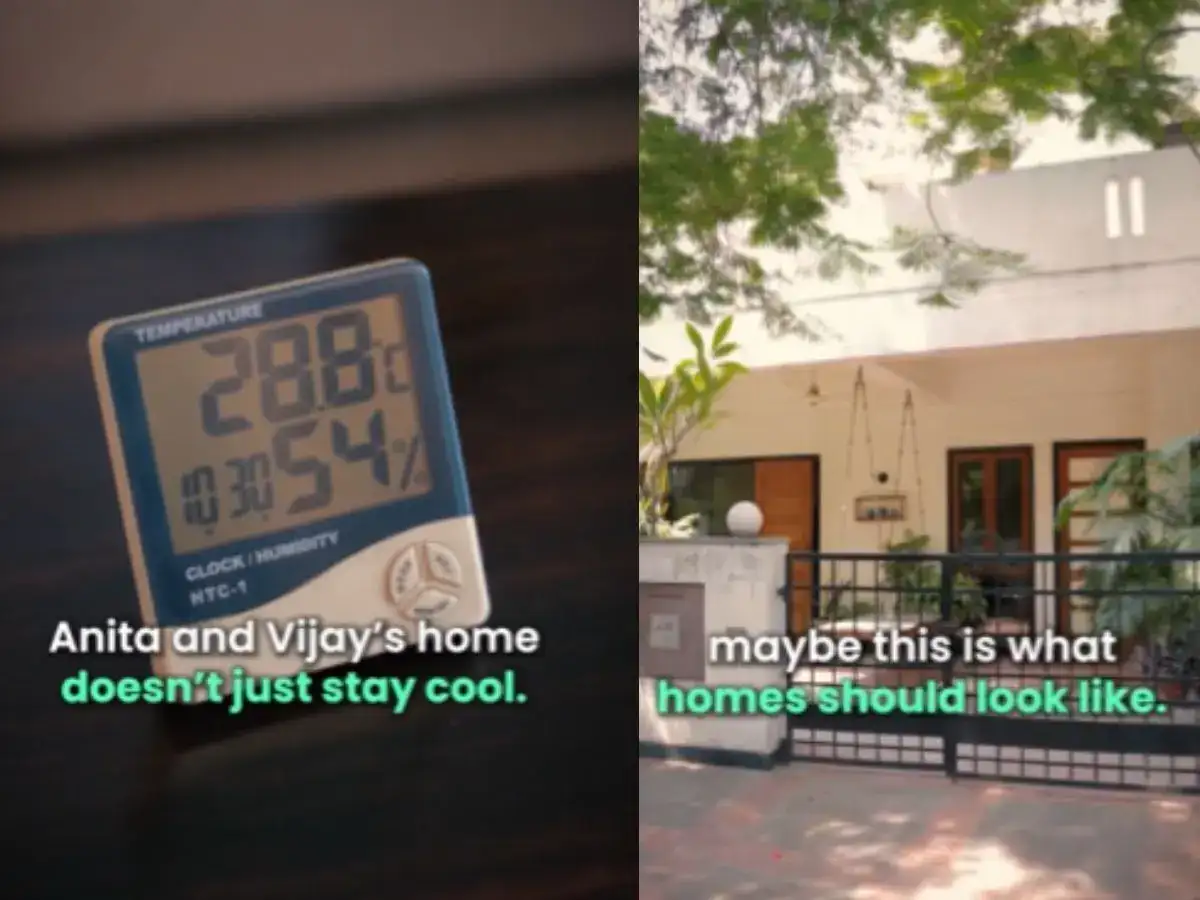
As Delhi battles scorching summer temperatures that often cross 45°C, one couple has found a way to stay comfortable without depending heavily on air conditioners. Their 40-year-old home remains significantly cooler than the outside environment thanks to a combination of traditional architecture, smart design choices and sustainable living practices.

While many households struggle with rising electricity bills during peak summer months, Anita and Vijay's residence offers an alternative approach, as per A Better India social media video. Instead of relying on energy-intensive cooling systems, the house uses natural airflow, heat-resistant materials and eco-friendly features to maintain a pleasant indoor temperature.

A Courtyard That Acts Like a Natural Cooling System

At the centre of the home is an open-to-sky courtyard, a feature commonly seen in traditional Indian architecture but rarely included in modern urban houses.

Also Read: Love mangoes? Worm-infested, rotten mangoes meant for juice seized in Gujarat. Watch shocking video

The courtyard helps create a natural cooling cycle. As warm air rises and escapes through the open space, cooler air is drawn in through windows and ventilation channels. This continuous movement of air keeps rooms comfortable even during the hottest parts of the day.

Strategically placed openings throughout the house further enhance cross-ventilation, reducing the need for artificial cooling.

Building Materials That Beat the Heat

The home's design goes beyond ventilation. Its floors are made of Kota stone, a material known for staying naturally cool even during extreme summers.

The ceilings are also insulated to reduce heat absorption from direct sunlight. Together, these features prevent indoor spaces from heating up quickly and help maintain a lower temperature throughout the day.

Rather than fighting the climate with machines, the house works with nature to create a comfortable living environment.

Sustainability Is Built Into Everyday Life

Cooling is only one aspect of the couple's eco-friendly lifestyle. Rainwater collected from the property is channelled into recharge pits, helping replenish groundwater reserves. Kitchen waste is converted into compost that nourishes plants, reducing household waste while supporting gardening efforts.

Solar panels generate a portion of the home's energy needs, and many of the furnishings have been crafted from recycled wood, reducing dependence on newly sourced materials.

A Green Oasis in the Middle of the City

The house is filled with greenery, from the courtyard to the terrace garden. Plants not only improve the home's appearance but also contribute to a cooler and healthier environment. The abundance of green spaces creates a refreshing contrast to the surrounding concrete landscape and helps make the home feel more connected to nature.

With climate change intensifying heat waves across India and electricity demand surging every summer, experts have increasingly highlighted the importance of passive cooling techniques.

Also Read: Why are newspapers so big? Industrialist Harsh Goenka shares a surprising 300-year-old secret you may not know

Methods such as natural ventilation, thoughtful building orientation, thermal insulation and climate-responsive materials can significantly reduce dependence on air conditioners. These solutions not only lower energy consumption but can also ease pressure on the power grid during peak demand periods.

Blending Traditional Wisdom With Modern Solutions

Anita and Vijay's home demonstrates that sustainable living does not require sacrificing comfort. Instead, it shows how traditional design principles can be combined with modern innovations such as solar energy to create homes that are both practical and environmentally responsible.

As Indian cities search for ways to cope with rising temperatures, examples like this suggest that some of the most effective solutions may already exist in the country's architectural heritage. Sometimes, staying cool is not about installing a bigger AC, it's about designing smarter homes from the start.

Sign up to read this article
Read news from 100's of titles, curated specifically for you.
Already a member? Sign in here
Related Stories
Top stories on inkl right now
One subscription that gives you access to news from hundreds of sites
Already a member? Sign in here
Our Picks
Fourteen days free
Download the app
One app. One membership.
100+ trusted global sources.