Comment: The rise in the polls of re-labelled political party Top is worthy of discussion insofar as whether it might re-shape New Zealand’s political landscape. Many of us would hope it does exactly that, although of course that’s a long shot right now.
So far MMP has delivered NZ a less predictable version of the old two-party, to-and-fro political management. While either National or Labour can ‘win’, nowadays it’s always a ruling party compromised by the hobbyhorses of the Greens, NZ First, Act or Te Pāti Māori. The fundamental back-and-forth between Labour and National however remains intact, and economic and social policy settings stay pretty steady, no transformative changes apparent.
That outcome reflects the wishes of the electorate presumably – risk-averse and steadily happy or steadily unhappy – about the status quo. Meanwhile New Zealand’s material standard of living falls away compared to the OECD average, but our international rankings on democracy, freedom, and fairness remain among the highest around. We are blissfully satisfied with our lot, despite our relative income slide. Non-transformative governments are evidence of that.
Top was founded on evidence-based, best-practice policy. In its original form it had no tolerance of political pragmatism or trade-offs, no interest in policy fetishes of those who wanted to be part of our party. In other words there was no compromise, we pursued best practice as the policy group determined it, take it or leave it. Those practices were evidence-based – pretty simply by survey of the literature in each area.
Such a prescription is about as far from the political world of horse trading and partisan politics as you can get; Top’s approach being the antithesis of how coalitions are formed under MMP. The only logical position for such a party in an MMP Parliament would be on the cross-benches, voting for each policy solely on its merits. Coalition by definition jettisons that principle, it is all about horse trading and Cabinet collective responsibility – you swallow rats in order to get some progress on your policy priorities.
Top failed to get the 5 percent in 2017, and its subsequent reincarnations were even less attractive to voters in part because of muddling the founding principles of the party but mainly because of invisible leaders.
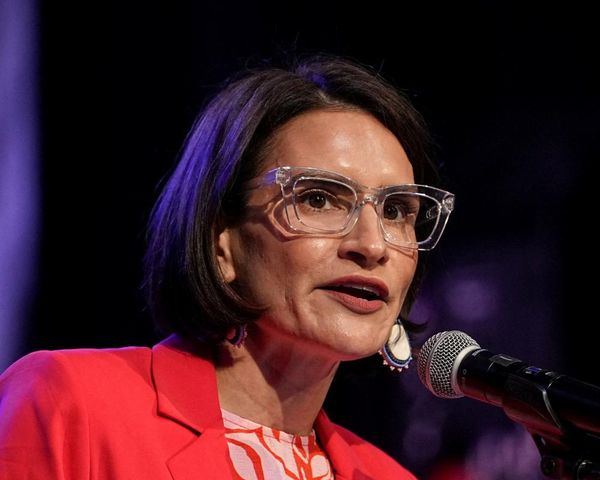
In 2026 we come to Opportunity, the latest reincarnation of Top, and included in the makeover is a telegenic leader. She is charming, much as Jacinda Ardern was for Labour in 2017. In my opinion Jacinda turned out to be far more than just personable, she was one of the best prime ministers of New Zealand’s modern era, along with John Key. She certainly rose to the challenges of two severe shocks to our society with a deft skill I could not see any run-of-the-mill main party leader managing. That, by the way, is also the global view of Jacinda Ardern.
The challenge facing Qiulae Wong is not as overwhelming as Covid or the Christchurch massacre, but nevertheless to lead a party into Parliament by virtue of more than 5 percent of the vote will be a first for Opportunity. In that regard she will have been a tremendous success, proof that a telegenic leadership delivers a significant advantage in our system.
But what of the policy suite that Opportunity is offering, how true to Top’s best practice policy principles is it? Does any of the rigour remain or has the party’s policy offering descended into a ragbag of ad hoc incoherence? I haven’t had the “opportunity” to read their manifesto, being more interested in other things these days. But out of curiosity I had a look at whether they’ve mangled the centrepiece of Top 2017 – our policy to close the loopholes in the income tax policy, remove the inequities and economic cost of targeted welfare, and do all this in a way that there was no increase in the overall tax take but a substantial boost to productivity.
I’m pleased to report that Opportunity has not surrendered the cornerstone of the Top 2017 manifesto. It’s changed labels and trimmed a little around the edges but in principle the integrity remains. What is the policy combo I refer to?
New Zealand has an income tax that does not tax all income; it contains a massive loophole. That loophole is owner-occupied property whose owners enjoy the income from those properties, tax free. It’s very easily explained: if I own a $500,000 deposit in the bank earning interest, I pay income tax on the interest; if instead I own a $500,000 residential property that I live in, I enjoy the income from that each year (the roof over my head) but I pay no tax on that benefit. That’s a loophole, plain and simple. Of course we all love it, so the name of the game is to own as many houses as possible, or as large a mansion as we can get so our tax-free income is maximised. And because we all know this, our demand for housing is insatiable, driving prices of the relatively fixed supply faster than would be the case if that benefit was not tax-free. Find one economist who thinks the benefit you receive from owning the roof over your head is not income, and I’ll pay for their re-training. Likewise, anyone who thinks taxation of capital gains or raising the progressivity of the income tax schedule is of benefit to the economy needs help.
On the other side of the ledger it is clear that wages as a form of income have become less and less adequate as technological progress displaces labour from the workplace, every chance it gets. Robots don’t need lunch breaks, sick leave, statutory holidays or annual leave. The economists’ Nirvana arrives when we all have unlimited ‘leisure’ and the economy’s production is automatically delivered. The assumption that displaced labour will always be reabsorbed is heroic at best and the common reality is that displaced labour is reabsorbed at lower wages than before. We have seen a steady trend in the return to capital lifting faster than wages.
Wouldn’t it be wonderful to sit at the beach all day while automation delivers everything needed to sustain us. That is a reality for some, but not for the majority, which is why we see the reach of the welfare state now so pervasive it has to provide hand-outs to three-child families with a household income of up to about $135,000. The overhead of administering the targeting and the incurring of the waste from benefits that go to those who should not be in need – while missing significant numbers of those in who are – have increased in line with the expansion of this reallocation via targeted welfare.
This of course is where the universal basic income arises. It enables a substantial part of our targeted welfare regime to be dismantled. The funding for this comes from closing the income tax loophole and flattening of the income tax schedule. Overall, the Opportunity policy is budget defict-neutral.
Opportunity has retained these core reforms of Top’s 2017 income tax and welfare spend system, albeit renaming the UBI as Citizens Income and restricting the income tax loophole to a land tax. In essence, the integrity remains.
In conclusion, New Zealand would benefit from having a meaningful discussion on its tax and welfare system. Our economic struggle is due in no small part to the misallocation of capital into low productivity endeavour, driven by the income tax loophole resulting in over-investment in residential property. If Opportunity gets the opportunity to bring this discussion to an otherwise totally stale Parliament, it would have achieved more than any MMP government has managed to date.