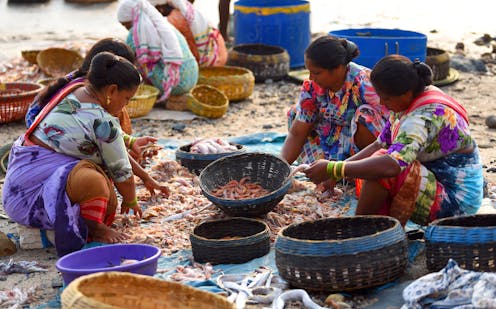
An estimated 45 million women make up 40 per cent of the workforce in small-scale fisheries worldwide. But they are left out of decision-making processes when it comes to the access and use of fisheries and coastal resources.
Fisheries policies, laws and programs have historically ignored women’s presence and contributions in fishing communities, resulting in their marginalization. This has also negatively impacted their livelihoods and widened gender inequalities. However, there are some fishing communities around the world where women do shape decisions. These communities boast of stronger claims to area-based fishing rights, improved economic returns and greater women’s empowerment.