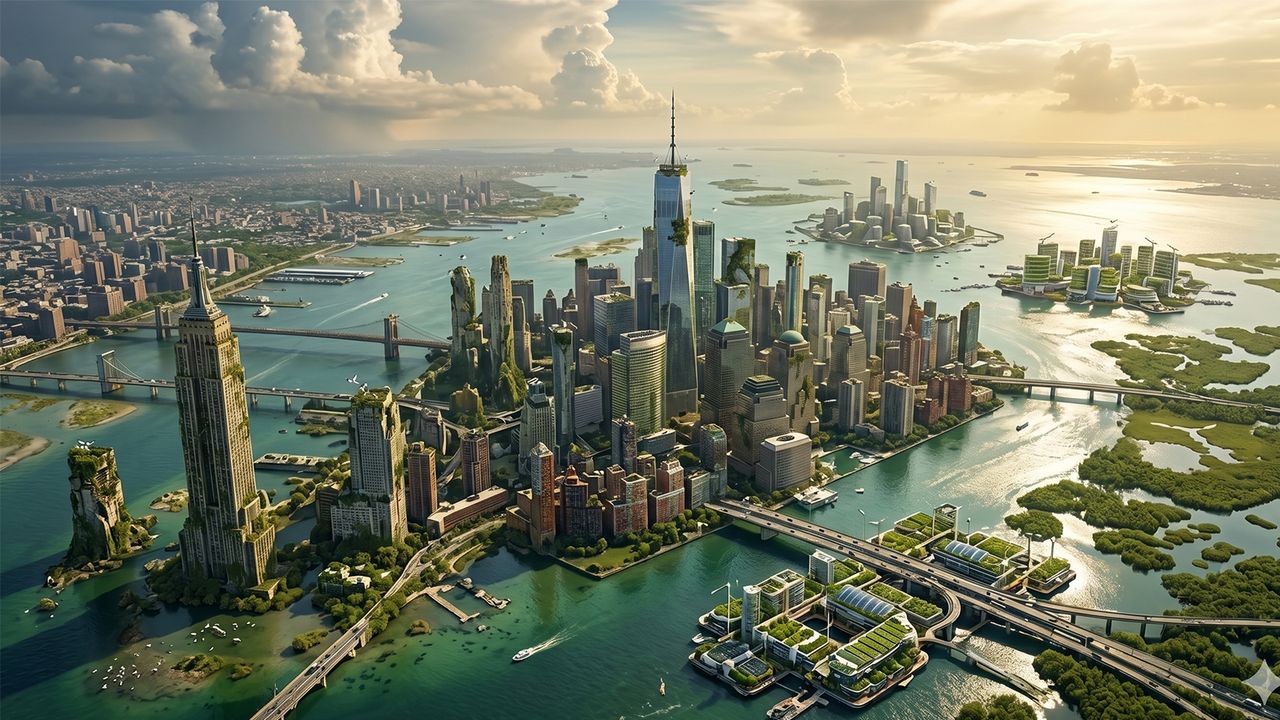
For Earth Day, I asked AI a simple question: What will the planet's biggest cities look like 1,000 years from now based not on sci-fi guesses but on hard data already available today. I asked it to avoid sci-fi guesses, predictions of specific events or other fun ideas we humans like to impose on visions of the future and to stick to real data on long-term environmental trends. And it came back with some not-so-surprising results.
ChatGPT looked at established climate research, including *deep breath” IPCC Sixth Assessment Report, NASA Sea Level Change Portal, Met Office Climate Change Overview, World Meteorological Organization (WMO) Climate Reports, and so many more resources I'd never think to turn to. All of this outlined a broad direction over the next centuries rather than specific outcomes for individual cities.