Get all your news in one place.
100's of premium titles.
One app.
Start reading
The Conversation
The Conversation
Environment
Karen A. Spiller, Thomas W. Haas Professor in Sustainable Food Systems, University of New Hampshire

Food forests are bringing shade and sustenance to US cities, one parcel of land at a time

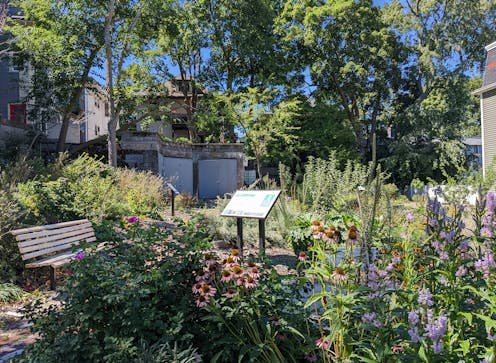
The Uphams Corner Food Forest in Boston's Dorchester neighborhood was built on a vacant lot. Boston Food Forest Coalition, CC BY-ND

More than half of all people on Earth live in cities, and that share could reach 70% by 2050. But except for public parks, there aren’t many models for nature conservation that focus on caring for nature in urban areas.

One new idea that’s gaining attention is the concept of food forests – essentially, edible parks. These projects, often sited on vacant lots, grow large and small trees, vines, shrubs and plants that produce fruits, nuts and other edible products.

Sign up to read this article
Read news from 100's of titles, curated specifically for you.
Already a member? Sign in here
Related Stories
Top stories on inkl right now
One subscription that gives you access to news from hundreds of sites
Already a member? Sign in here
Our Picks
Fourteen days free
Download the app
One app. One membership.
100+ trusted global sources.