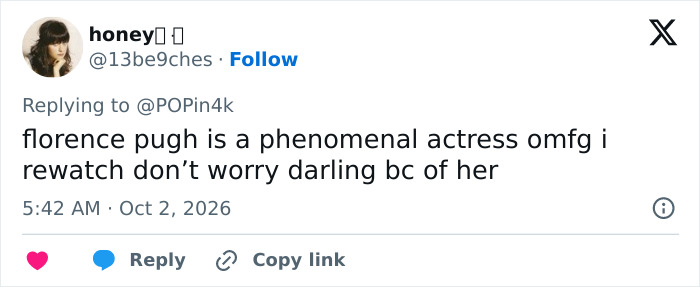
Florence Pugh’s latest role has viewers asking the same question after some of her most intimate scenes in East of Eden sparked a wave of online reactions.
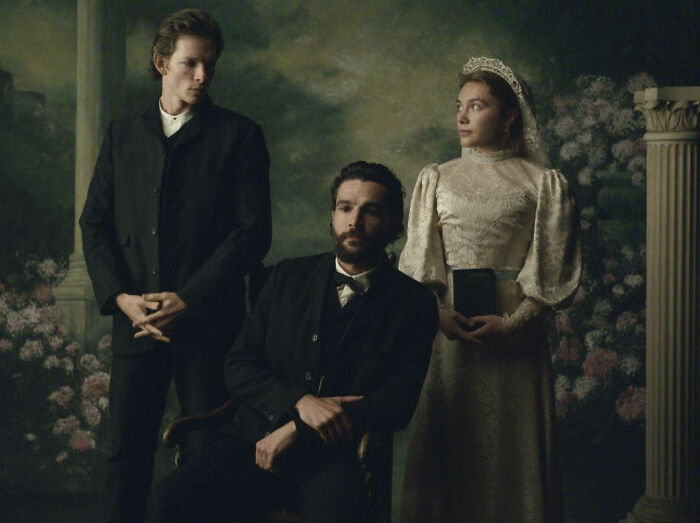
The actress plays Cathy Ames in Netflix’s seven-episode adaptation of John Steinbeck’s classic novel, bringing a famously controversial character to the screen with more context and emotional history.
But while some viewers have been captivated by Pugh’s performance, others are fixated on one seemingly strange detail: her expression during the intimate scenes.
Viewers are divided over why Florence Pugh appears so detached during her intimate scenes in Netflix’s new series

Some viewers watching Florence Pugh as Cathy Ames have been left puzzled by how little emotion she appears to show during the show’s intimate moments.
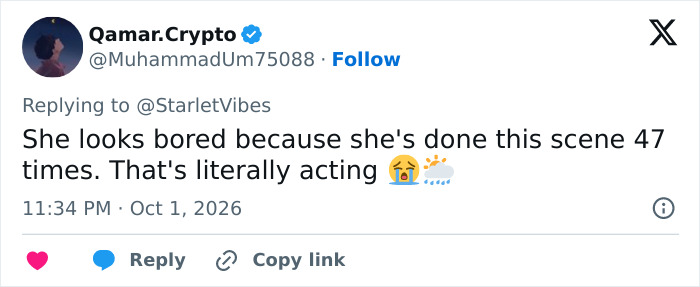
“Why she look so bored??? She is obviously tired,” one viewer wrote.
While another suggested, “It’s obvious she wasn’t happy with it.”
Others were even more blunt, writing, “No emotion, no expression… just nothing!!”
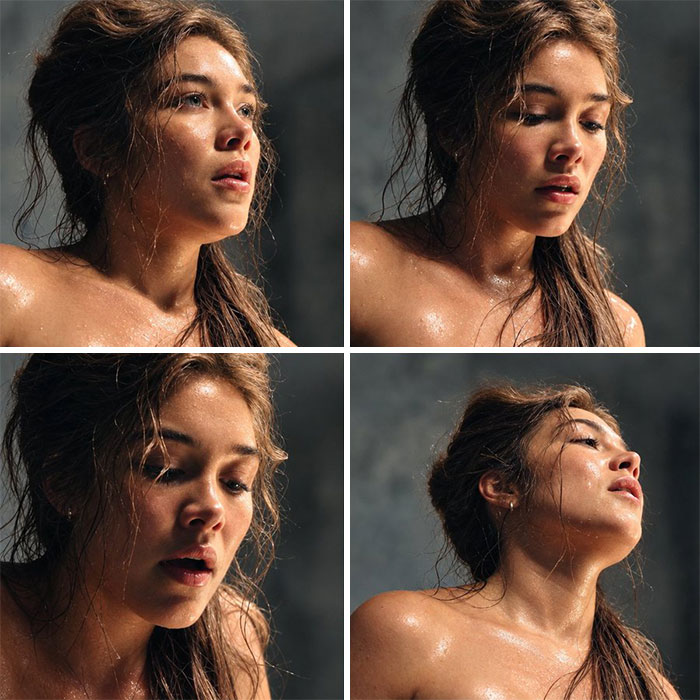

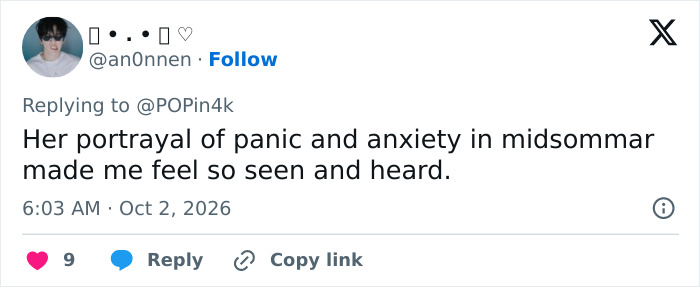
But some viewers pushed back on the criticism, arguing that the apparent detachment could be exactly what Pugh is supposed to convey.
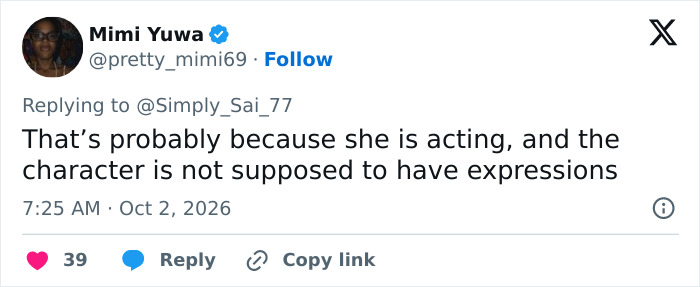
“That’s probably because she is acting, and the character is not supposed to have expressions,” one person argued.
Another wrote, “I’m pretty sure that’s how her character is, when doing what she does, and maybe for good reason…”
That interpretation fits with how Cathy has traditionally been portrayed as emotionally cold and manipulative.
The 30-year-old star previously revealed that the intimate scenes were filmed in one exhausting day

The new series, however, deliberately explores more of the character’s history and motivations, making Florence’s restrained performance part of a much broader conversation about who Cathy really is.
Another reason some viewers notice an exhausted quality in her performance may be the same.
Pugh has spoken about the unusually demanding filming schedule, revealing that all of the intimate scenes were filmed in a single day.
Florence Pugh in East of Eden. pic.twitter.com/Gx8TZuW6rt
— Starlet Vibes (@StarletVibes) October 1, 2026
“We did shoot all of those s*x scenes in one day,” she explained, describing the experience as “very trying” because she was portraying a woman who had experienced severe physical a**se and later worked as a pr**stitute.
The actress said she listened to playlists while preparing for particularly difficult scenes because she wanted to fully embody Cathy’s experiences.
By the end of the marathon filming session, Florence said she had reached a point where she felt, “This is it… now I’m done.”
Florence’s take on Cathy Ames has already divided fans of the classic 1952 novel
But rather than viewing that exhaustion as separate from the character, she felt it actually fit the circumstances Cathy was experiencing.
“I think by the end of that day, I was in the complete correct mind and body of all of those moments,” Pugh said.
The production was clearly demanding in other ways, too.
Florence has described taking on vulnerable material as part of playing Cathy, while Zoe Kazan’s adaptation expands the character’s traumatic history and gives greater attention to the forces that shaped her.
florence pugh you will be getting that emmy nom for east of eden bc this was insane pic.twitter.com/nxyi7cUSvs
— ★ (@POPin4k) October 1, 2026
Rather than treating the scenes as mere provocations, the series uses them to explore Cathy’s relationship with power, survival, and control.
That context may explain why her performance looks deliberately distant rather than traditionally romantic or passionate.
The debate over Pugh’s expression is only part of the controversy surrounding her interpretation of Cathy.
Speaking to InStyle, Florence acknowledged that Cathy has traditionally been viewed as a villain, saying, “I think with Cathy, I’ve been given the honor of playing someone that has, for many decades, been listed as a villain—or as bad, or as evil.”

She then explained why she wanted to look beyond that straightforward interpretation.
“And looking at it from our perspective, from women that really want to understand other women, there’s a bit of context, there’s motive. There’s understanding behind the woman that she is and the decisions that she makes,” Pugh said.
“That’s been the most exciting thing for me to find and figure out and learn: who is that woman?”
The seven-episode adaptation gives Florence a more complex and manipulative version of the character
The Dune star also said, “I think I’ve always been interested in women that are fighting. Women that are pushing against what they know and what they’re being forced to know.”
“They may not be as dramatic or as drastic as the characters that I’m playing and the decisions that they’re making, but I feel like most women have an understanding of what it feels like to push back. And it’s something that I love to find—I love to feel.”
Those comments have unsettled some longtime readers of the novel, who fear the adaptation could go too far in explaining or humanizing a character they believe was intentionally written as deeply disturbing.
One user wrote, “Noooo, let us have our unhinged Cathy. She is BAD.”
View this post on Instagram
The commenter argued that “women can be monsters too” and criticized what they saw as a tendency to overexplain or excuse female characters’ behavior.
Another reader added, “I love that Cathy doesn’t pretend to have some rich inner life,” arguing that her lack of visible emotion is central to how the character works in the novel.
Someone else summed up their concern more simply: “Please do not give me girlboss Cathy, I beg you.”
Some viewers and critics have argued that understanding why a character behaves a certain way is not the same as absolving her of responsibility.
The series gives Cathy a traumatic history and explores the circumstances surrounding her choices, but it still portrays her as capable of manipulating and hurting the people around her.
That distinction also shows up in early critical reactions to Pugh’s performance.
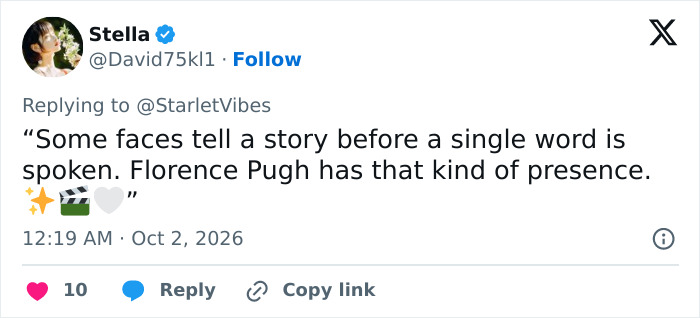
RogerEbert.com praised the actress for a highly physical portrayal built around subtle facial changes, loaded looks, and shifts in posture, suggesting that the character’s restraint is part of the performance rather than evidence that she is disengaged.
“She looks absolutely expressionless, completely lost inside,” one social media user wrote