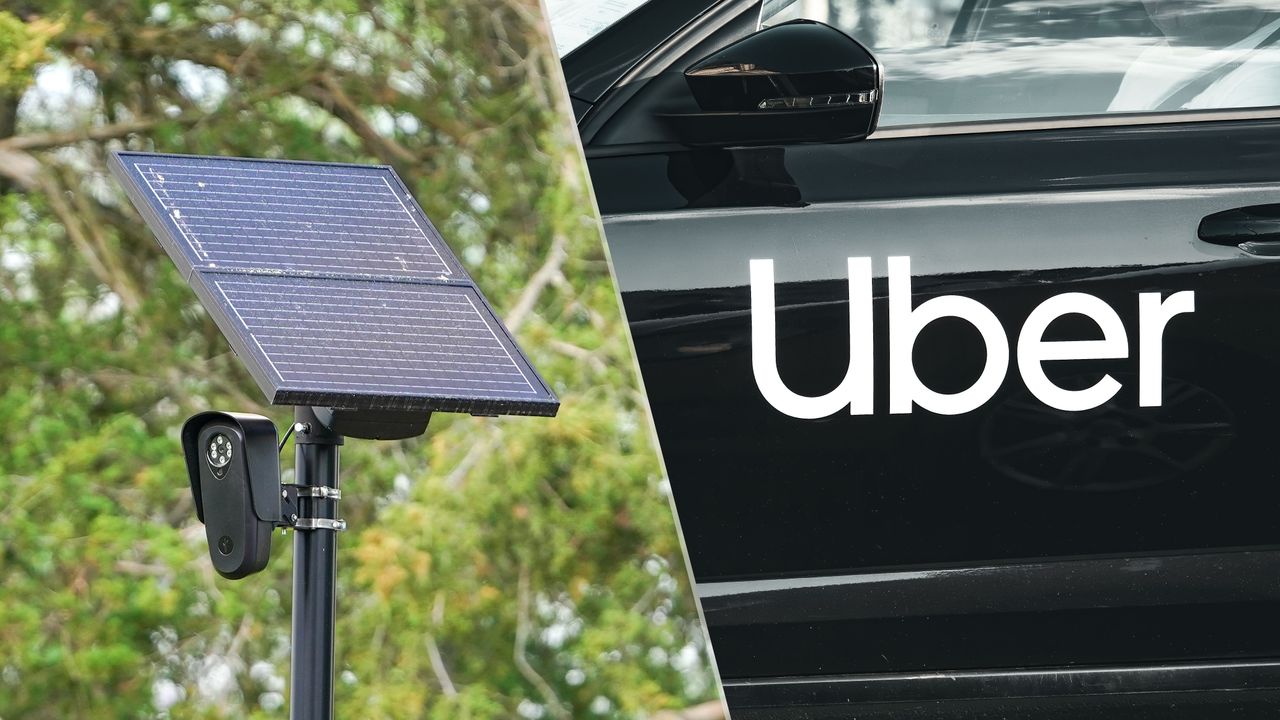
If you thought Flock Safety’s massive network of pole-mounted cameras couldn’t reach any further, think again. The company reportedly planned to use dash cams installed in Uber and Lyft vehicles to significantly expand its footprint.
As reported by 404 Media, an internal Flock presentation sheds new light on a potential partnership with dash cam maker Nexar. While the deal never materialized, it paints a concerning picture of how Flock envisions expanding beyond stationary poles.

The proposed partnership would have allowed Flock to leverage hundreds of thousands of Nexar dash cams installed in rideshare and delivery vehicles, scanning and capturing license plate data from surrounding traffic. While 404 Media first revealed the potential deal last summer, new details have emerged from a presentation Flock used to pitch the concept to potential customers.
Obtained through a public records request by a Georgia resident and shared with 404 Media, the pitch deck reveals an ambitious push toward mobile tracking. Crucially, the documents leave it unclear whether Uber or Lyft drivers would have even been informed that their dash cams were feeding data into a surveillance network.
Had the deal gone through, Flock’s coverage would have exploded — adding an estimated "350k Uber/Lyft and other delivery service devices" to its grid.
From fixed poles to mobile surveillance
Flock Safety’s pole-mounted automated license plate readers (ALPRs) have drawn widespread privacy concerns, and for good reason. Engineered to log the license plate, color, make, and model of every passing car, these devices now operate in nearly every U.S. state.
When Flock founder Garrett Langley launched the company in 2017 to combat property crime in his Atlanta neighborhood, the scope was localized. However, the system evolved into FlockOS, an interconnected nationwide network that allows law enforcement to trace a vehicle's movements across state lines.
What began as a neighborhood safety initiative has morphed into a mass surveillance apparatus ripe for abuse. Numerous law enforcement officers throughout the country have been suspended or fired for using the Flock network to track vehicles without a legitimate reason — in some cases, to spy on former spouses and partners.
Public backlash against Flock’s rapid expansion is mounting. Organizers have built tools like DeFlock to map camera locations, while others have taken a more direct approach by cutting down the poles and physically dismantling the hardware.
If that physical pushback continues, Flock may well double down on the strategy outlined in its Nexar pitch. By shifting from static poles to roving, unmapped mobile sensors, the company could expand its reach while insulating its hardware from public interference.
Have you seen Flock cameras pop up in your neighborhood? Or have you been wrongly served a ticket as a result of its license plate-reading tech? Let me know in the comments below.