Good morning, and happy Mardi Gras to everyone in Sydney. If you’re staying in – in Sydney, or wherever else you read this – our weekly selection of great writing from around the Guardian has some fascinating stories to while away the time.
Either way, have a lovely weekend.

1. The inside story of a royal disgrace, by Andrew’s biographer
Andrew Lownie spent years investigating the greed and excesses of Andrew Mountbatten-Windsor and Sarah Ferguson for his “cradle to police station” book which came out last year. Days after the former prince’s arrest, Lownie spoke to Zoe Williams about the barriers he faced in getting to the truth.
Tip of the iceberg: Of the 3,000 people he has approached from all corners of Andrew’s life, only a tenth have wanted to talk. Williams is unsurprised, but Lownie is indignant – it’s a matter of public interest, he tells her. “This is the thing that makes me upset. I, perhaps naively, expect standards in public life.”
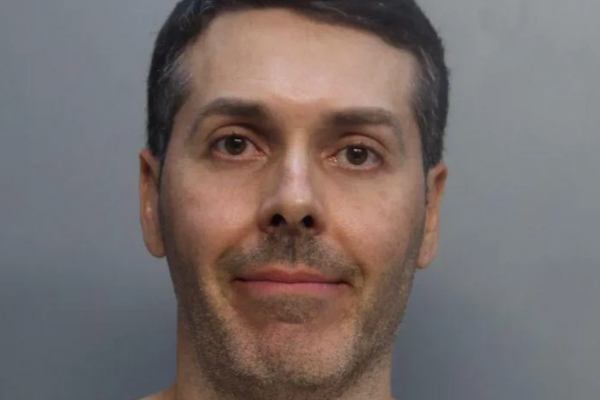
The photo on every front page: Williams’s description of the much-shared picture of Andrew (back of the car, post-release) is very good: “He looks hunted, because he literally has been, but his expression is curiously blank, its most legible emotion grievance.”
How long will it take to read: about five minutes.
2. CBGBs
Fifty years ago, when cheap spots to live were still plentiful in New York, whispers about an East Village dive bar run by a folk singer and an ex-marine were growing. Garth Cartwright chronicles how CBGB became a “totemic” hub for modern music where outsiders laid down blueprints for punk, spoken word, new wave, hardcore and more.
‘A locus of art and energy’: Patti Smith played there; the Ramones, Television, Talking Heads, Blondie; Lou Reed, Iggy Pop, John Cale, David Bowie (with bodyguard), Brian Eno and Malcolm McLaren hung out there; so did Robert Mapplethorpe, William Burroughs and Allen Ginsberg. The Police played too, and AC/DC, and later Sonic Youth and the Beastie Boys … you get the idea.
‘Gross, but great’: “The bathrooms were never cleaned,” Smith’s guitarist/producer, Lenny Kaye, remembers.
How long will it take to read: four minutes.
Another piece this week about music that captured a moment: composer William Basinski and musician Anohni told Tim Jonze how The Disintegration Loops – which Jonze calls “one of the most important musical recordings of the 21st century” – became a requiem for the 9/11 attacks.
3. ‘You can love again, you can have several lives in one’
* Warning: this next story deals with sexual assault – some readers may prefer to scroll down to story #4.
Gisèle Pelicot has become a global symbol of courage. The case she brought against her ex-husband changed French society and, Angelique Chrisafis writes in her confronting but uplifting interview, “showed that there is no such thing as a minor sexual offence”. Gisèle, now 73, waived her right to anonymity during the Avignon trial of Dominique Pelicot and dozens of men he invited to rape her after drugging her unconscious.
Years before his arrest, Pelicot was caught taking “upskirt” photos in Paris and merely fined; Gisèle was not told. The feeling at the time was that it “wasn’t so bad”, she says – a mentality of denial that returned with a vengeance during the 2024 trial.
***
“They were so casual, it was as if they were there for snatching a handbag … I think they hadn’t understood the scale of their crimes. That’s when you realised this was all about the triviality of rape. They looked me up and down as if to say: ‘Why is she troubling us with all of this?’” – Gisèle Pelicot
How long will it take to read: eight or so minutes
Further reading: Sophie Smith’s gripping and exceptional London Review of Books essay written during the case reckons with what we let men get away with.
4. Why chronic fatigue is so slippery
Hermione Hoby was knocked out for years by a “mystery illness” before finally getting a diagnosis for myalgic encephalomyelitis or ME, “also known by the extremely vexing name of chronic fatigue syndrome”. Vexing , she explains, “because it can make it sound like the problem is simply that you’re feeling a little meh. Which would describe most of the population, most of the time.”
She charts her winding path with the disease: moments of optimism, crushing setbacks, hopes for treatments that turn out to be neither nonsense nor miracle.
No diamond of insight, just a “modest lump of coal”: There’s no meaning to be wrested from a chronic condition, Hoby realises. “What it asks for is so much more banal – just the ongoing work of management and mitigation,” she writes. “Illness is meaningless, random – it happens to all of us, to varying degrees, and it simply sucks.”
How long will it take to read: nine minutes.
5. Learning to oil paint
“As a five-year-old, I loved fairies, Spice Girls and Vincent van Gogh.”
Sian Cain was a happy painter until high school, when she started getting marked for it. Having recently felt the itch to try again, she enrolled in an oil painting class, standing in front of an easel for four hours each week and going back to basics. She learned about composition, drawing and paint mixing – and the hardest lesson of all: to enjoy the struggle.
Origin story: Cain was first drawn to the painter by a picture book that told his story – but as “a teddy bear, not a depressed Dutchman”. “I loved Vincent, man and bear,” she writes, “I even went as Vincent Van Bear to Book Week and confused the hell out of everyone.” Even better, she’s got photo evidence to back it up.
How long will it take to read: two charming minutes.
Sign up
If you would like to receive these Five Great Reads to your email inbox every weekend, sign up here. And check out out the full list of our local and international newsletters.