Get all your news in one place.
100's of premium titles.
One app.
Start reading
The Economic Times
The Economic Times
Trending Desk

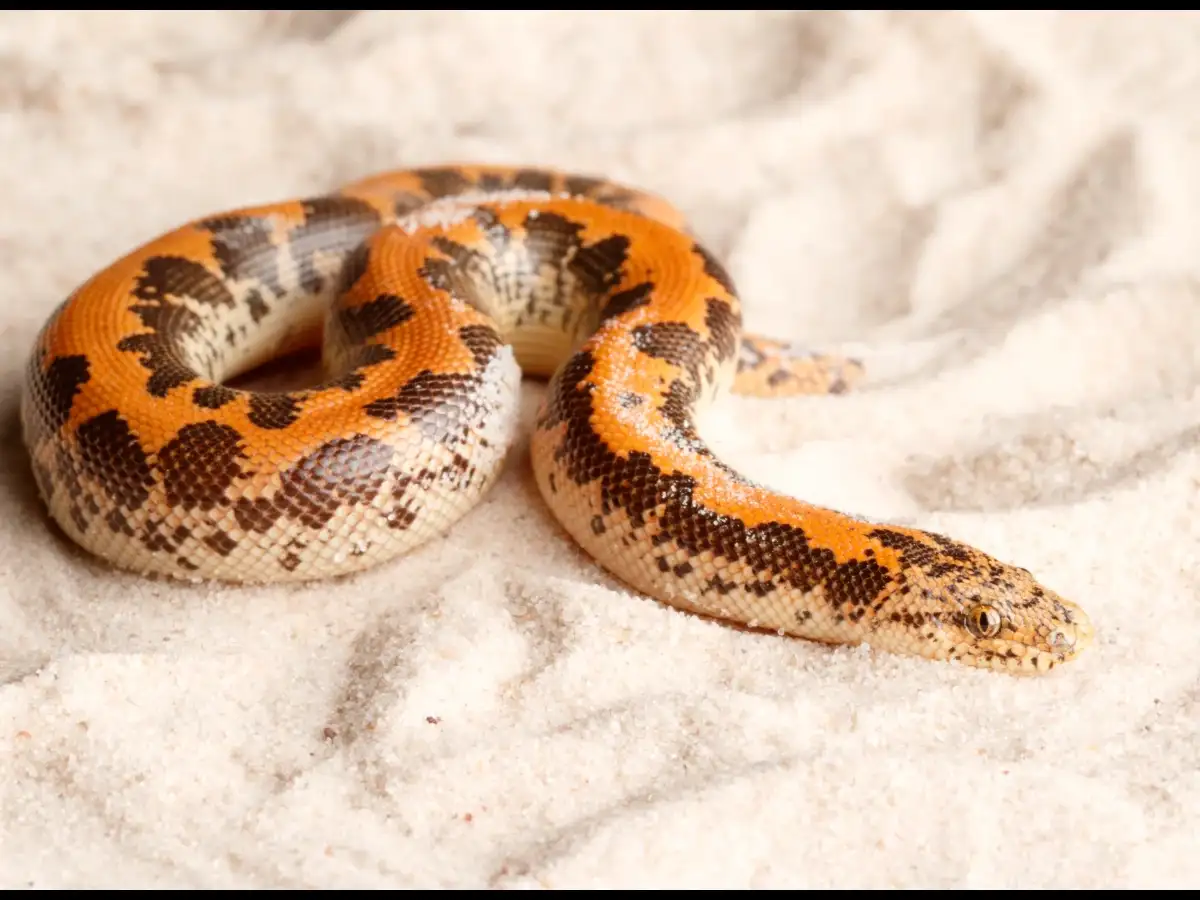
First scientific record of Sistan sand boa in India: 3 snakes found In Rajasthan’s Sikar; here’s how to identify them

A snake species known as the Sistan sand boa has been scientifically recorded in India for the first time after researchers identified three specimens in Rajasthan’s Sikar district.

The Sistan sand boa (Eryx sistanensis) is a non-venomous, thick-bodied snake known from dry regions of Iran and Pakistan. Researchers Vivek Sharma of Jabalpur and wildlife biologist Dharmendra Khandal of Tiger Watch found the three snakes during a survey in the Ramgarh-Shekhawati region of Sikar in 2025. Their findings were published in the Journal of Threatened Taxa on May 26, 2026.

Three Sistan Sand Boas Found In Sikar

The researchers identified three specimens from the Sikar region and studied their body shape, colour patterns and scales before confirming them as Sistan sand boas.

The discovery provides the first scientific record of Eryx sistanensis in India. The researchers noted that the species had previously been documented in Iran and Pakistan.

"We knew that this snake was different, but we did not rush to publish a research paper. We first decided to understand and study it properly," Khandal said.

How To Identify Sistan Sand Boa

The Sistan sand boa resembles the red sand boa (Eryx johnii), a species commonly found in India. One of the key differences is the shape of the tail.

The Sistan sand boa has a tail that gradually becomes thinner and ends in a pointed tip. In the red sand boa, the tail remains thick for much of its length before narrowing towards the end.

The researchers used morphological characteristics of the Indian specimens to distinguish the species from its look-alike, the red sand boa.

Sistan Sand Boa May Not Be Limited To Sand Dunes

The study suggests that the species may occur in human-influenced dry landscapes, including farmlands and other areas around settlements, rather than being restricted to typical sand-dune habitats.

Researchers said further studies are needed to determine the species’ distribution in Rajasthan and understand its population status and conservation requirements.

[With PTI Inputs]

Sign up to read this article
Read news from 100's of titles, curated specifically for you.
Already a member? Sign in here
Related Stories
Top stories on inkl right now
One subscription that gives you access to news from hundreds of sites
Already a member? Sign in here
Our Picks
Fourteen days free
Download the app
One app. One membership.
100+ trusted global sources.