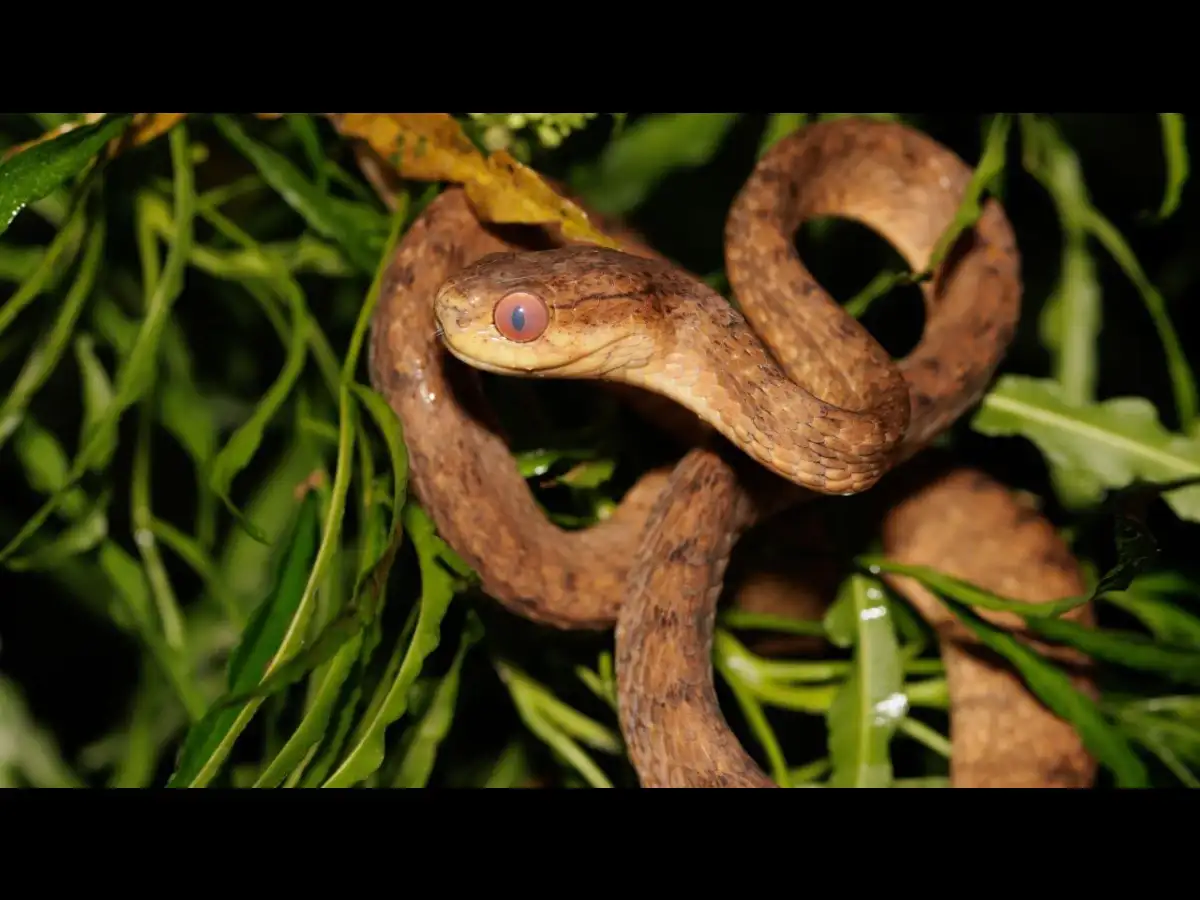
On a small US territory in the Western Pacific, an invasive snake has spent decades reshaping an ecosystem that evolved without such a predator. The brown treesnake, a nocturnal, tree-climbing reptile native to parts of Australia, Indonesia, Papua New Guinea and the Solomon Islands, arrived on Guam accidentally after World War II, most likely as a stowaway in cargo. The US National Park Service says its introduction ultimately produced an ecological disaster and the loss of almost all of the territory’s native forest birds.
What began with an accidental introduction eventually became an extraordinary population explosion. The US Department of Agriculture’s Animal and Plant Health Inspection Service says localized brown treesnake densities on Guam can reach 20 or more snakes per acre, among the highest snake densities ever recorded. With Guam covering roughly 130,000 acres, estimates cited by US authorities put the island’s snake population at more than 2 million.