
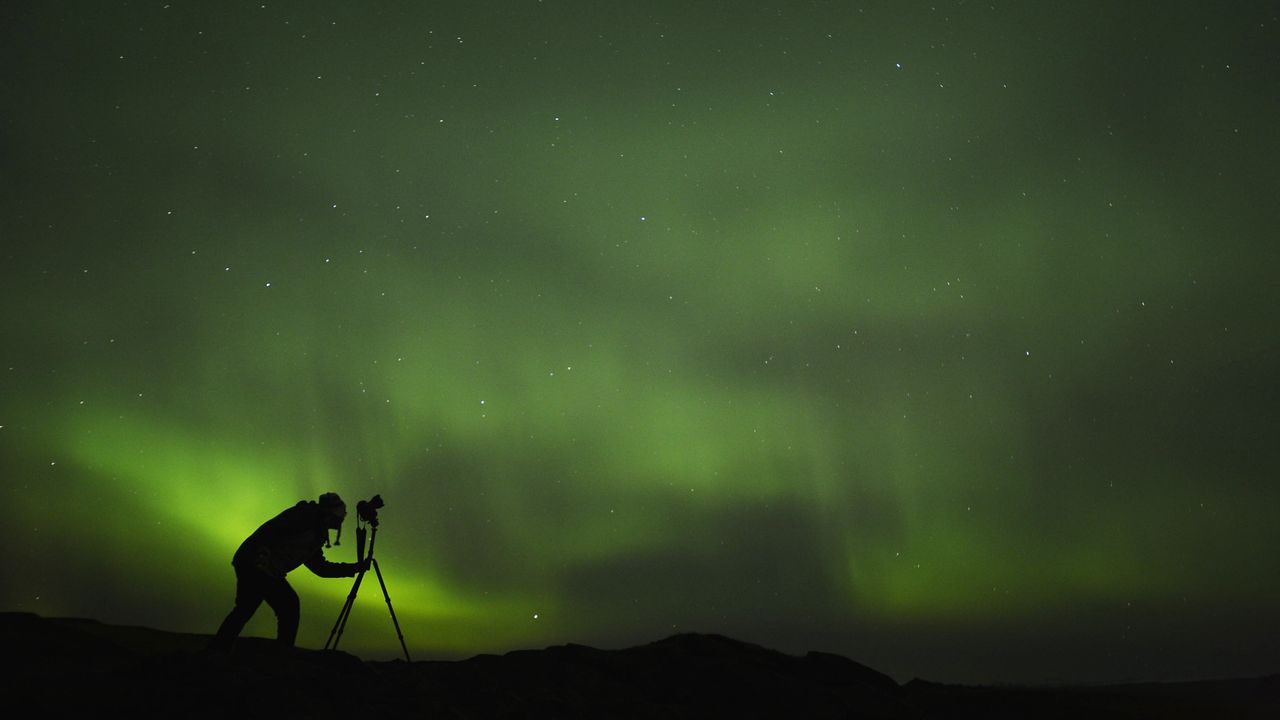
Photographers may have more than fireworks to capture this Fourth of July weekend, as several sun flares could mean a natural night sky light show over the next few days. Heightened solar activity could increase the odds of seeing the aurora farther south than usual over the weekend.
The sun emitted several flares over a 24-hour period on June 30. Those flares could potentially spark an aurora this weekend, as early as tonight, with heightened chances for an aurora continuing into the weekend.

The National Oceanic and Atmospheric Administration (NOAA)'s three-day geomagnetic forecast predicts that the highest levels of activity could potentially hit a KP6, a moderate G2-level storm, around 18:00 ET today. The levels remain above a KP4 for more than 24 hours, however.
NOAA, however, notes that this particular solar activity makes the forecast unpredictable, and the timing could come earlier or later than expected. The sun unleashed 10 flares over a 24-hour period, and how those flares interact makes the aurora even more challenging to predict than usual.
The organization notes that there is “some uncertainty” on the timing due to that unpredictability – if the solar activity hits during daylight hours, the aurora would not be visible.
With the timing uncertain, photographers should check NOAA’s short-term forecast – which tends to be more accurate than the three-day forecast – before losing sleep.
If the conditions remain favorable, northern US states and Canada could see some aurora activity:
The UK's MET Office is also monitoring the activity and notes a potential aurora, but says that "any aurora is likely to be restricted to the northern parts of the UK and similar latitudes."
Thankfully, photographing the aurora is a little like photographing a fireworks show: Bring a tripod and prepare to use slower shutter speeds.
You may also like...
Prep for the potential show by learning how to photograph the northern lights. Even if the northern lights don't show, you could still photograph the stars and other night sky phenomena this July.







