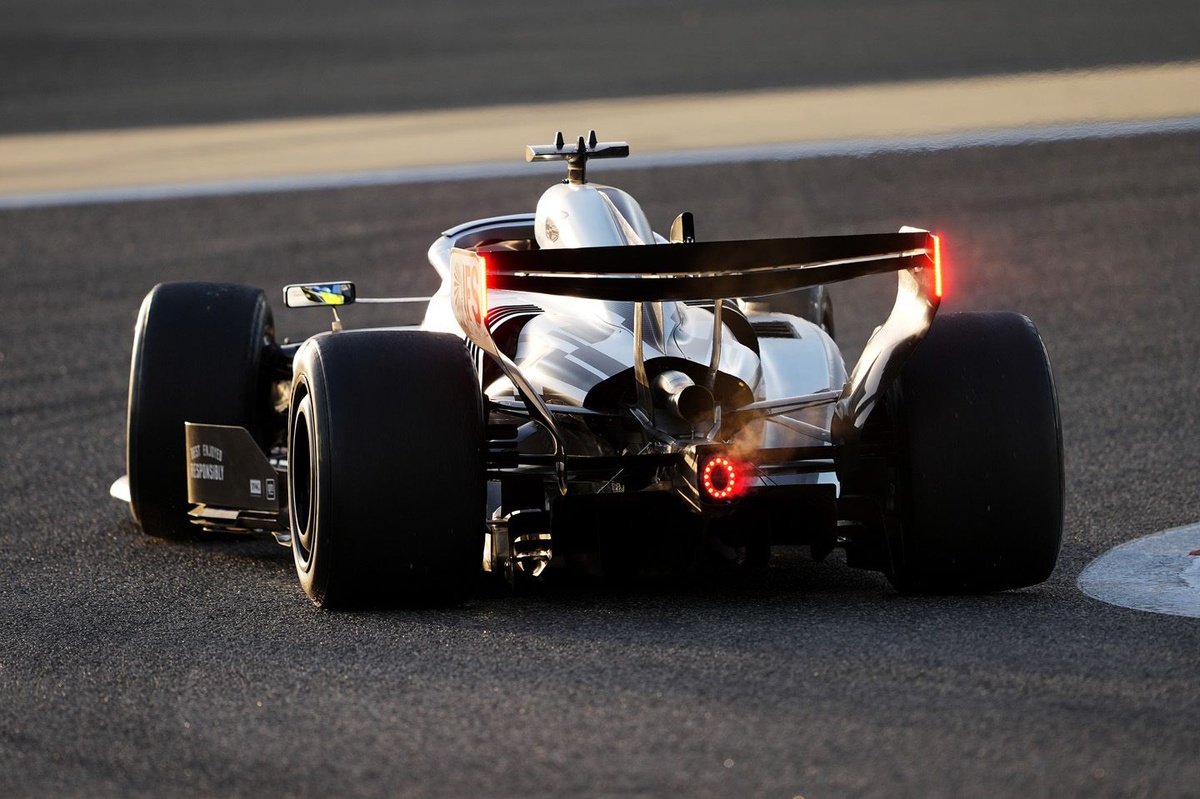
After Formula 1’s first on-track action of 2026, the reactions from drivers on 2026-spec machinery have been mixed. Lando Norris and George Russell have spoken positively, while Max Verstappen, Fernando Alonso and Lewis Hamilton have been more critical.
The Red Bull racer even said that the drivers who are positive could fit into a small “easy-up tent” and that those with objections form a larger camp. Following that remark, Norris also acknowledged that it is not, in his view, the purest form of racing.
Like F1 itself, the FIA is wary of an ‘overreaction’. According to the FIA single-seater director Nikolas Tombazis, the new regulations are largely in order, although he is open to listening to the initial complaints.
“The cars are new,” Tombazis pointed out. “In the period of last summer and last autumn, a lot of people were driving the simulators and expressing huge concerns. I think the comments in Barcelona and in Bahrain are certainly much better than what people [said based] on the simulator. But there are still some comments, like what Max said.
“We are completely conscious that we may need to make adjustments. That has been a discussion we've been open about with the teams and the PU manufacturers for a long, long time. And with the drivers, indeed. So I think there are some ways that we can act as a sport to make adjustments in the rules.”
“90%” already looking good?
The obvious follow-up question is, what kind of adjustments are being discussed behind the scenes? “Well, potentially on some of the rules to do with energy deployment,” Tombazis replied.
Although the governing body wants to wait for the first few races before coming forward with specific proposals, it is understood in the paddock that the focus will mainly be on the harvesting side of things. The FIA could, for example, allow drivers to recover more energy per lap.
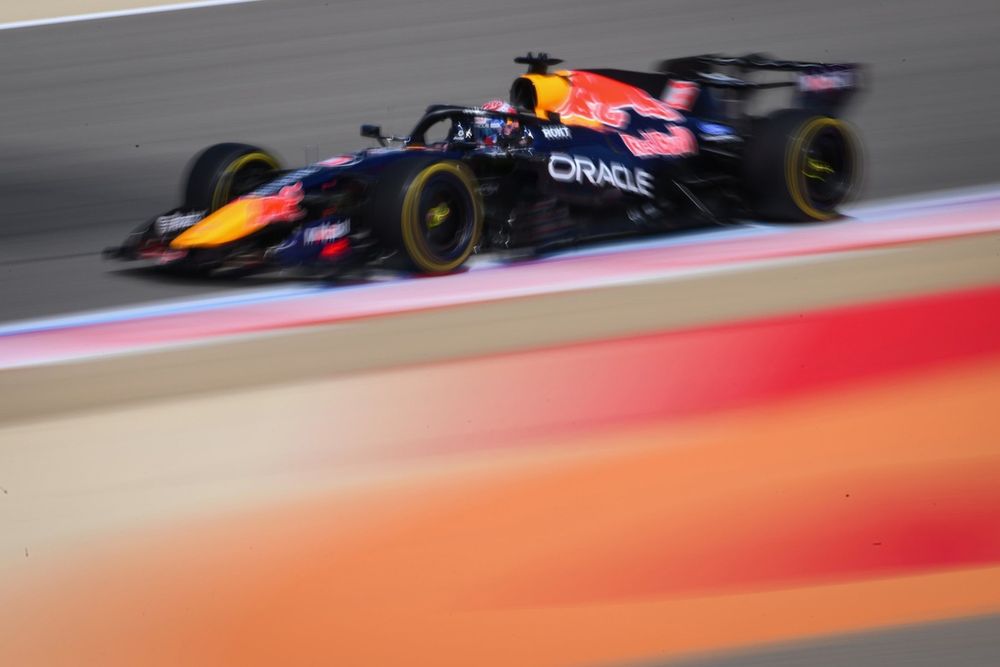
That would mean they would also have more energy to deploy and therefore be less “energy poor” on the straights, as Verstappen described it. However, it would also mean that in the corners and with additional downshifts, more energy management could be required in order to actually recover that extra energy.
According to the FIA, these aspects are primarily related to the software and how the power unit is run, and therefore do not have major consequences for the hardware.
“There wouldn't be any need for any change of your system,” Tombazis added. “It would be more how you run your system. Clearly, if you go to a power unit engineer, they would say, ‘Well, that changes a bit the duty cycle. And if I had known it, I would have maybe done this slightly different’ or whatever.”
That's true, but fundamentally cars are on different levels of electrical energy, and how that is deployed can affect some of these issues.
“We think we are not in a bad place where we are now,” the Greek added. “But if there needs to be some adjustments following these comments, we will discuss them all collectively as a sport and do what's needed.”
On that last point – that F1 is currently not “in a bad place” – Tombazis emphasised that the overall picture is already 90% satisfactory.
“I think if you take the comments that have been made in November or October or last summer, I think we are way, way better now. We've addressed a lot of the concerns. Have we addressed every single concern? No. I think there are some topics that are still open,” he replied when asked by Motorsport.com if the current situation was more worrying than anticipated.

“Of course, it is very easy to say, yes, if the internal combustion was much bigger and the ERS was much smaller, there would be fewer of these problems. And that is true. We've known right from 2022 that the 50-50 power solution has challenges.
“It's not new or a surprise. We've done a huge amount of work to work on how this energy is deployed. And I think we've done, in my view, 90% of the work to get to a reasonable place. There may be some adjustments as we've learned about the cars, and we are fully open to do that.”
How quickly can the FIA react if necessary?
Finally, the question remains how quickly the FIA could implement potential adjustments.
“We are learning as we go along,” Tombazis said. “And the first real test will be the first race, because here they're not really racing each other and so on. These changes do need a bit of discussion. There may be a few weeks of discussion, and we also need to go through the governance process.
“It's unlikely to be something between Australia and China, for example. But it's also not months and months.”
The FIA at least wants to wait for the first races to see what the actual picture looks like, with Tombazis keen for fans not to immediately draw far-reaching conclusions from Melbourne.
“We'll take the decision for the best of the sport,” Tombazis added. “This is a marathon, not a sprint. I definitely hope that Australia will be exciting. But I don't think Australia is the [be-all and end-all]. We have five years to go through, and we have very clear tools on how to act on things.
“We will see where we stand. And, as I say, discuss them openly and transparently, and do our best.”
Photos from Bahrain Pre-Season Testing - Day 6

Bahrain Pre-Season Testing Day 6, in photos

Bahrain Pre-Season Testing Day 6, in photos

Bahrain Pre-Season Testing Day 6, in photos

Bahrain Pre-Season Testing Day 6, in photos

Bahrain Pre-Season Testing Day 6, in photos

Bahrain Pre-Season Testing Day 6, in photos

Bahrain Pre-Season Testing Day 6, in photos

Bahrain Pre-Season Testing Day 6, in photos

Bahrain Pre-Season Testing Day 6, in photos

Bahrain Pre-Season Testing Day 6, in photos

Bahrain Pre-Season Testing Day 6, in photos

Bahrain Pre-Season Testing Day 6, in photos

Bahrain Pre-Season Testing Day 6, in photos

Bahrain Pre-Season Testing Day 6, in photos

Bahrain Pre-Season Testing Day 6, in photos

Bahrain Pre-Season Testing Day 6, in photos

Bahrain Pre-Season Testing Day 6, in photos

Bahrain Pre-Season Testing Day 6, in photos

Bahrain Pre-Season Testing Day 6, in photos

Bahrain Pre-Season Testing Day 6, in photos

Bahrain Pre-Season Testing Day 6, in photos

Bahrain Pre-Season Testing Day 6, in photos

Bahrain Pre-Season Testing Day 6, in photos

Bahrain Pre-Season Testing Day 6, in photos

Bahrain Pre-Season Testing Day 6, in photos

Bahrain Pre-Season Testing Day 6, in photos

Bahrain Pre-Season Testing Day 6, in photos

Bahrain Pre-Season Testing Day 6, in photos

Bahrain Pre-Season Testing Day 6, in photos

Bahrain Pre-Season Testing Day 6, in photos

Bahrain Pre-Season Testing Day 6, in photos

Bahrain Pre-Season Testing Day 6, in photos

Bahrain Pre-Season Testing Day 6, in photos

Bahrain Pre-Season Testing Day 6, in photos

Bahrain Pre-Season Testing Day 6, in photos

Bahrain Pre-Season Testing Day 6, in photos

Bahrain Pre-Season Testing Day 6, in photos

Bahrain Pre-Season Testing Day 6, in photos

Bahrain Pre-Season Testing Day 6, in photos

Bahrain Pre-Season Testing Day 6, in photos

Bahrain Pre-Season Testing Day 6, in photos

Bahrain Pre-Season Testing Day 6, in photos

Bahrain Pre-Season Testing Day 6, in photos

Bahrain Pre-Season Testing Day 6, in photos

Bahrain Pre-Season Testing Day 6, in photos

Bahrain Pre-Season Testing Day 6, in photos

Bahrain Pre-Season Testing Day 6, in photos

Bahrain Pre-Season Testing Day 6, in photos

Bahrain Pre-Season Testing Day 6, in photos