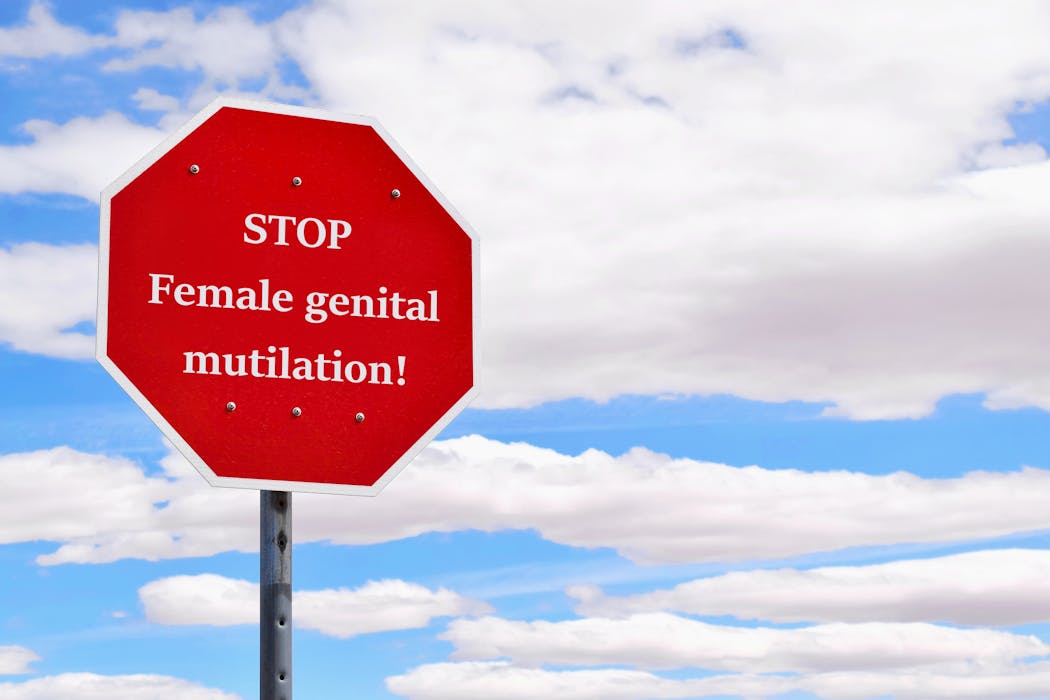
Female genital mutilation or cutting (FGM/C) remains a threat to the rights of women in Southeast Asia, often religiously and culturally justified. Yet, despite lasting physical and psychological impacts, governments have not mounted a coordinated regional effort to address it.
From about 4.1 million of FGM/C cases worldwide, which involves cutting tissue or the clitoris itself, more than one million cases occur in Asia.

The practice has been documented in Indonesia, Malaysia, Thailand, Singapore, the Philippines, and Brunei Darussalam. Reliable data in Southeast Asia is limited, but Indonesia is estimated to account for around 35% of reported cases globally.
FGM/C undermines women’s reproductive and sexual health. Studies link it to severe bleeding, infection, chronic pain, menstrual and urinary problems, and complications during childbirth.
WHO classifies the practice as a form of mutilation that violates human rights. But so far, countries in the region have yet to fully ban all forms of female genital mutilation.
Growing challenges in Southeast Asia
Governments across Southeast Asia are often reluctant to confront or ban all forms of FGM/C, partly because some religious authorities continue to justify it.
For example, Malaysia’s Department of Islamic Development considers it obligatory for Muslim girls, while Indonesia’s Ulema Council describes it as recommended. These positions have slowed efforts to protect the rights of women and girls.
Yet many Muslim scholars worldwide have condemned the practice because of its harmful impacts. In Indonesia, the Women’s Ulema Congress — a network of female Islamic scholars — has also called for an end to female genital cutting.
Beyond the religious debate, addressing FGM/C requires clear evidence.
Indonesia’s participation in the UNICEF-UNFPA Joint Programme, for instance, shows how data can help secure funding and shape policy. Indonesian government has set a target to reduce the practice from about 46% to 34% between 2024 and 2029 under its National Medium-Term Development Plan.
While this is a positive first step, Southeast Asia can learn from African nations, which have made ending FGM a regional priority through formal protocols.
Southeast Asian countries need a coordinated regional approach to end FGM/C in a way that upholds human rights and advances gender equality. Three key aspects should guide these efforts.
1. Explicit law and policies
The African Union’s Maputo Protocol shows the importance of addressing female genital mutilation directly within child protection and gender equality efforts.
Several African countries, including Chad, Côte d’Ivoire, Guinea, and Somalia, have written protections into their constitutions. About half of the protocol’s signatories now have national strategies to end the practice, and 20 countries have criminalised it through specific laws.
Even so, states can still enter reservations to protect sovereignty, highlighting the challenge of enforcing regional agreements.
While ASEAN (the Association of Southeast Asian Nations) has established a Gender Mainstreaming Strategic Framework, it does not yet treat FGM/C as an explicit priority.
The bloc’s long-standing tradition of non-interference often prevents it from addressing sensitive cultural or religious issues across borders. Advocacy is needed to ensure the issue is clearly included in regional human rights agendas.
2. Addressing medicalisation and cross-border practice
A recent study highlights that nurses, midwives, and doctors are increasingly performing FGM/C across Southeast Asia. Indonesia, Malaysia, and Singapore report some of the highest rates of medicalised procedures.
Medicalisation can create the false impression that the practice is safer, yet there is no scientific evidence that it reduces harm.
In Indonesia, prevalence is slightly higher in urban than rural areas, suggesting the trend may be linked to urbanisation.
As more countries move to ban FGM/C, cross-border procedures may also rise. East Africa offers a warning: the practice has become common in border areas, prompting the East African Community to draft a regional bill to address it. In countries such as Kenya, Tanzania, Uganda, Ethiopia, and Somalia, prevalence is often higher in border regions than national averages.
Learning from efforts in East Africa, Southeast Asian nations must collaborate to tackle the issue of cross-border FGM/C.
3. Changing beliefs that harm women
Laws alone are not enough. Resistance to women’s rights advocacy remains widespread, and the FGM/C reflects a deeper gender inequality by reinforcing harmful norms about women and girls.
Research suggests that shifting beliefs must be paired with broader efforts to drive real behavioural change.
The African Union’s gender equality strategy includes a continent-wide campaign to end FGM/C. Southeast Asia needs a similar regional approach.
Rather than normalising medicalised procedures, countries should invest in support services for survivors and those at risk.
FGM/C is not tradition — it is violence. Southeast Asia has the tools to act, but action must come with urgency. A coordinated regional strategy — backed by strong legislation, accountability, and support for survivors — will be key to ending FGM/C and protecting future generations.
Adinda Ghinashalsabila Salman translated this article from Bahasa Indonesia.
Nadira Irdiana is affiliated with the ARC Centre of Excellence for the Elimination of Violence against Women (CEVAW). She is a recipient of the Australia Awards scholarship.
This article was originally published on The Conversation. Read the original article.