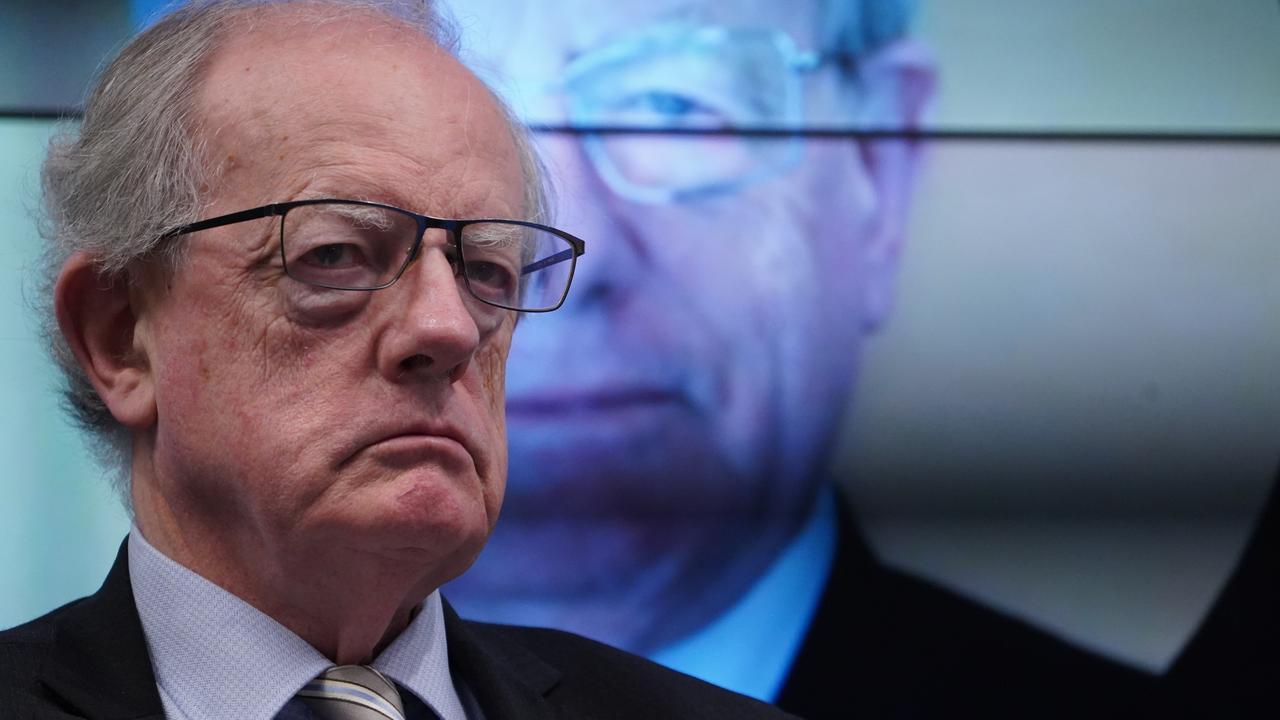
The nation's top corruption fighter will step down two years before the end of his term, blaming long-running conflict-of-interest allegations for distracting from the agency's work.
Inaugural National Anti-Corruption Commissioner Paul Brereton, appointed to the role in 2023, has faced a number of complaints about his ties with the military and his initial decision not to investigate referrals from the Robodebt royal commission.

"I believe that the commission's success is paramount and not due to any single person," Mr Brereton said in a statement on Monday.
"While I will continue to resist any suggestion of impropriety, I have decided that it is time, now that the commission is established and functioning with quality staff and good processes, to step aside."
Mr Brereton is due to face a senate estimates committee for the first time on Tuesday.
In 2025, the former war crimes investigator stepped away from all defence-related corruption referrals to avoid any perceived conflict of interest, after revelations he was continuing to work with the inspector general of the Australian Defence Force as a consultant.
A separate inquiry into the NACC's decision not to follow up referrals related to the Robodebt scandal found Mr Brereton should have removed himself from the decision-making process because he was affected by apprehended bias, but did not make any findings of intentional wrongdoing or impropriety.
That decision was overturned and the commission eventually found two public servants had engaged in serious corrupt conduct.
Independent MP Helen Haines, who led the push for a national corruption watchdog and sits on federal parliament's NACC oversight committee, said the change in leadership was a chance to make the agency's recruitment processes more transparent.
"We need to understand decisions made around who is the best candidate, and we absolutely need to be very, very clear - and the public needs to see that - conflicts of interest, perceived conflicts of interest, are declared and managed," she told reporters in Canberra.
Dr Haines reiterated her call for the watchdog to hold more public hearings, which can only take place in exceptional circumstances.
"Many of these investigations are complex and need to be undertaken in a very, very careful way and we don't want to bring the public in too early,'' she said.
"But the problem is, we're not bringing the public in at all."
Greens senator David Shoebridge said Mr Brereton's resignation was the right outcome and would help rebuild trust in the agency.
"Commissioner Brereton's inability to appropriately manage conflicts of interest, including relating to the Robodebt scandal, has plagued the NACC and materially damaged public trust," he said.
Mr Brereton's resignation will take effect on July 6, just over three years into his five-year term.
An investigation into his handling of alleged conflicts of interest with defence is ongoing.
A draft of that report has already been given to the NACC, government officials told senate estimates on Monday.
Announcing his resignation, Mr Brereton said the mere existence of the National Anti-Corruption Commission had changed behaviour across the public service.
That had been reinforced by education programs and investigations, he said.
The commission had open investigations into current or former politicians and their staff, senior public servants, contractors, consultants and a grants scheme, Mr Brereton said.
Attorney-General Michelle Rowland thanked Mr Brereton for his service as a corruption fighter and major-general in the ADF reserves.
"Commissioner Brereton has made an invaluable contribution to the establishment of the NACC as its inaugural commissioner," she said.