
Get all your news in one place.
100's of premium titles.
One app.
Start reading
Ideal Home
Ideal Home
Holly Cockburn

Fed up with clutter? This is the exact amount of crockery you *actually* need in a kitchen – as well as inspiration to ditch the rest

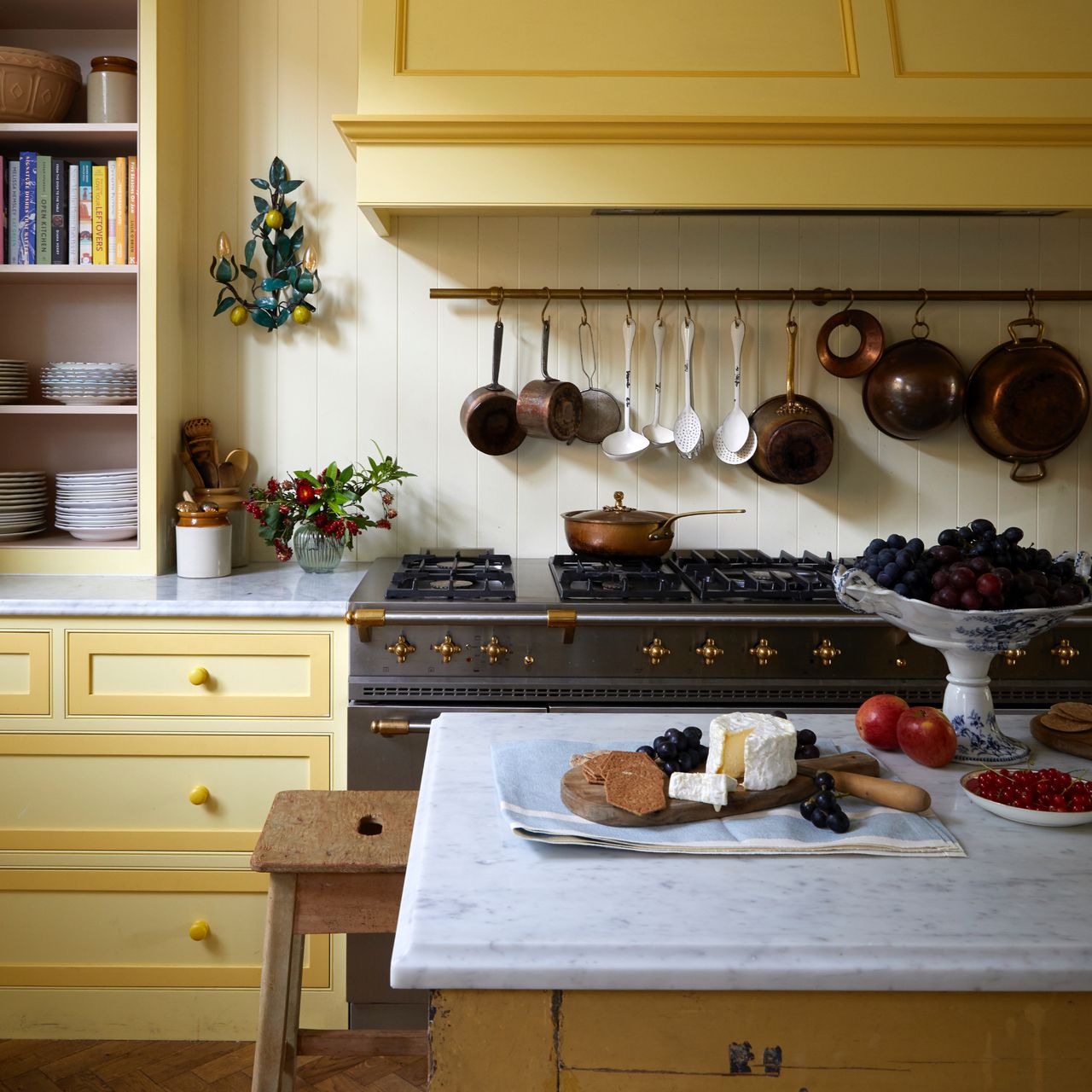
Yellow kitchen with copper pans hanging over range cooker from a rail.

Kitchens can so quickly become cluttered and disorganised. Before you know it, you have way too many hosting platters, a cupboard bursting at the seams with glassware and a few too many pots and pans for daily use.

Decluttering should be easy, but how do you know you won't need it in the future? Unless you're a cut-throat organiser with perfect kitchen storage ideas who also finds it easy to send things to the charity shop, you might need some clear rules to follow.

Advice from professionals is sometimes the easiest way to finally admit that multiple cutlery sets is too many for one home (I'm looking at myself, here), which is why I've sought out expert advice for the amount of kitchenware you actually need. Here's what she had to say.

How much crockery do you need in a kitchen?

(Image credit: Future PLC/Kristy Noble)

I'll be the first to admit that I have a serious problem with hoarding homeware for a rainy day. Whether that is a small appliance that I hope to have room for one day in my dream kitchen or fun dishware that is destined for a dinner party, I find it hard to get rid of kitchenware that I might one day want or need.

However, this is why my kitchen is bursting at the seams. I have plenty of cupboard space, particularly for a small kitchen, but somehow 3 months after every declutter it is once again jam-packed.

So when I heard an expert advising the exact amounts of crockery and kitchenware you actually need in a cooking space, I knew it was just the type of cut-and-dry advice that I would actually listen to. When you bring maths into the equation, how can you argue?

(Image credit: Future PLC/James French)

Now, this advice largely depends on the size of your household; it's designed to be adaptable to fit your exact needs.

'The key is to have enough crockery, cookware, and glassware to cover at least a few meals for every person in your household. This can help to manage mealtimes and dishwasher turnover efficiently, without causing surplus items to take up precious storage space or leading to countertop clutter (particularly near to the sink),' explains Gaël Blake, design director for Nook Home.

This makes sense - the last thing you need after throwing away or donating kitchenware is to find that you don't have enough to host, which leads to spending more money on replacing items. However, you also don't want an abundance of things that clutter up your space, 'just in case' they one day come in handy.

(Image credit: Olive & Barr)

Sharing her insights with Nook Home, interior designer Samantha-Jane Agbontaen suggests that these quantities are a safe bet for diminishing clutter:

'For cookware and ovenware, stick to 2 to 3 pieces solo, 4 to 6 for a family. Nesting trays, two roasting dishes maximum. When it comes to pots and pans, 3 for one person and 5 to 6 for a family will be plenty,' Samantha explains.

'For crockery and cutlery, buying four above your household size is the sweet spot. It covers you for guests and the occasional breakage without tipping into excess that sits unused in a cupboard for years. The same logic applies to cookware,' she adds.

'A saucepan, a frying pan, a casserole and a stockpot covers almost every cooking scenario. Anything beyond that should only come in when something specific and regular demands it. These numbers work because they keep the kitchen practical, easy to use and free from unnecessary duplication.'

(Image credit: Future PLC/Paul Massey)

Sticking to a specific number for kitchenware is about so much more than practicality. Yes, it helps to keep your cupboards organised and it will also streamline your cooking experience, but it's also far better for your mind, too.

'Physical clutter can add to the mental load that we are carrying, leaving us feeling stressed or anxious. Decluttering can positively impact mental health by regaining control, tackling overwhelm, and creating space,' explains psychotherapist Georgina Sturmer.

Wondering where to start? 'The right time to declutter is when you are reaching past things to get to what you actually use,' Samantha recommends. 'I recommend going through once a year, ideally before any new purchases, and asking honestly: ‘have I used this in the last twelve months?’ If the answer is no, it does not need to be there.'

Shop kitchen essentials

Ready to tackle kitchen clutter? These simple rules for decluttering a kitchen will inspire you to get started.

Sign up to read this article
Read news from 100's of titles, curated specifically for you.
Already a member? Sign in here
Related Stories
Top stories on inkl right now
One subscription that gives you access to news from hundreds of sites
Already a member? Sign in here
Our Picks
Fourteen days free
Download the app
One app. One membership.
100+ trusted global sources.