Get all your news in one place.
100's of premium titles.
One app.
Start reading
International Business Times
Business
Merin Rebecca Thomas

Fed Officials Voice Growing Concern Over Inflation And Supply Chain Pressure From Iran War

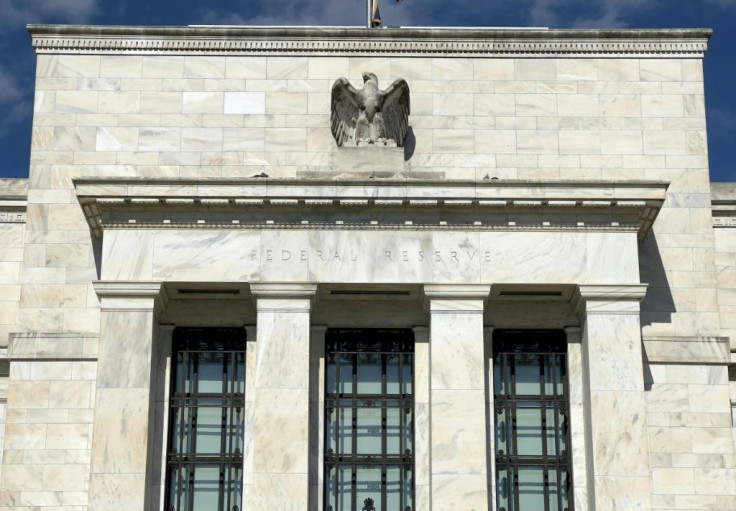
Data from the Federal Reserve Bank of New York showed its Global Supply Chain Pressure Index jumped sharply in April to 1.82 from 0.68 in March, the highest reading since 2022. (Credit: AFP)

Officials at the Federal Reserve are increasingly concerned over the economic fallout from the US-Israeli war with Iran, with several of them warning that inflation risks are becoming harder to contain as the conflict drags on, according to a new report.

Divisions inside the Fed became more visible during the central bank's late-April policy meeting, where three officials dissented against language suggesting interest rates could eventually move lower.

Cleveland Fed President Beth Hammack, Dallas Fed President Lorie Logan and Minneapolis Fed President Neel Kashkari argued that policymakers should acknowledge the growing possibility that rates may need to remain elevated or even increase if inflation worsens.

The Fed ultimately kept its benchmark interest rate unchanged at 3.50% to 3.75%, though the decision marked the most divided vote since 1992. Officials cited elevated inflation and uncertainty linked to the Middle East conflict in their policy statement, Business Recorder reported.

Fed Chair Jerome Powell had initially suggested in March that the economic impact from the war would likely remain temporary and concentrated in energy markets. But as the conflict has continued into a tenth week, concerns inside the central bank have broadened to include supply chains, commodity shortages and inflation expectations, according to CNN.

The war has disrupted access to key industrial materials including fertilizer, helium and aluminum, increasing costs for businesses already grappling with higher energy prices. Recent surveys from the Institute for Supply Management showed companies taking steps to secure inventories and diversify suppliers as shipping and procurement pressures intensify.

Data from the Federal Reserve Bank of New York showed its Global Supply Chain Pressure Index jumped sharply in April to 1.82 from 0.68 in March, the highest reading since 2022.

Policymakers are also watching inflation expectations, which play a major role in consumer behavior and financial markets. If households and businesses begin expecting inflation to remain elevated for years, the Fed fears those expectations can become embedded in wage demands and pricing decisions.

Williams said inflation expectations remain "well anchored" despite recent shocks, pointing to surveys from the University of Michigan, the New York Fed and the Conference Board. Kashkari also said recent long-term expectations data provided some reassurance, according to the outlet.

At the same time, some market indicators have started moving higher. The 10-year inflation breakeven rate, a closely watched measure derived from Treasury markets, recently climbed to 2.5%, its highest level since early 2023.

Fed Vice Chair Philip Jefferson warned in March that inflation remaining above the Fed's 2% target for an extended period could make it more difficult for policymakers to bring prices back under control.

Minutes from the Fed's March meeting, reported earlier by Bloomberg, showed officials already debating the risk that prolonged fighting in the Middle East could delay progress on inflation and force the central bank to reconsider rate policy. Policymakers noted that higher energy prices tied to the conflict could feed into broader "core" inflation measures beyond gasoline and fuel costs.

Other central banks are also responding to the economic fallout from the war. Minutes released this week from the Bank of Japan showed officials discussing possible rate increases if energy-driven inflation persists, according to Reuters.

Financial markets have remained highly sensitive to developments in the Middle East. Oil prices, Treasury yields and the US dollar have all fluctuated sharply in recent weeks as investors react to changing expectations surrounding the conflict and its impact on inflation and interest rates.

Sign up to read this article
Read news from 100's of titles, curated specifically for you.
Already a member? Sign in here
Related Stories
Top stories on inkl right now
One subscription that gives you access to news from hundreds of sites
Already a member? Sign in here
Our Picks
Fourteen days free
Download the app
One app. One membership.
100+ trusted global sources.