
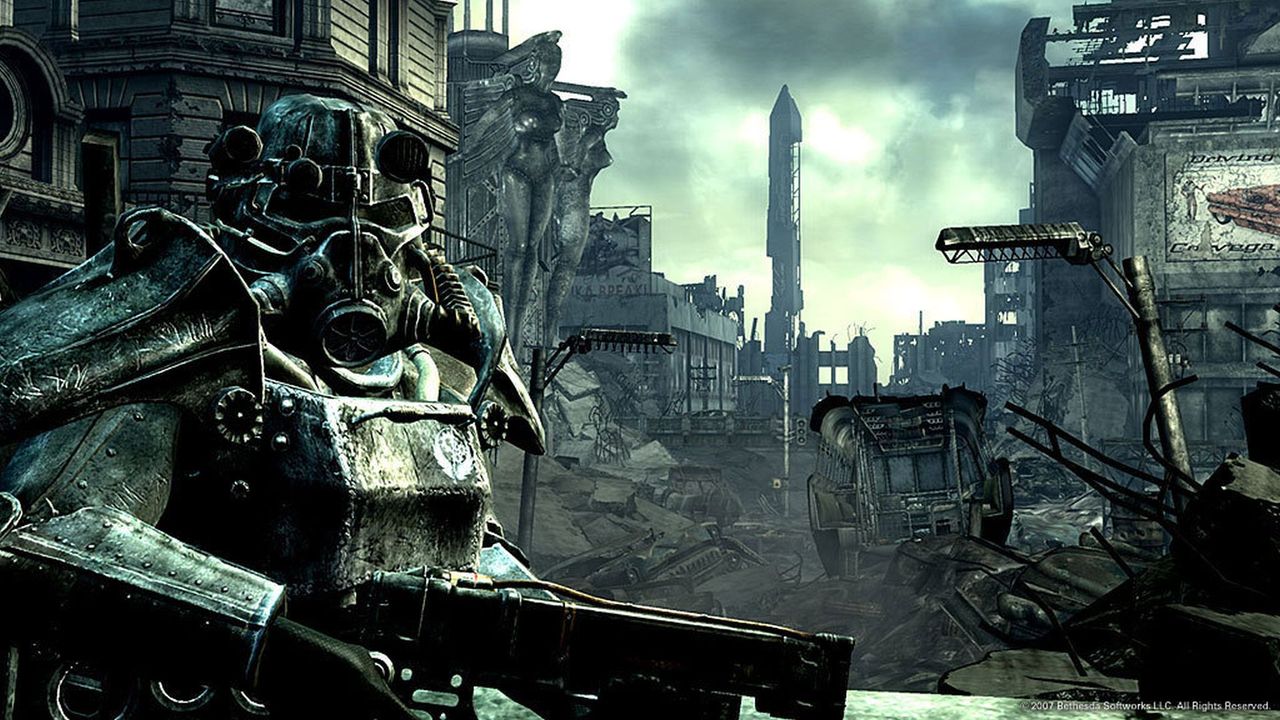
After Morrowind and Oblivion, the difficulties Bethesda had in pivoting to sci-fi for Fallout 3 are well-documented. But one major thorn in the studio's side proved to be one of the apocalyptic RPG's most iconic features.
Speaking to Edge magazine, lead artist Istvan Pely says that the move from the fantasy of Oblivion to the science fiction of Fallout 3 "was a big pivot." The studio "had to prove that we could pull off a totally different genre, the opposite of fantasy." Fallout 3 remained "very much an RPG," but that could make for an unenviable situation for the player.

"We had to work out how your character's abilities would factor into your ability to shoot," Pely explains. "Your skills aren't good, so when you shoot at things, you're missing – but does that feel good? Or is it just frustrating?"
Enter VATS, which could have been the perfect answer to Bethesda's questions, but instead offered "some significant challenges." Pely says "there was a long period where it was like 'is this even fun? Is this worth doing at all? Is anyone even going to use this?'" One of the biggest issues was camera positioning, and eventually Bethesda had to write an entire algorithm "to make sure it didn't get stuck behind an object" during the slow-motion playback. Getting the system right took "so much time" that Bethesda "only just" got it working in time to ship the entire game.
Clearly, the team's fears were largely unfounded. While VATS isn't necessarily for everyone, it's remained a core part of Fallout's identity. Neither has the switch between sci-fi and fantasy seemed to cause too much difficulty. After Fallout 3 came Skyrim, and after that Bethesda went back to Fallout 4. Fallout 76 and Starfield bucked the trend in sci-fi's favor, but with The Elder Scrolls 6 hopefully stepping into the light relatively soon, we're moving back in the traditional direction.
Fallout holds a spot on our list of the best RPGs of all time.