
Get all your news in one place.
100’s of premium titles.
One app.
Start reading
GamesRadar
GamesRadar
Technology
Dustin Bailey

Fallout 3 feeling like "Oblivion with guns" was only natural, Todd Howard says – the RPG was Bethesda's follow-up to, well, Oblivion

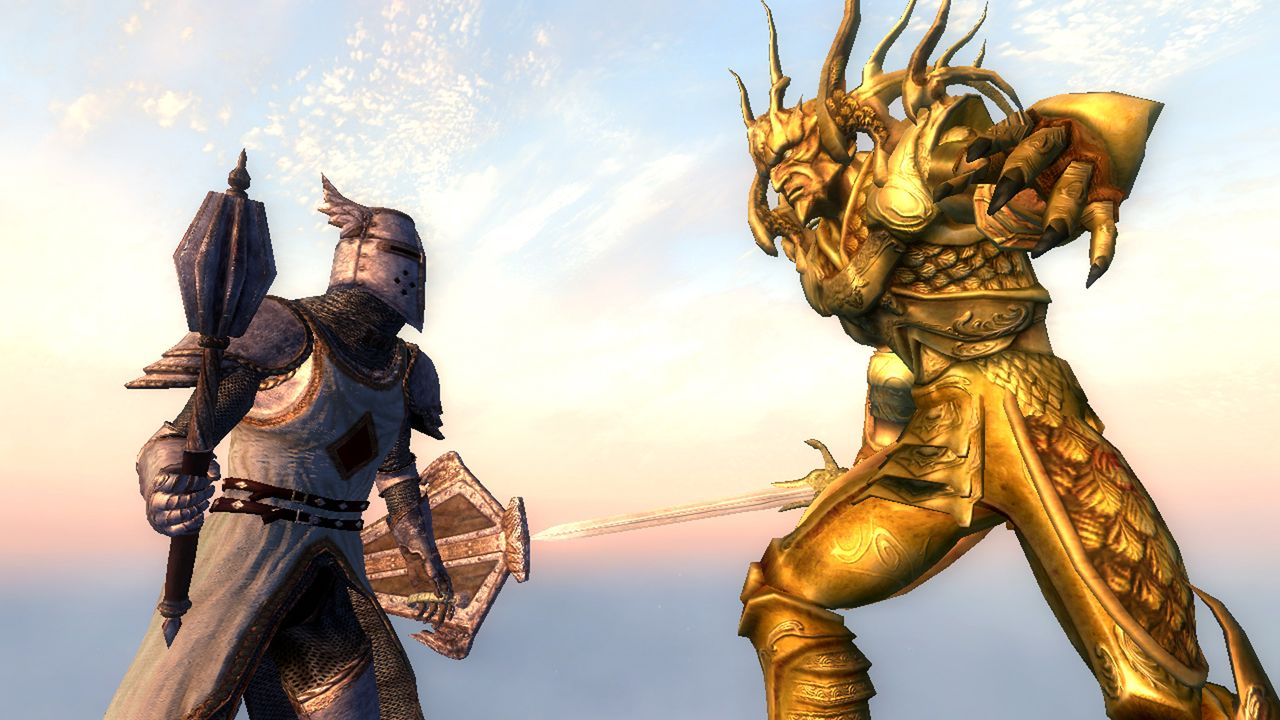
The Elder Scrolls 4 Oblivion screenshot.

Before Fallout 3's launch in 2008, Bethesda's revival of the post-apocalyptic was criticized both by die-hard Fallout fans and portions of the mainstream gaming audience with one, unified dismissal: "Oh, it's just Oblivion with guns." 18 years later, Todd Howard says Fallout 3's similarities to Oblivion were only natural, since it was Bethesda's follow-up to the fantasy RPG.

"The Oblivion-ish-ness of Fallout 3, I think, has to do with, in many respects, it's our follow up to Oblivion," Howard muses in an interview with Game Informer. "So, it's, you know, we’re rebooting Fallout, which people haven’t seen in a while, in an all-new way. But you’re coming off Oblivion, which was hugely popular, so you’re getting an audience that you know expects both."

The first two Elder Scrolls entries offered procedurally generated worlds before Bethesda settled on the hand-crafted it's now known for. Morrowind "popularized" the open-world format that now defines Bethesda's output, and Oblivion did the same "in a different way," Howard reckons. Fallout 3, it seems, was just the next step in exploring that style of open-world RPG.

That's not to say Fallout 3 was meant to be identical to Oblivion, and that's why Bethesda took caution to make sure it bore little aesthetic resemblance to its predecessor. "We were so conscious of proving that we could do this genre switch and that Fallout would feel very different from what came before, like Oblivion, that I think that informed a lot of how Fallout 3 was a very dark, bleak, very post-apocalyptic type of world," lead artist Istvan Pely explains.

I played a lot of Fallout 3, but I never enjoyed it quite as much as I liked Oblivion, in part because Bethesda's efforts to make it feel much more dark and bleak were so effective. These are games you're meant to spend hundreds of hours in, and I found that a lot easier to do in a colorful fantasy world rather than a desaturated post-apocalypse. But, of course, that aesthetic shift is by design.

"Oblivion was very saturated and colorful and bright for the most part," Pely continues, "and we sapped out the color, we darkened it, we just added grunge, and everything that’s like… it was almost an overcorrection to say, 'Alright, we need to make a statement that we’re going to take this seriously and do Fallout justice.' I think that gave 3, specifically, a very, very hardcore visual identity. That was, I think, a surprise to a lot of folks that we could pull it off."

Bethesda's take on the series was controversial, but it's given us some of the best Fallout games.

Sign up to read this article
Read news from 100’s of titles, curated specifically for you.
Already a member? Sign in here
Related Stories
Top stories on inkl right now
One subscription that gives you access to news from hundreds of sites
Already a member? Sign in here
Our Picks
Fourteen days free
Download the app
One app. One membership.
100+ trusted global sources.