Get all your news in one place.
100's of premium titles.
One app.
Start reading
The Conversation
The Conversation
Frederik Joelving, Contributing editor, Retraction Watch

Fake papers are contaminating the world’s scientific literature, fueling a corrupt industry and slowing legitimate lifesaving medical research

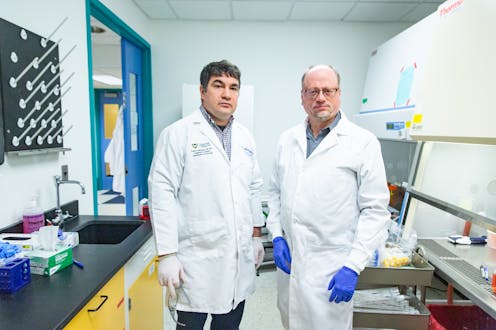
Assistant professor Frank Cackowski, left, and researcher Steven Zielske at Wayne State University in Detroit became suspicious of a paper on cancer research that was eventually retracted. Amy Sacka, CC BY-ND

Over the past decade, furtive commercial entities around the world have industrialized the production, sale and dissemination of bogus scholarly research, undermining the literature that everyone from doctors to engineers rely on to make decisions about human lives.

It is exceedingly difficult to get a handle on exactly how big the problem is. Around 55,000 scholarly papers have been retracted to date, for a variety of reasons, but scientists and companies who screen the scientific literature for telltale signs of fraud estimate that there are many more fake papers circulating – possibly as many as several hundred thousand. This fake research can confound legitimate researchers who must wade through dense equations, evidence, images and methodologies only to find that they were made up.
Sign up to read this article
Read news from 100's of titles, curated specifically for you.
Already a member? Sign in here
Related Stories
Top stories on inkl right now
One subscription that gives you access to news from hundreds of sites
Already a member? Sign in here
Our Picks
Fourteen days free
Download the app
One app. One membership.
100+ trusted global sources.