Trash on the street, noise, pollution, graffiti, and belligerent dogs: these all might be considered public nuisances. New Mexico, however, hopes to convince a jury that Meta's Facebook and Instagram fall under that designation and should be penalized accordingly.
I won't argue that Meta's products have proven in their 20-year history to be something of a challenge for humans. What started as a fun, casual way to connect has, in some instances, become the very foundation of how people view themselves and others. They are the pipeline for information (real and fake) and, in the case of Facebook, the single place where we wish someone a happy birthday.
No one envisioned, though, that they would have, for some, a powerful effect on our psyche, and especially for the youngest among us. What we see, hear, and read shapes us and our worldview.
How did we get here
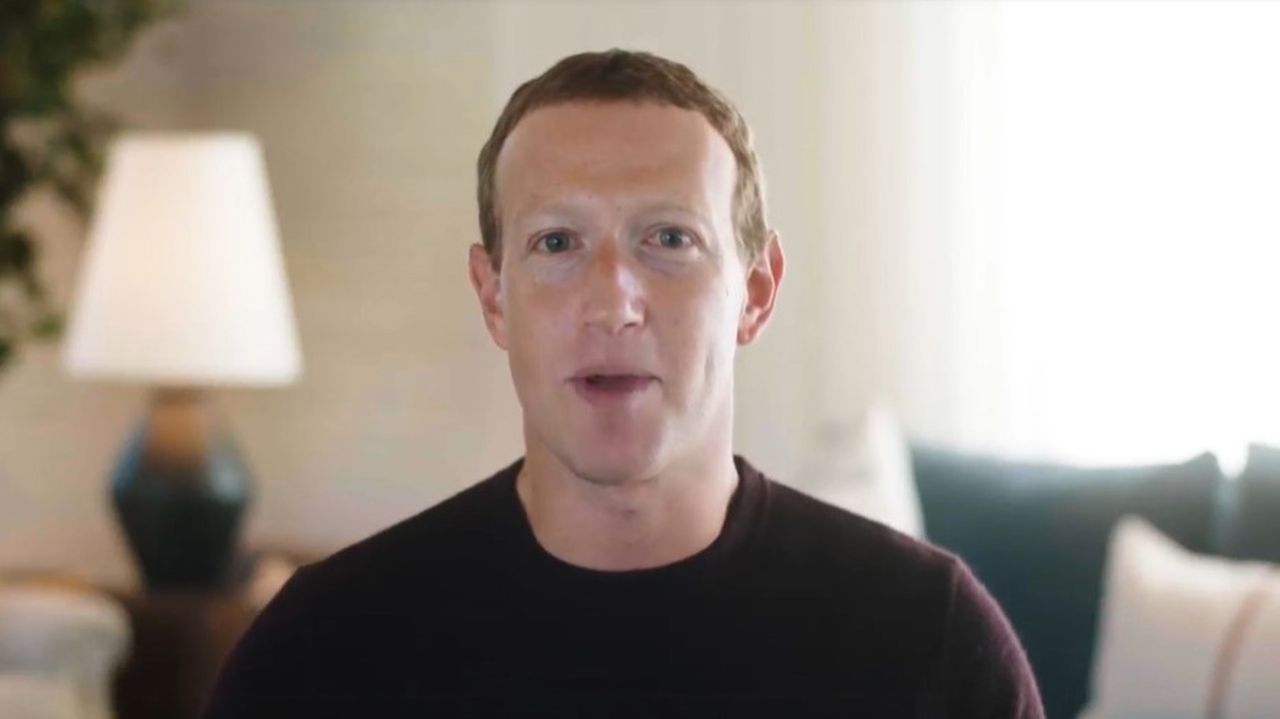
Certainly, Mark Zuckerberg never envisaged that his college "The Facebook" would someday influence Presidential Elections.
However, when Zuckerberg and other tech leaders realized the magnetic power of these systems and how they could suck in eyeballs and drive advertising dollars, they woke up to both the potential for growth and the ever-present risk of losing visitors.
Things like infinite scroll, autoplay, and especially algorithms were designed not just to tailor experiences to your individual tastes, but to hook you and hold your attention for as long as possible (and to serve you as many ads as possible).
Again, by my estimation, there was no understanding that those same tools would prove so toxic to one of Meta's key audiences.
Meta was not necessarily targeting children or tweens, but that cohort was certainly on the platforms (and it never hurt Meta that teens would grow into adults with buying power) and lacked the maturity and skills to know when to turn them off or to take what was being presented as real with a grain of salt.
In truth, many adults still lack these abilities. They're fed a steady mix of fact and fiction, truth and hyperbole. Recently, a relative I consider intelligent told me with certainty that the recent White House Correspondents' Dinner attempted assassination was staged. There's no evidence it was, but the chatter on Facebook and fake media outlets that live there told her it was so.
Has Meta done enough?
It's in this light that we view Metas' impact on those adults, but especially these minors.
Meta has done what it thinks it can to prevent kids and teens from having the wrong kinds of experiences on the platform.
It's using AI to ferret out kids and teens posing as adults and shunting the minors to a limited experience — and in that experience, parental oversight that puts the control in adult hands.
All that, though, may not be enough
After losing the first part of a big case last month, which focused less on the content on these platforms and more on how Meta willfully built them to capture and hold attention, Meta is now facing that Public Nuisance charge, which New Mexico wants to use to force Meta to make these changes:
- Age verification
- Redesign recommendation algorithm
- End autoplay (for those under 18)
- End infinite scroll (for those under 18)
- $3.7B to support future teen mental health services in New Mexico
Meta has naturally argued that these changes are technically infeasible. I kind of doubt that, but they could be, at scale, at least, financially infeasible.
Look at that last bit where New Mexico is trying to get tens of billions of dollars from Meta to cover future teen mental health costs. I have no doubt the true costs could be that expensive, but what if New Mexico wins? The 40-or-so other Attorney Generals-sponsored cases against Meta would try to follow suit, and suddenly, Meta has a bill in the hundreds of billions.
You can see why Meta is going to fight. But the momentum appears to have swung away from the social media company, and it could very well lose this case.
Meta's answer, by the way, would be to pull out of New Mexico, something that I'm sure will upset many in New Mexico, especially some Instagram-addicted teens.
If New Mexico wins, it will also affix the label of public nuisance to Facebook and Instagram. I can't say I agree with that. I'm sometimes annoyed by the platforms, but there are other times, like my birthday, when I appreciate it. It's also worth noting that whatever happens with Meta will impact all other social media that operates in New Mexico and, likely before long, the rest of the US.
I agree, Facebook is frustrating, sometimes upsetting, but also part of our culture and, for better or worse, who we are as a society. It has connected people across oceans and could still do that in the future. I expect change to come, and I don't know if they should all be on Meta's terms, but I would be cautious about stamping it all with a label we'll struggle to remove.