Get all your news in one place.
100’s of premium titles.
One app.
Start reading
Sports Illustrated
Sports Illustrated
Sport
Michael Fabiano

Fab's Five: Biggest Fantasy Football Hits And Misses in 2025 and Lessons Learned

In the world of fantasy football prognostication, we all have wins and losses. We plant our flags and spout stats and trends that support our opinions, with confidence (and hope) that what we’ve studied and researched will come to fruition. 

Sometimes we knock it out of the park like a massive Aaron Judge home run at Yankee Stadium, and other times we strike out worse than the Mighty Casey in Mudville.

In the interest of holding myself accountable, I looked back at some of the picks I made this season and compiled a list of what I got right and wrong (and why). Also, I’ve added some of the fantasy football lessons I learned from a challenging 2025 campaign.

Fab’s Five Biggest Fantasy Hits

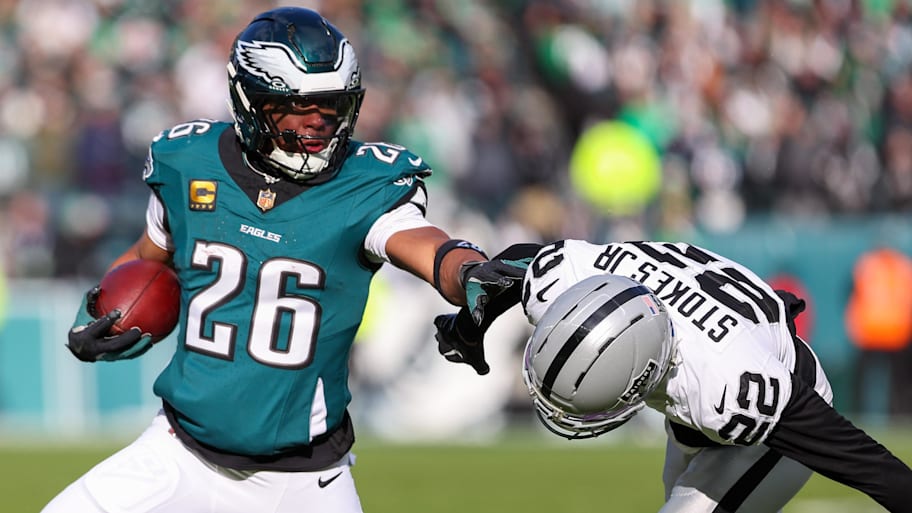
1. History matters, just ask anyone who drafted Saquon Barkley 

I wanted nothing to do with Barkley in 2025 fantasy drafts. In fact, I was in 20 leagues, and he wasn’t on a single roster. I was down on him because of the trends of 2,000-yard rushers with 400-plus carries between the regular and postseason, and those with 370 or more touches in the regular campaign. Barkley was on the negative side of all those trends, and he was on the cover of the Madden video game, too!

Barkley went on to see statistical declines across the board, much like his running back predecessors who had come off similar workloads and statistical success in a previous season. Now entering his age-29 season, Barkley will be less attractive in 2026 drafts. 

2. Few players can overcome the dreaded “curse of the magical season” 

I talk about this all the time, because, ultimately, it’s a very dependable trend. When a player has a historic statistical season, it’s often impossible to duplicate. That’s what happened to Barkley, and he wasn’t alone in failing to meet high expectations.

Lamar Jackson scored 430.4 fantasy points in 2024, the most by a quarterback in NFL history. Unfortunately, injuries and poor play resulted in him posting only 214.7 points (or 215.7 fewer) this season. His 16.5 points-per-game average was the lowest he has ever had as an NFL starter, making him a major fantasy disappointment.

Ja’Marr Chase scored 17 touchdowns and 403 fantasy points in what was a career season in 2024. That made him the consensus No. 1 pick in many 2025 fantasy football drafts. While he had a good statistical season, Chase still experienced what was a significant decline in both touchdown catches (8) and fantasy points (313.6).

Brock Bowers was the top tight end picked in most 2025 fantasy drafts, but injuries and a decline in totals when he was active made him a disappointment. While he did average 14.7 points in his 12 games (only 0.8 fewer points than his rookie year), Bowers scored 46 percent of his points in three games, including 43.3 points in one game.

So, remember, that even the biggest names aren’t immune to the magical season curse.

3. Never overlook veteran running backs, even if a rookie is drafted

The 2025 NFL draft featured a deep group of running backs, but a lot of them landed on teams that had incumbent starters. That was something I warned fantasy fans about in the cases of Omarion Hampton, TreVeyon Henderson, RJ Harvey and Kaleb Johnson.

Hampton was in a committee with Najee Harris before the veteran got hurt, and he then lost work to Kimani Vidal at times (when he was healthy). Henderson was behind starter Rhamondre Stevenson for most of the season, and the pair basically shared touches. That made it impossible for Henderson to truly break out. Harvey didn’t make a real impact until starter J.K. Dobbins went down with an injury, and Johnson was basically an afterthought all year while playing behind Jaylen Warren and Kenneth Gainwell.

Sure, it’s always exciting to have that shiny new toy on your fantasy team, but you can’t overlook the backfield situation, especially when a veteran who is still in the prime of his career, like Stevenson, Dobbins, and Warren or Gainwell, is on the roster. 

4. Rookie tight ends should no longer be discounted in fantasy leagues

There was a time when first-year tight ends were all but overlooked in fantasy drafts, and for good reason. Rookies simply didn’t make much of an impact at the position, even if they were the best of prospects, so I usually avoided them in my drafts.

Times, though, have changed my friends.

The top-scoring tight ends in fantasy football in 2023 and 2024 were both rookies, as Sam LaPorta and Brock Bowers busted out in Year 1. This past season, Tyler Warren (TE4) and Harold Fannin Jr. (TE6) both finished in the top 10 in fantasy points at tight end. It is the first time in 23 years that two rookies finished that high in the same year. Jeremy Shockey and (TE3) and Randy McMichael (TE10) did it in 2002. 

Colston Loveland, who finished as the TE14 and was a league winner down the stretch, should also be mentioned. In fact, he scored more points in 2025 than big-name tight ends like LaPorta, Mark Andrews, T.J. Hockenson, Dalton Kincaid and Zach Ertz. 

Clearly, the days of rookie tight ends being a fantasy afterthought are over. 

5. When it comes to quarterbacks, it still makes sense to just wait

Among the top 12 fantasy quarterbacks drafted based on the average draft position (ADP) data from NFFC, just seven finished in the top 12 in points. The signal-callers who failed to meet their expectations include Lamar Jackson (QB20), Joe Burrow (QB34), Jayden Daniels (QB33), Kyler Murray (QB38) and Brock Purdy (QB24). 

Those are all big names. 

On the flip side, five quarterbacks who finished in the top 12 at the position were drafted at 124.8 (Caleb Williams) or lower. Drake Maye (124.8), Matthew Stafford (222.2), Trevor Lawrence (148.3), and Justin Herbert (140.8) all turned into draft-day bargains.

This sort of thing happens every single year, so why take a quarterback in the second or third round (or even in the first five to seven rounds)? I’ve always preached patience when it comes to picking field generals, and I’ll continue to do so moving forward.

San Francisco 49ers running back Christian McCaffrey was the most valuable player in fantasy football in 2025.
San Francisco running back Christian McCaffrey was the most valuable player in fantasy football in 2025. | Trevor Ruszkowski-Imagn Images

Fab’s Five Biggest Fantasy Misses

1. Christian McCaffrey was my single biggest whiff of the 2025 season 

McCaffrey came into this season with a ton of question marks after missing all but four games in 2024. He also missed most of two of the previous four seasons due to injuries. As a result, I was very wary of drafting him in the first round (in fact, I didn’t do it).

Well, shame on me.

McCaffrey was easily the 2025 fantasy football MVP, scoring 404.9 points in the fantasy season. He scored 20-plus points in 12 of his 17 games, and he averaged 24.5 points for the season. If you weren’t like me (a scardey cat), chances are you had a successful fantasy year (or ended up winning your league title) with CMC on your roster. 

2. Fantasy managers should always trust Dallas running backs

I’m a Cowboys fan who can’t stand Jerry Jones, and I let that blind me when it came to Javonte Williams. The Cowboys went into training camp with Williams, Miles Sanders, and rookie Jaydon Blue all vying for backfield touches. With no clear lead option, Williams was the RB35 in drafts with an ADP of 101.8. In fact, he was picked behind other running backs like Jacory Croskey-Merritt, Jordan Mason, and Kaleb Johnson.

The veteran went on to finish the fantasy season as the RB11, rushing for 1,201 yards and 11 touchdowns while adding 35 catches for 137 receiving yards and another two touchdowns. In all, the veteran runner averaged a solid 15.2 points per game. That was more than Saquon Barkley and Ashton Jeanty, who were both picked in Round 1.

Had I been in my right mind, I would have loved Williams as a sleeper. Historically, the Cowboys have almost always had at least one good fantasy running back, dating back to the days of Tony Dorsett. Heck, even Darren McFadden and Rico Dowdle became useful fantasy options in Big D. So, I’ll take the “loss” on this one (and blame Jerry).

3. You can’t overlook coaching, even for the most talented players 

I’m going to give fantasy fans two examples of why we can’t simply look past coaching changes in the NFL (and be honest, often times we do exactly that in our drafts). 

In 2024, Baker Mayfield had his best fantasy season with 4,500 passing yards, 41 touchdown passes, and 365.8 points. He saw a huge decline in stats this past year, as Mayfield threw for 807 fewer yards, 15 fewer touchdowns, and had 93.9 fewer points.

Mayfield’s career fantasy season came with Liam Coen as the offensive coordinator in Tampa Bay. Coen left the Buccaneers for a head coaching job with the Jacksonville Jaguars in 2025. With Coen calling the shots, Trevor Lawrence finished the fantasy season ranked fourth in points among quarterbacks. The veteran had a career-high 338.2 fantasy points and averaged a robust 19.9 points per game. 

Lawrence’s career season came with Coen, while Mayfield experienced decreases nearly across the board without Coen after posting a career campaign with him.

In Las Vegas, Ashton Jeanty was considered a first-round pick in most fantasy drafts. We all were enamored with his skills and the fact that he would have little to no real competition in the backfield, so a featured role was a virtual guarantee in Year 1.

Unfortunately, we all just looked past the fact that the Raiders had a new coaching staff with 74-year-old Pete Carroll at the helm and Chip Kelly making his return to the NFL as the team’s offensive coordinator. He hadn’t been in the league since he was the head coach in San Francisco in 2016 (and we all know how that turned out in the end).

And we also overlooked something else … it’s the Raiders. 

Jeanty wasn’t terrible, but he failed to meet expectations, in part because of his role in an offense that often played from behind and lacked talent. There are other examples of how coaching matters, but you get the point. And with so many new head coaches and offensive coordinators who’ll be around the league, don’t forget factor that in. 

4. Don’t let analytics rule your fantasy decisions. Personnel changes matter

Analytics certainly have a place in real and fantasy sports, but you shouldn’t use that as the be-all, end-all when it comes to a player’s value. Case in point, Ladd McConkey. 

He was awesome in his rookie year, posting 82 catches and 1,149 yards and finishing as the WR12. His metrics were equally impressive, as he ranked ninth among wideouts in yards per route. He was praised for his elite route-running, a 74.5% catch rate, and his success rates against man and zone coverage. McConkey was a metrics boon. 

As a result, he was picked very highly in fantasy drafts, too highly, in fact. 

Once the Chargers made a particular personnel move, which was bringing back Keenan Allen, I was out on McConkey. My mistake was that I wasn’t down on him enough. Allen had a built-in rapport with Justin Herbert from his initial stint with the team, so much so that the old veteran, not McConkey, led the Chargers receivers in targets with 122. 

McConkey would go on to see his stats drop off by 16 catches and 360 receiving yards, and his points-per-game average fell from 15.1 as a rookie to 11.3 this past season. So, despite his impressive rookie metrics, McConkey would finish as the WR30 … and his statistical decline had a lot to do with Allen being back in the offensive mix. 

5. Don’t let the haters fool you : Kickers can help you win a championship

Kickers have become the butt of plenty of fantasy football jokes, but they have earned more respect (or at least, they should) after the 2025 season. The highest-scorer at the position was Jason Myers, who finished with 195 fantasy points, more than all but two tight ends (Trey McBride, Kyle Pitts Sr.). It’s also more points than wideouts like McConkey, DK Metcalf, Jaylen Waddle, Deebo Samuel Sr. and Brian Thomas Jr. 

The ADP (average draft position) between those players and Myers was insane. Based on NFFC data, Myers wasn’t even picked in most drafts with an ADP of 286.3. If you think Myers was an outlier, then what about Brandon Aubrey and Ka’imi Fairbairn?

Aubrey was drafted, on average, at 154.4, while Fairbairn came in at 223.9. Offensive skill players like Jerome Ford, DeMario Douglas, Cedrick Tillman and Ray Davis went ahead of Aubrey, while Fairbairn was picked behind Issac TeSlaa, Geno Smith, DJ Giddens, Roschon Johnson and Tahj Brooks. None of them made a real impact. 

If we include kickers as flex starters (along with running backs, wide receivers and tight ends), Myers finished 47th in fantasy points! Fairbairn finished 50th, and Aubrey was 60th. Cameron Dicker was 72nd with more points than David Montgomery and Khalil Shakir, and Cam Little was 80th ahead of Rome Odunze and Brian Thomas Jr.

While I’m not saying this is the case for all kickers, players with long resumes of success like Aubrey and Fairbairn should no longer be grouped with the “don’t draft a kicker until the last round” crowd. In fact, given their recent finishes, it is not at all absurd to target high-end booters somewhere in the 9th or 10th round of 2026 drafts.


More NFL on Sports Illustrated


This article was originally published on www.si.com as Fab's Five: Biggest Fantasy Football Hits And Misses in 2025 and Lessons Learned.

Sign up to read this article
Read news from 100’s of titles, curated specifically for you.
Already a member? Sign in here
Related Stories
Top stories on inkl right now
One subscription that gives you access to news from hundreds of sites
Already a member? Sign in here
Our Picks
Fourteen days free
Download the app
One app. One membership.
100+ trusted global sources.