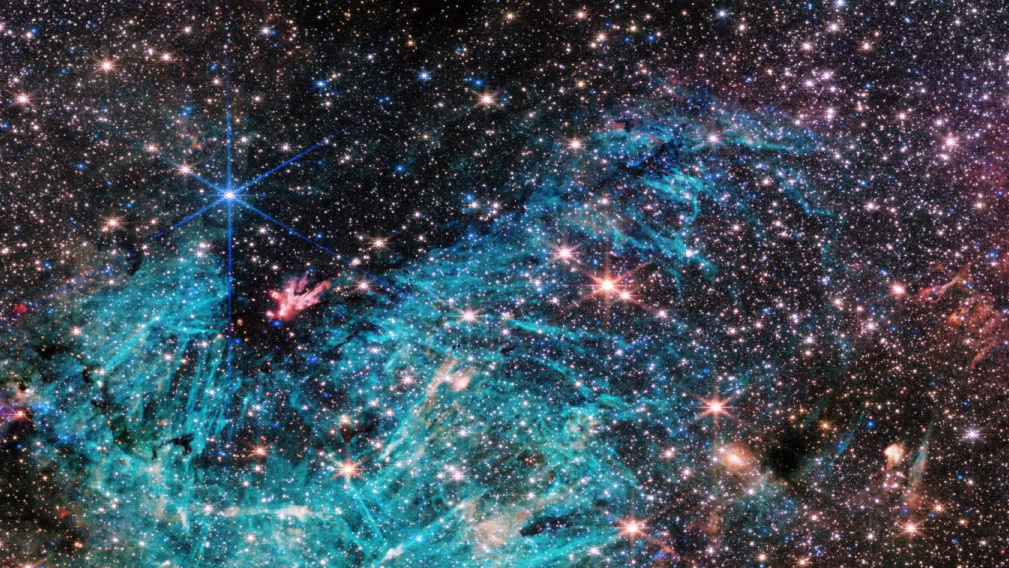
Stars are the architects of nearly all the chemical elements in the universe, including ones crucial to life as we know it, such as carbon and oxygen. Yet, despite decades of research, aspects of star formation are as mysterious as the dense, dark clouds of gas in which baby stars are embedded. The James Webb Space Telescope's observations of Sagittarius C (Sgr C), a star-forming region at the Milky Way's heart that appears to form fewer stars than expected, are shedding new light on some of these enigmatic processes.
Despite residing in one of the galaxy's most extreme star-forming environments — just 200 light-years from the supermassive black hole Sagittarius A* — and containing vast reserves of molecular gas, Sgr C doesn't birth as many stars as astronomers estimate it should. In 2023, the James Webb Space Telescope (JWST) provided astronomers with the first infrared data of this stellar nursery, enabling them to peer through the obscuring blanket of gas and dust and study its young stellar population in greater detail.