A federally funded trial of 959 adults with long COVID found that stretching Paxlovid well past its usual five-day course did not improve symptoms compared with placebo. The published trial results appeared August 31, 2026, in The Lancet Infectious Diseases and come from the National Institutes of Health RECOVER initiative.
The finding closes off one of the more prominent theories about what drives long COVID. The idea, held by many patients and some researchers, was that fragments of the virus persist in the body after the initial infection clears, keeping the immune system activated and symptoms going. If that were the main mechanism, a longer antiviral course should have helped. It did not.
For the millions of Americans living with long COVID, the practical meaning is narrow but worth stating plainly. Extended Paxlovid is not a treatment that was withheld from them, and pursuing it through off-label prescribing or overseas purchase is unlikely to help. What the trial does not do is rule out other mechanisms or other treatments still under study.
Inside the Trial Design
The study, known as RECOVER-VITAL Viral Persistence, recruited 959 adults with long COVID from 69 sites across the United States and collected data between July 2023 and early 2025, according to the trial registration record. Long COVID was defined as symptoms lasting at least three months after a SARS-CoV-2 infection.
Participants first completed symptom surveys and were sorted into one of three groups based on their dominant complaint. One group had cognitive dysfunction, the trouble concentrating and word finding commonly called brain fog. One had autonomic dysfunction, meaning dizziness, rapid heart rate, shortness of breath, or blood pressure swings. One had exercise intolerance and post-exertional malaise, the exhaustion that follows activity and interferes with daily life. Roughly 320 people landed in each group.
Within those groups, participants were randomly assigned to one of three treatment arms. One arm received 25 days of Paxlovid. One received 15 days of Paxlovid followed by 10 days of ritonavir plus a placebo standing in for nirmatrelvir. One received 25 days of ritonavir with a nirmatrelvir placebo. Participants rated their symptoms periodically over six months, alongside lab tests and clinic visits.
The Limits of the Finding
This was a phase 2 trial, and it tested a specific hypothesis rather than the drug in general. The Mass General Brigham announcement reported no improvement in long COVID symptoms compared with placebo, and also reported that the longer duration did not cause serious side effects.
One design detail matters for interpretation. The comparison arm received ritonavir rather than a fully inert placebo, because ritonavir is needed to boost nirmatrelvir levels and blinding required matching regimens. Ritonavir has its own effects, so the comparison is against ritonavir alone rather than against nothing.
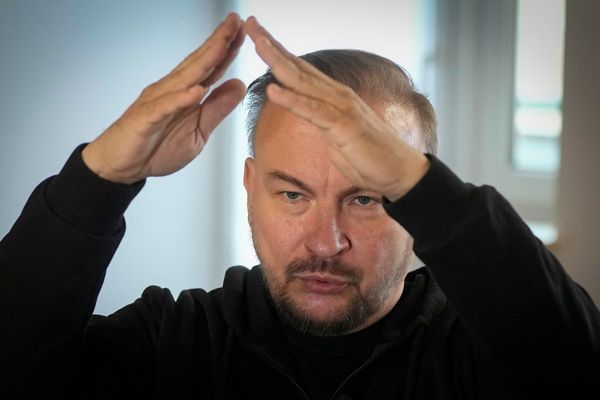
Lindsey Baden of Mass General Brigham, a co-principal investigator, framed the outcome carefully. He said the study contributed important findings to the science of long COVID and viral persistence, and that the team learned how to better characterize and measure patients' symptoms. "Unfortunately, treating viral persistence with this antiviral medication did not show evidence of clinical benefit," he said.
The trial does not prove that viral persistence plays no role in long COVID. It shows that this drug, at these durations, in this population, did not produce measurable benefit. Other candidate mechanisms, including immune dysregulation, microclotting, autonomic nervous system injury and reactivation of other latent viruses, remain under investigation.
Funding came from the NIH through the RECOVER initiative. Pfizer donated the study medication and contributed to study design discussions but, according to the disclosure, did not participate in study conduct, data interpretation, or initial drafting of the manuscript.
A Negative Result with Real Value
Long COVID has been an unusually fertile ground for unproven and expensive interventions, from off-label antiviral courses to blood filtering procedures marketed abroad. A large randomized trial that says a specific approach does not work removes one option from that marketplace and redirects research money.
The trial also produced something the field has lacked. Investigators grouped patients by dominant symptom rather than treating long COVID as one condition, and Baden pointed to improved characterization and measurement of symptoms as a contribution in its own right. Future trials can use those groupings to test whether a treatment helps one subtype without helping others.
RECOVER includes seven additional studies testing other treatments for long COVID symptoms that patients identified as most damaging to quality of life. A full list of ongoing trials is public, and results will arrive on their own timelines.
Practical Guidance for Patients
No one currently taking Paxlovid for an acute COVID infection should change anything. The drug remains authorized and effective for its approved use, which is treating mild to moderate COVID-19 in people at higher risk of severe outcomes, given for five days near the start of infection. This trial tested something different.
Anyone considering an extended antiviral course for long standing symptoms now has an evidence based answer, and it is that the approach did not work in the largest test of it. Patients who obtained extended courses privately are not missing out on a benefit, though they may have taken on cost and side effect risk without one.
Symptom-directed care remains the mainstay. That means pacing strategies for post-exertional malaise, evaluation and treatment for orthostatic intolerance and rapid heart rate, sleep and cognitive rehabilitation approaches, and management of any coexisting condition. People with disabling symptoms should ask a primary clinician about referral to a long COVID clinic, several of which are attached to academic medical centers, and about whether they qualify for any of the ongoing RECOVER trials. MedicalDaily recently reported on prolonged COVID symptoms among health care workers, a group with high documented exposure.
Key Questions Answered
What did the trial find? Paxlovid given for 15 or 25 days did not improve long COVID symptoms compared with the control regimen over six months of follow-up.
How large was it? 959 adults with long COVID at 69 United States sites, with data collected from July 2023 into early 2025.
What theory was being tested? That leftover virus in the body keeps long COVID symptoms going, and that a longer antiviral course could clear it.
Does this mean viral persistence is not involved? No. It means this drug at these durations did not help. The mechanism question remains open.
Was the extended course dangerous? The study reported that the longer duration did not cause serious side effects in participants.
Should I stop taking Paxlovid for acute COVID? No. Its approved five day use for acute infection in higher risk people is unaffected by this trial.
What treatments are left for long COVID? There is no approved cure. Care focuses on managing specific symptoms, and seven other RECOVER trials of different approaches are underway.