As monsoon begins to recede, Kolkata comes undone to the autumnal hues of the month of Ashwin (seventh month of the lunisolar Hindu calendar). Like a flower, the city opens itself to the possibilities of art. Nights are charged with the perfume of shiuli (night flowering jasmine) and at dawn on Mahalaya (held seven days prior to the puja festivities), playwright Birendra Kishore Bhadra’s profound invocation to the goddess rides the wind. This marks the onset of Durga Puja, a festival that Bengal eagerly looks forward to. Over the years Durga Puja has grown to epic proportions with its pandals being nothing short of ornate installations of art.
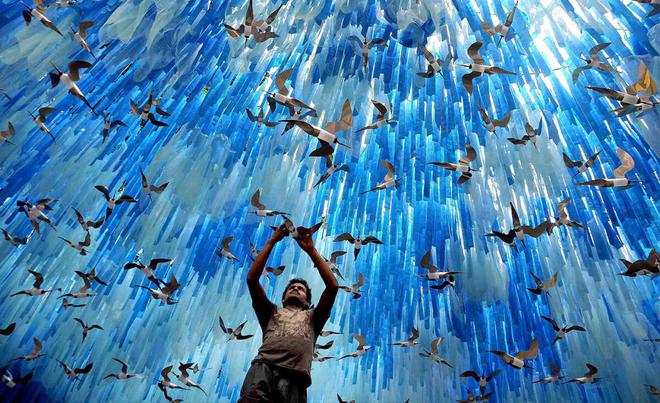
In 2021, UNESCO declared the festival as an Intangible Cultural Heritage of Humanity. The tradition of Durga Puja originated roughly around the 16th century, held by zamindar (land owning gentry) families in colonial Calcutta. Over the years, the puja and puja parikrama (activities) have given the city not only deep creative currents but also new syllables that spell inclusion, festivity and joie de vivre.