
Get all your news in one place.
100's of premium titles.
One app.
Start reading
The Independent UK
The Independent UK
Alice Reynolds

Experts reveal the causes of dry hair and the best products to combat it

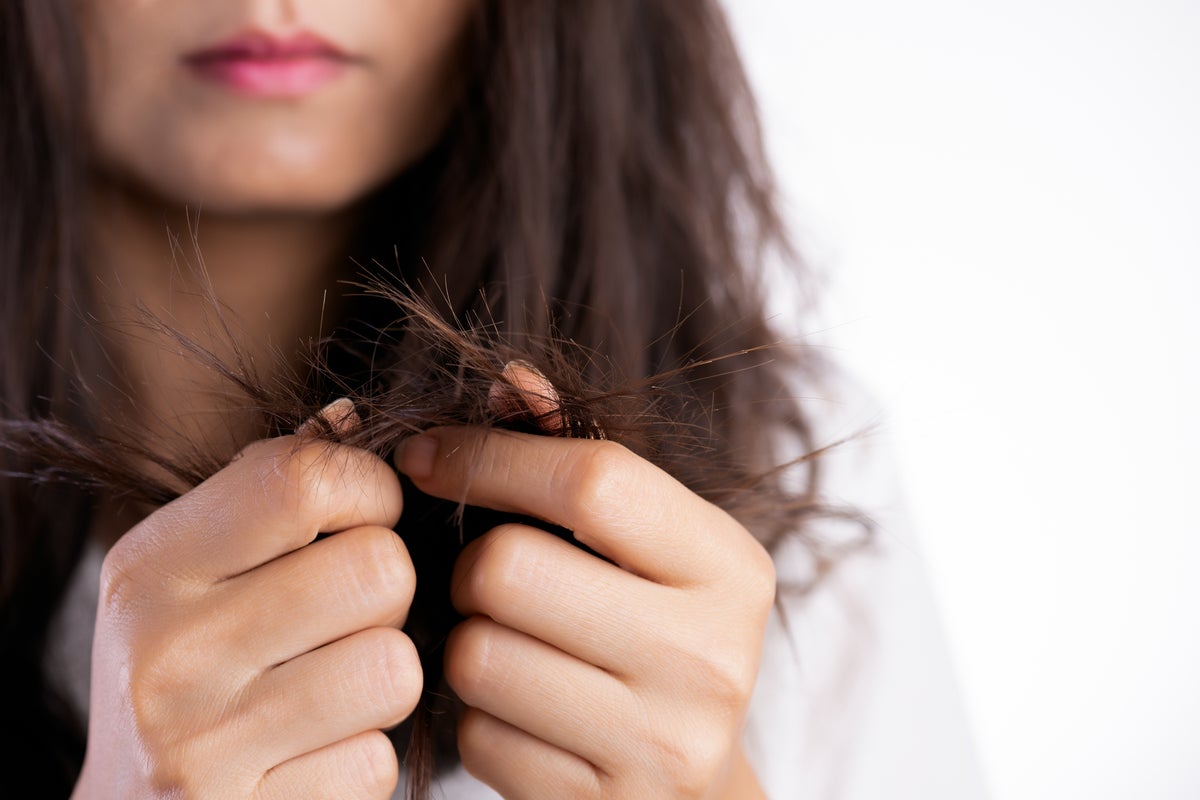
Dry hair lacks moisture and natural oils - (Getty Images)

Characterised by coarse strands, a lacklustre finish, frizz and persistent flyaways, dry hair is a concern that can affect anyone, regardless of hair type or texture. In healthy hair, natural oils coat the outer layer (known as the cuticle) helping to lock in moisture, protect the inner structure and deliver a glossy sheen. When hair becomes dry, this protective layer is compromised, leaving strands looking dull and feeling brittle.

It’s little surprise, then, that the beauty industry has responded in force. From deeply nourishing masks to lightweight oils and gentle cleansers, there’s no shortage of solutions promising to restore hydration and shine. In our experience, investing in targeted treatments – including the best hair masks, best hair oils, best sulphate-free shampoos and even the best shower filters designed to reduce mineral build-up, can make a noticeable difference, helping to smooth, soften and revive thirsty strands.

While those guides are a great starting point if you’re on the hunt for products that genuinely deliver, dry hair as a topic deserves a little more unpacking. From misdiagnosing dehydration to overloading strands with the wrong formulas, there’s plenty of confusion surrounding what dry hair really is – and how best to treat it.

That’s where expert insight becomes invaluable. To cut through the noise, I’ve consulted leading hair specialists to answer the most common questions, from how to accurately identify dryness to the treatments that will make the biggest difference.

Read more: 9 best leave-in conditioners for healthy and hydrated locks

How do I know if my hair is dry, rather than damaged?

“Dry hair and damaged hair often get confused, but they’re not the same thing,” says Helen Reavey, trichologist, celebrity hairstylist and founder of hair wellness company Act and Acre.

Reavey explains that “dry hair means the hair is lacking moisture and natural oils.”

“It can look dull, feel rough to the touch, and may be harder to detangle or style,” she says. “You might notice more frizz, static, or a lack of shine, but the hair strand itself is still structurally intact.

“Damaged hair, on the other hand, means the protein structure of the hair has been weakened. This usually comes from heat styling, bleaching, chemical treatments, or excessive tension. Damaged hair tends to break easily, split at the ends, feel stretchy when wet, or look uneven through the mid-lengths.”

Read more: These everyday things are damaging your hair – experts explain how to heal it

Reavey compares it to skincare: “dry skin needs hydration, but damaged skin needs repair. The same goes for hair. Healthy hair starts with a balanced, hydrated scalp”.

“You can spot that your hair is dry primarily by the colour,” says co-founder of London-based salon Haug London Haus and award-winning colourist Siobhan Haug. “If you are a brunette and your ends are looking one to two shades lighter and dull (and it’s not the result of a glossy balayage), this is probably the result of dry hair causing cuticle layer to raise instead of lying flat and compact,” she explains.

Read more: Best heat protectants for hair 2026, tested by a beauty editor

What causes dry hair?

“Dry hair can result from a combination of internal and external factors, often reflecting both nutritional status and hair care practices,” says Izabella Bordignon, trichologist and founder of London-based salon Izabella Bordignon.

From an internal perspective, she highlights nutritional deficiencies in zinc, essential fatty acids, and vitamins A, B and E “can impair the production of sebum, the natural oil that lubricates and protects the hair fibre”. She also says hormonal changes, particularly during menopause, “may also reduce sebaceous gland activity, contributing to increased dryness and changes in hair texture”.

Externally, Bordignon explains that chemical processes are among the most common causes of dry and fragile hair. “Procedures such as frequent bleaching have a profound impact on the hair’s structure,” she says. This is because to remove the pigment from the cortex (the middle layer of the hair shaft), the cuticle or outermost layer must first be lifted, “allowing oxidative agents to penetrate the fibre and break down melanin”.

Harsh shampoos are top of the list for Reavey. “Strong detergents can strip the scalp of its natural sebum, which is what keeps the hair lubricated and protected,” she explains.

Scalp imbalances can also cause dry hair according to Reavey. “If the scalp isn’t healthy, the hair won’t be either,” she says. “Sebaceous glands produce oil that travels down the hair shaft to keep it hydrated, so when scalp health is off, dryness often shows up in the lengths.”

Reavey also points to environmental stresses like sun exposure, pollution, hard water, and cold weather as they can all dry the hair out over time.

Haug agrees and adds the “environments that we work and live in tend to be quite dry at this time of year due to central heating”.

Heat styling can also cause dry hair according to Haug as it sucks the moisture out of the hair, “leaving the cuticle layer looking parched and feeling dry.” “The good news is that this is a surface level issue, and not necessarily damage which is found internally at the cortex; means it’s fairly easily remedied,” she concludes.

Read more: 12 best hair oils for shine and frizz control, tested on three hair types

How can we repair dry hair?

“It may sound blunt, but hair is made of protein, much like an egg,” says Bordignon. “Once an egg is cooked, it cannot return to its original state. The same principle applies to hair: once structural damage has occurred, it cannot be truly reversed.”

That being said, we can significantly improve the condition and appearance of the hair fibre with treatments and formulations that can “help restore mechanical strength, rebalance pH, smooth the cuticle and enhance the overall feel and manageability of the hair,” she says.

A trifold approach to this is recommended by Reavey. “The key is to focus on hydration, barrier repair, and scalp health at the same time,” she says. “Dry hair improves when the hair cuticle is smoothed and the scalp environment is balanced. When the scalp is healthy, the hair has a much better chance of staying hydrated long-term.”

She recommends gentle, sulphate-free cleansers that don’t strip natural oils, and a conditioning mask or leave-in treatment to restore moisture to the cuticle. Protecting the hair from heat and UV exposure is also on Reavey’s list, as it supports the scalp so it can produce healthy oil again. She also recommends to avoid over-styling while the hair is recovering.

Bordignon highlights that “understanding your own body is key, particularly for women, as hormonal changes can directly affect hair quality”. She recommends acting preventively after you notice early changes in texture, shine or density and seek tailored advice from a qualified trichologist. Plus, a well-balanced diet, regular exercise and healthy blood circulation ensures “the hair follicle receives the nutrients it needs to produce strong, healthy hair”.

What are the best treatments for dry hair?

“When selecting products for dry hair, the focus should be on restoring surface lipids, improving cuticle alignment and enhancing moisture retention,” says Bordignon. To guide your purchases, I asked the three experts to recommend their favourite products to treat dry hair.

Kérastase nutritive 8h magic night serum

Helen Reavey recommends the Kérastase nutritive 8h magic night serum for dry hair “because it’s lightweight but very hydrating”.

“It uses plant proteins and conditioning agents to smooth the cuticle overnight, which helps reduce frizz and improve softness without weighing the hair down,” she explains.

Buy now £35.99, Amazon.co.uk

Wella oil reflections luminous smoothing oil

Izabella Bordignon says this is “a lightweight oil that works exceptionally well for dry or colour-treated hair.

“It helps to smooth the cuticle, enhancing light reflection and shine, while also improving softness and manageability”.

She recommends for best results apply the oil before washing as a pre-treatment, and again in small amounts on damp hair to seal in moisture.

Buy now £18.99, Amazon.co.uk

Act+Acre conditioning hair mask

“I love recommending you swap this mask with your everyday conditioner, because it focuses on restoring hydration without heavy buildup,” says Reavey.

“It’s made with glycerin and shea butter to help pull moisture into the hair while smoothing the cuticle, so the hair feels softer but still lightweight.”

Buy now £36, Cultbeauty.co.uk

Schwarzkopf blond me hair oil

Siobhan Haug recommends this hair oil “even when you’re not a blonde!”

“It’s so unbelievably delicate that it works on even the finest of hair types for adding shine and hydration to the surface of the hair.” She says to use it on wet instead of dry hair if you’re a little more oil prone.

Buy now £22.95, Amazon.co.uk

Davines oI hair butter

Bordignon describes the Davines hair butter as “a deeply nourishing treatment designed to replenish lipids within the hair fibre.”

“Its rich formulation helps to soften the hair, reduce roughness and improve elasticity, making it particularly beneficial for thicker or more dehydrated hair types”.

Buy now £33.25, Selfridges.com

Kérastase gloss absolu glaze milk anti-frizz heat protecting spray

“A good heat protectant is essential for dry hair,” says Reavey. “This type of formula coats the strand to prevent moisture loss while also helping with shine and frizz control, which is key when the cuticle is already lifted”.

Buy now £34.18, Amazon.co.uk

Sisley precious hair care oil

Bordignon recommends this product as a “more premium option that combines botanical oils to deliver intense nourishment and protection”.

“It works by smoothing the cuticle and forming a protective film over the fibre, helping to reduce moisture loss and improve overall hair texture and shine,” she explains.

Buy now £98, Johnlewis.com

Bring your mane back to life with the best sulphate-free shampoos for healthy locks, tried and tested

Sign up to read this article
Read news from 100's of titles, curated specifically for you.
Already a member? Sign in here
Related Stories
Top stories on inkl right now
One subscription that gives you access to news from hundreds of sites
Already a member? Sign in here
Our Picks
Fourteen days free
Download the app
One app. One membership.
100+ trusted global sources.







