
Get all your news in one place.
100's of premium titles.
One app.
Start reading
Euronews
Euronews
Joana Mourão Carvalho

Experimental project releases 30,000 mosquitoes in Lisbon that do not bite

Lisbon will release 30,000 mosquitoes this Thursday. Yes, you read that right, but rest assured, they don't bite.

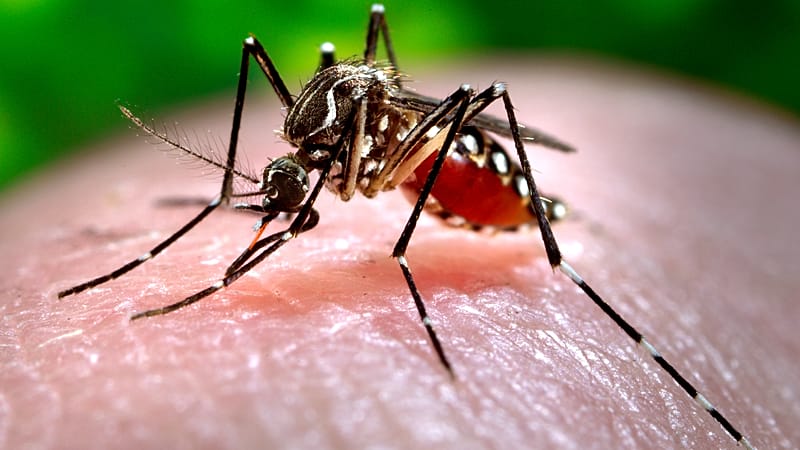
They are sterile male Asian tiger mosquitoes belonging to the species 'Aedes albopictus' and will be released in the Lisbon parish of Alvalade. They are part of anexperimental project whose ultimate aim is to reduce the population of the Asian tiger mosquito, because of its implications for public health.

The project focuses on the Asian tiger mosquito because of its implications for public health, as it can transmit diseases such as dengue, Zika and yellow fever, with the risk arising if the mosquito bites an infected person and subsequently passes the pathogen on to another person.

This is not the first time this has been done. In total, 60,000 mosquitoes have already been released in Portugal and this will be the last release of this type of insect.

Speaking to the Lusa news agency, Afonso Moreira, a public health doctor at the Francisco George Public Health Unit of the Santa Maria Local Health Unit, explained that these mosquitoes were sterilised using a proven and safe technique.

"When we release them into areas where there is a population of this mosquito, they will essentially compete with the male mosquitoes that are already there, the wild mosquitoes," said the project leader.

The aim is to assess whether this competition reduces the species' reproduction, given that mating with sterile males does not produce offspring. And since only females need blood, reducing the number of wild males and the opportunities for reproduction would help control the number of mosquitoes of this species that can bite humans.

However, the researcher stressed that in this first phase the main objective is to understand how the released specimens behave, particularly their ability to disperse and survive in the intervention area.

If the results of the first stage are positive, further progress in the research is expected in May, with a comparative study between areas where the mosquito has been released and areas where it is being controlled.

Speaking to Lusa, Afonso Moreira stressed that the release of sterile mosquitoes is only one of the control measures, and argued that it remains essential to continue eliminating the places where this species breeds.

This text was translated with the help of artificial intelligence. Report a problem : [[email protected]].

Sign up to read this article
Read news from 100's of titles, curated specifically for you.
Already a member? Sign in here
Related Stories
Top stories on inkl right now
One subscription that gives you access to news from hundreds of sites
Already a member? Sign in here
Our Picks
Fourteen days free
Download the app
One app. One membership.
100+ trusted global sources.